Key points:
- CMA CGM is introducing a war risk surcharge of USD 35 (about €31) per TEU for the Black Sea region.
- It applies to all bills of lading from 9 November 2026, subject to regulatory filings where applicable.
- The fee covers Constanța, Poti, Varna, Burgas and any other Black Sea port served by CMA CGM.
- It applies to all cargo types, including dry, out-of-gauge, reefer and special cargo.
- On 16 September 2026, the Black Sea was listed as a war risk area by the Joint War Committee.
USD 35 per TEU for all cargo
According to the customer advisory published on 28 October, the surcharge is set at USD 35 per TEU. For a 40-foot container, which counts as two TEU, that means USD 70, or about €63.
The fee applies to cargo from anywhere in the world to Black Sea countries, and from these countries to the rest of the world. It covers:
- dry cargo, including out-of-gauge cargo,
- reefer cargo,
- special cargo.
The advisory names the ports of Constanța, Poti, Varna and Burgas, as well as “any other port in the region offered by CMA CGM”.
The surcharge applies to all bills of lading from 9 November 2026, “subject to regularity filings where applicable”. This means that on trades where carriers must file rates with regulators in advance, the start date may be later.
Why now
CMA CGM explains that the operational situation in the Black Sea has deteriorated in recent months. On 16 September 2026, the Joint War Committee, which advises the London insurance market, listed the Black Sea maritime zone as a war risk area. As a result, sailing in the region is subject to additional costs, mainly higher insurance premiums.
The carrier says the surcharge will help it “continue ensuring service continuity” in the region.
The decision comes after a series of drone attacks on cargo ships, including in the waters of EU member states. New defences are being fast-tracked to protect the trade route to Constanța.
Not the only extra cost
The war risk surcharge comes on top of other charges. CMA CGM notes that bunker surcharges, terminal handling charges, peak season charges, and safety and security surcharges may also apply, as well as local charges.
Conflict-related surcharges have become common in container shipping this year. Carriers introduced them for the Middle East, and MSC added piracy and Suez surcharges when selected services returned to the Red Sea.
What it means for road transport
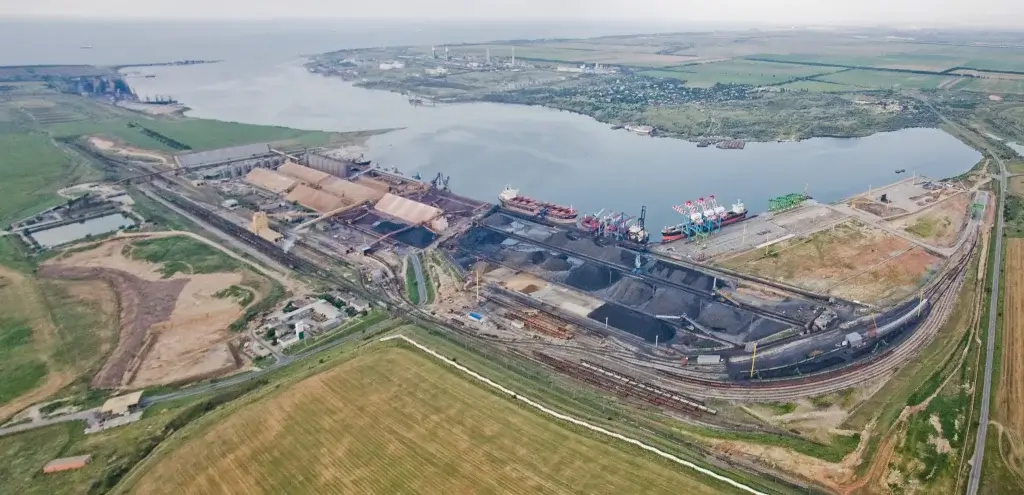
Constanța is the largest container port on the Black Sea and the main sea gateway for Romania. It also serves cargo for Hungary, Serbia, Moldova and other inland markets. Most containers that arrive there continue by truck or train.
For freight forwarders and hauliers, the surcharge itself is relatively small compared with total freight costs. However, it is another signal that sea transport via the Black Sea is becoming more expensive and less predictable. Forwarders should check whether the fee is already included in the rates they quote to customers, and shippers should expect it on invoices from mid-November.
If other carriers follow CMA CGM, as often happens with such surcharges, the extra cost will apply to most containers moving through Constanța, Varna and Burgas.