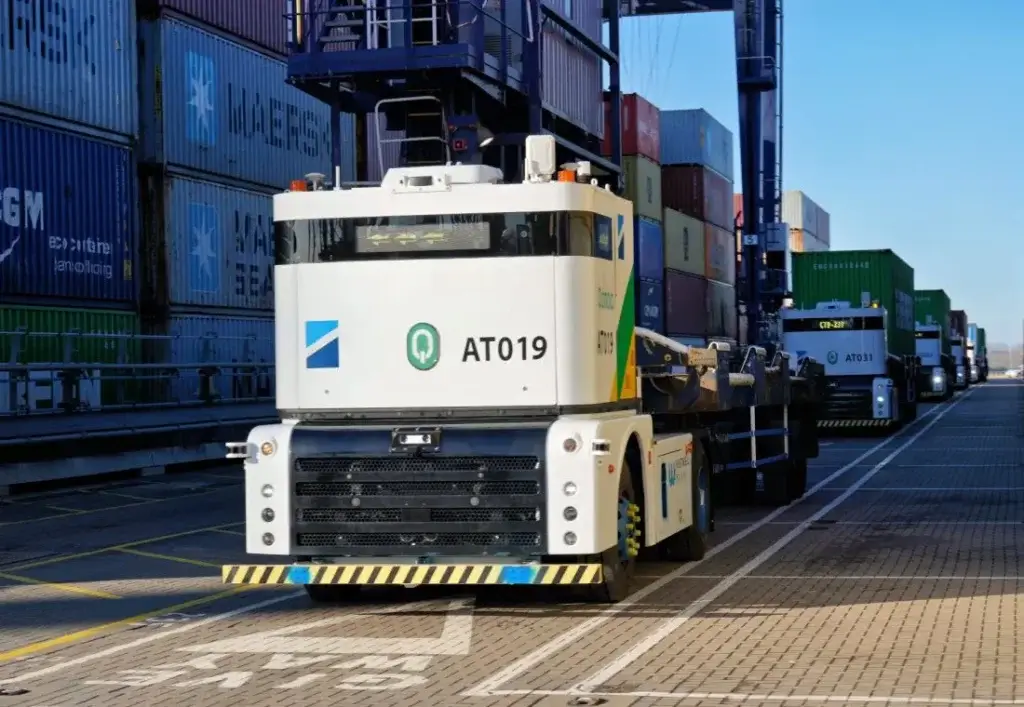
The P-CAL, or Port-Connected and Automated Logistics, project was carried out at the Port of Tyne through the UK Government’s CAM Pathfinder programme. According to the North East Automotive Alliance, the trial deployed and validated a fully autonomous terminal tractor in a live port environment, moving the technology beyond earlier proof-of-concept tests.
The project brought together the North East Automotive Alliance, the Port of Tyne, Oxa, Nissan, Newcastle University, ANGOKA, LOGISTEED UK Limited and Womble Bond Dickinson.
During the trial, the consortium designed, integrated and tested an autonomous container transport system capable of operating on a busy quayside. The work included a secure mesh communication network, integration with terminal operating systems, real-time coordination with crane movements, and a cybersecurity framework for remote and automated operations.
The system was tested in what the project partners describe as a complex operational design domain, reflecting the conditions of a working port, including traffic density, changing conditions and interaction with people.
Graeme Hardie, Operations Director at the Port of Tyne, said the project had shown how automation could be applied to “real operational challenges” in port logistics.
Oxa said the project demonstrated that existing work vehicles can be converted into an autonomous “digital workforce” for industrial sites. The company said the trial completed autonomous container movements in a dynamic quayside environment while providing worksite intelligence for real-time optimisation.
However, the project partners stressed that the next stage will need to test the system across wider port operations. That would include the added pressure of multiple autonomous vehicles working alongside people, port equipment and live commercial activity.
The trial therefore marks a step towards port automation rather than a full commercial rollout. The immediate relevance for freight and logistics operators lies in closed-site operations, where repetitive container and trailer movements may be easier to automate than public-road transport.