Since July 2025, French law has introduced a specific offence label, “homicide routier” (“road homicide”), for cases where a driver causes death without intending to, but does so in defined aggravating circumstances that indicate a deliberately risky manner of driving. According to guidance published by the French road transport federation OTRE, the move responds in part to long-running criticism of the wording “involuntary homicide” in cases involving high-risk behaviour, while also tightening the legal and operational consequences for professional drivers and operators.
What “road homicide” is
The law does not remove the existing offence of “involuntary homicide” (homicide involontaire). OTRE explains that it remains in place, and the key change is that where an involuntary homicide is committed with a motor vehicle plus aggravating circumstances, the offence is now framed as “homicide routier”.
In practice, that means the same crash can be treated very differently depending on what is established about the driver’s conduct.
What turns a fatal crash into “road homicide”
OTRE’s guide reproduces the aggravating circumstances listed in the new offence. These include:
- Alcohol, including refusal to submit to checks
- Drugs (stupéfiants), including refusal to submit to checks
- Deliberate misuse or clearly excessive consumption of a psychoactive substance (a list is to be set by decree)
- Driving without a licence (or with a licence annulled/invalid/suspended/retained)
- Speeding of ≥ 30 km/h over the limit
- Hit-and-run or failure to assist a person in danger
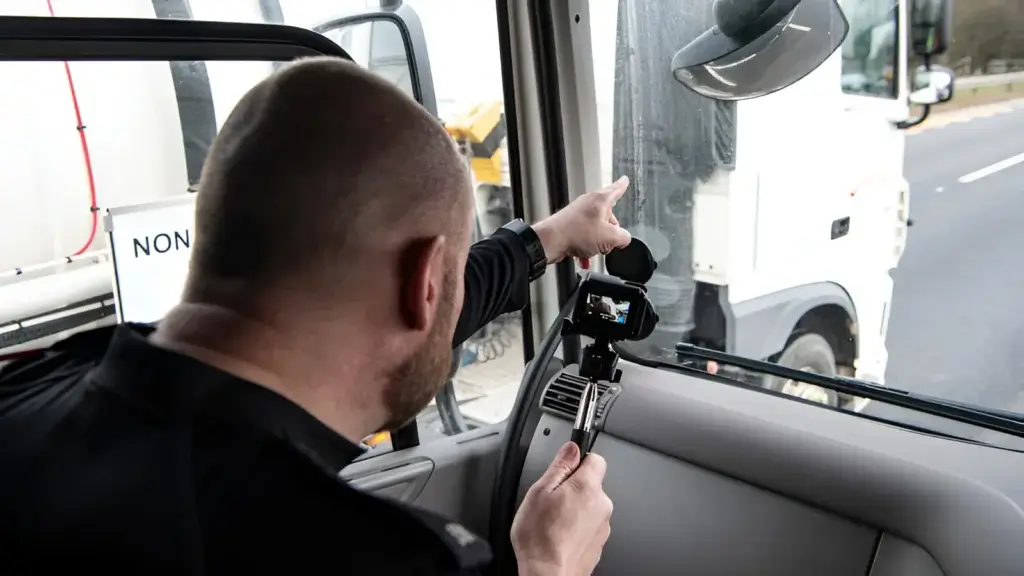
- Handheld phone use or wearing an earpiece/device capable of emitting sound
- Failure to stop / refusal to comply (refus d’obtempérer)
- Motorised “rodeo” (as defined in French road law)
What happens next: penalties and “career-ending” consequences
OTRE notes that “road homicide” is more severely punished than “simple” involuntary homicide.
With one aggravating circumstance, the offence carries a maximum of seven years’ imprisonment and a €100,000 fine.
When aggravating factors accumulate, the sanctions rise. In its summary table of penalties, OTRE indicates that for homicide with a cumulative two circumstances, the maximum is 10 years’ imprisonment and a €100,000 fine.
For professional drivers, the bigger issue is often what comes alongside the main sentence. OTRE highlights a set of complementary penalties that can remove a driver from the job for years, including:
- Suspension of the driving licence for up to 10 years
- Annulment of the driving licence, with a ban on applying for a new one for up to 10 years
- Bans on driving certain motor vehicles, including some not require a licence
- In alcohol-related cases, restrictions are linked to alcohol interlock requirements
- OTRE also notes that convictions can carry additional prohibitions (for example, on weapons or hunting licences) and that courts may order publication of the decision, not transport-specific, but part of the broader personal impact.
A key “career risk” point: OTRE reproduces the rule that any conviction for the relevant offences (Articles 221-18 and 221-19 of the French Penal Code) results automatically (“de plein droit”) in annulment of the driving licence, with a ban on applying for a new one for five to ten years. In cases of repeat offending, the ban becomes ten years by default, and a court may make it definitive.
OTRE also summarises this for road transport in practical terms: for a professional driver convicted of homicide routier or road injuries with ITT ≥ 3 months, annulment with a 5–10 year re-test ban is part of the risk landscape.
Vehicle immobilisation and confiscation: when the truck is at risk
France’s July 2025 changes also reinforce measures affecting the vehicle used in the offence.
Confiscation can apply to the vehicle used to commit the offence if the convicted person is the owner. It can also apply when the driver is not the owner if the owner knowingly left the vehicle at the driver’s disposal while aware the driver was unfit to drive, for example, intoxicated, under the influence of drugs, or without a valid licence.
OTRE makes a key point for fleets: this asset risk is real, but limited by the knowledge threshold; confiscation is only possible if prosecutors can show the owner knew the driver’s condition or licence status and still let them drive.
Separate from confiscation, OTRE reproduces the rules allowing police to order provisional immobilisation and impound in several situations, including driving without the correct licence, alcohol intoxication, a positive drug screening result, or refusal to submit to checks.
The guide also flags a disruption risk that matters to operators even without a crash: where combined alcohol and drug use is established, the vehicle is subject to immobilisation and immediate impound (typically up to seven days, extendable with authorisation), which can create direct operational loss.
Does this target only the driver or the operator too?
OTRE’s reading is that the new “road homicide/road injury” offences are drafted around the driver, meaning the driver is the primary target for those specific offences.
However, OTRE is equally clear that employers and transport companies can still face criminal exposure via involuntary homicide/involuntary injury routes if prosecutors argue the operator contributed through negligence or breach of legal safety obligations.
It also highlights the different thresholds:
- For a company (legal entity), a simple fault of negligence or breach of a legal/regulatory obligation can be sufficient.
- For a company director/employer as a natural person who did not directly cause the harm, liability generally requires a higher threshold (a deliberately breached duty or a “characterised” fault exposing others to serious risk).
Operator checklist: what to tighten now (France-focused)
If your drivers run France, even occasionally, OTRE’s guide underlines the need to show you took reasonable steps to prevent the high-risk triggers.
Driver entitlement and status
- Run and record regular licence entitlement checks, and have a process for immediate reporting of any suspension/annulment. OTRE warns that the reinforcement of licence-suspension measures may increase cases where a driver loses their entitlement in private life and returns to work without informing the employer.
- Have a clear “no drive” escalation route (dispatch – compliance – management).
“Trigger behaviour” policies that match the French risk picture
- Phone policy: explicit ban on handheld phone use and earpieces while driving; brief it, enforce it, document acknowledgements.
- Alcohol/drugs: clear rules on refusal consequences and immediate stand-down procedures (refusal itself is part of the aggravating framework).
- Speed management: treat the ≥30 km/h threshold as a red-line risk factor for France.
Training and documentation
- Keep written evidence of briefings and training on impairment, distraction and speed risk — because, in OTRE’s framing, operator exposure is assessed through what was preventable and what the company did to prevent it.
Asset-protection controls
- Dispatch/keys control: ensure you can demonstrate the company did not knowingly let an unfit or unlicensed driver take a vehicle — because owner knowledge is central to confiscation/immobilisation risk when the driver is not the vehicle owner.
Incident protocol
- A France-specific “what happens next” card for drivers and traffic staff: who to call, what documents to preserve, and how to manage immobilisation/impound scenarios.