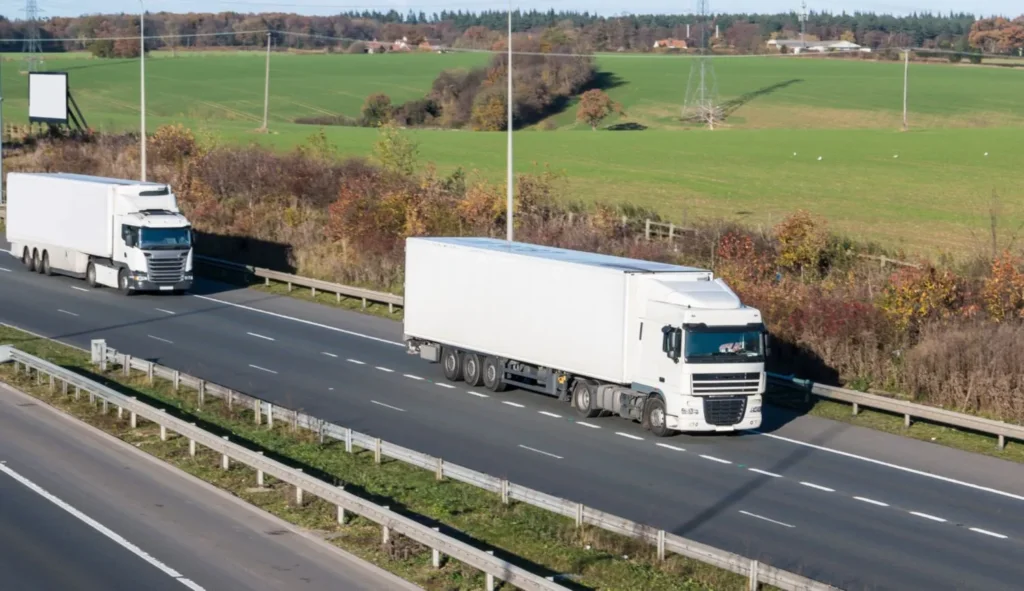
The European Commission has approved a German support scheme with a total volume of up to €1.6 billion. The aim is the large-scale expansion of rapid charging infrastructure for electric trucks along Germany’s motorways. According to the European Commission and the Federal Ministry for Digital and Transport, up to 1,410 charging points are to be installed at more than 120 unmanaged motorway service areas.
The programme will be managed by Autobahn GmbH des Bundes. Funding will be provided in the form of direct grants as well as recurring payments intended to cover part of the construction and operating costs. Operators will be selected through a competitive tendering procedure.
Fee model: costs to be returned to the state
A central element of the funding mechanism is a charging infrastructure fee that will be included in the user price. The revenue generated is intended to flow back to the federal government. According to the authorities, the exact level of this fee will be determined through the tendering process and then reviewed every two years.
As the guardian of the single market, the European Commission regularly examines state aid measures for potential distortions of competition. In this case, it concluded that the scheme is compatible with EU law and, in particular, supports the overarching objective of decarbonising the transport sector.
Current situation: electric trucks remain the exception
For now, the market share of electric heavy goods vehicles in Germany remains extremely low. According to the European Commission, as of April 2025 only 0.37 per cent of all registered trucks were electric. Nationwide, there are currently only around 250 public charging points for trucks, according to Germany’s National Charging Infrastructure Control Centre.
Expanding the charging infrastructure is therefore seen as a key lever for encouraging the commercial vehicle sector to switch to electric powertrains. For fleet operators, the funding programme could also provide decisive investment incentives – provided that charging availability and operational reliability can be ensured.