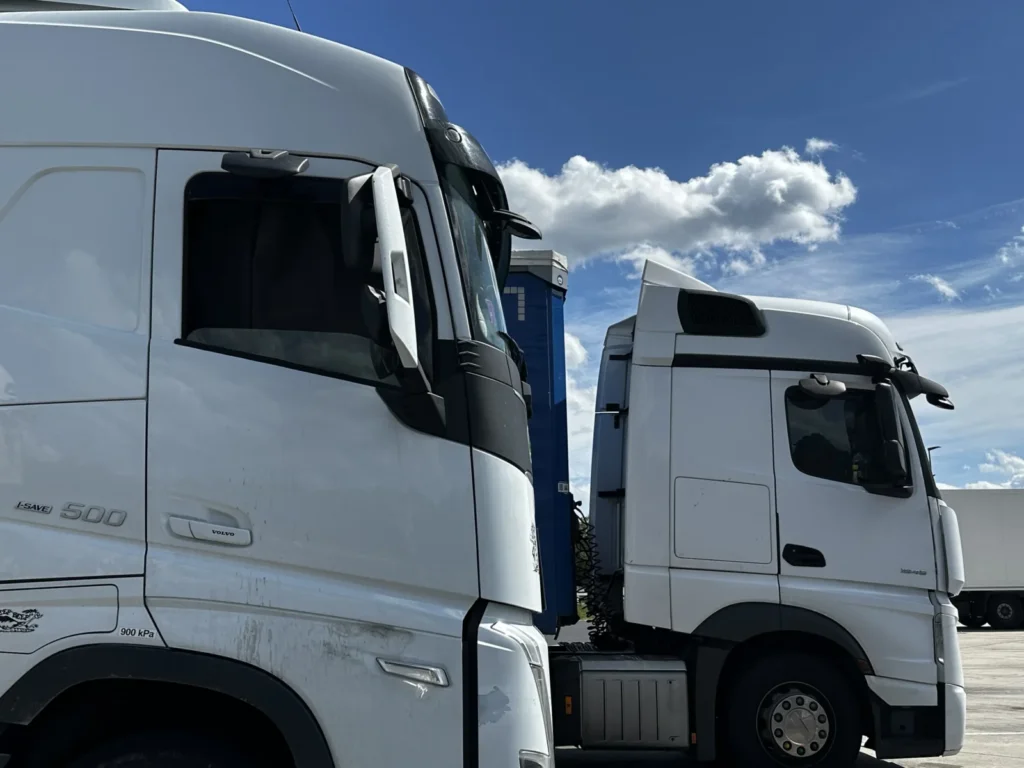
According to German broadcaster n-tv, citing figures from the dpa news agency, what used to be dismissed as isolated incidents has become a serious threat to the transport sector. The Hesse State Criminal Police Office (LKA) says the perpetrators are operating with growing professionalism. They build convincing company profiles, impersonate real carriers and use fake contact details to secure transport orders.
The scale is escalating fast
Data referenced by the Hesse business association VhU and the German Insurance Association (GDV) shows how quickly the problem is growing. In the first six months of 2025, losses caused by fake carriers totalled around seventeen point five million euro. By comparison, estimated damage for all of 2023 was about five million euro.
GDV also reported that 2024 saw 266 cases involving “ghost carriers”, up from just 80 in 2022. Experts estimate that thefts of trucks and cargo across Europe can amount to as much as one point three billion euro per year.
Criminals are taking control of ready-to-go loads
Daniel Muth, head of the Hesse LKA, points out that today’s playbook is simpler and more profitable than traditional cargo theft from parking areas.
“They get a complete, already loaded combination. And if it’s a 40-ton shipment full of iPhones, you can imagine how much money can be made,” Muth said.
Scammers typically hunt for offers on online freight exchanges. They may propose unusually attractive terms or pretend to be a well-known carrier or subcontractor. Once the goods are collected, the truck disappears. Identification becomes harder when number plates are swapped and documents are forged.
Investigators say these cases are less about classic theft and more about a carefully engineered logistics scam.
Electronics and raw materials are prime targets
Authorities note that organised groups focus on goods that can be resold quickly. Electronics, raw materials and other high-value products top the list. One recent case involved two shipments of raw materials originating in Tyrol. The perpetrators posed as a subcontractor and diverted the loads to Germany. Losses were estimated at several tens of thousands of euro.
Another issue is accountability in partner selection. If a subcontractor is not properly vetted, the financial fallout after a load goes missing can be severe.
What to watch for
German authorities and industry bodies are urging extra caution when placing transport orders online. The most common warning signs include:
- using free email accounts instead of a company mailbox,
- website domains that look almost identical to those of legitimate firms,
- new freight-platform profiles with no track record,
- accepting any rate without negotiation, or quoting unusually low prices,
- communication limited to a mobile phone number only,
- last-minute vehicle or licence plate changes before loading,
- insurance documents that cannot be quickly verified.
Police recommend more thorough due diligence on business partners, the use of GPS tracking and additional technical security measures in vehicles.
Advice for drivers as well
Authorities are also reminding drivers about basic security habits. During stops, they should not share route details, cargo information or delivery locations with strangers. It’s also recommended to avoid leaving the vehicle unattended and to check the truck and load after longer breaks. Police advise against picking up hitchhikers and encourage regular check-ins with the transport base, following procedures agreed in advance.
Transport sector under closer scrutiny
At the same time, German enforcement bodies are stepping up checks across logistics and transport. On 6 May, German customs carried out a nationwide inspection campaign in the courier and express segment. More than seven thousand people were checked, and proceedings included suspected breaches related to minimum wage rules and social security contributions.
In parallel, police in Hesse found numerous technical issues during truck inspections. Among the cases recorded were a vehicle overloaded by eight point seven percent and a truck carrying 25 tonnes of unsecured cargo.
With criminal methods becoming more sophisticated, partner verification, shipment monitoring and digital security tools are increasingly central to protecting the transport and logistics industry.
A fake subcontractor and a load that never arrives
The “ghost carrier” playbook is not limited to one country — similar cases are being reported across Europe. That broader pattern is reflected in a case from Austria, where a company in Tyrol became the victim of this kind of deception. An experienced carrier from the Innsbruck-Land area used services, provided by entities that impersonated legitimate subcontractors and took over two raw-material shipments collected in Italy. The loads were meant to go to Germany, but they never reached the consignee.
At first, nothing looked suspicious. The arrangement resembled routine B2B cooperation: credible identity, smooth communication and an order accepted without friction. Only later did it become clear that the cargo had effectively been pulled out of the supply chain by a party that had not been properly verified. Losses ran into several tens of thousands of euro, and authorities note that liability can partly fall on the company that passed the job on.
That’s exactly what makes the Tyrol case so instructive: everything appears normal until it’s too late. Experts increasingly describe the issue as systemic. Karol Wojtowski of Pactus.eu says transport fraud is no longer incidental — it has evolved into a refined operating model used by organised criminal groups.
In practice, he points to recurring signals that often show up before a load is lost. One is email-domain manipulation — addresses that look almost identical to a company’s real domain, differing only in a small detail. Another red flag is a new or dormant account on a freight platform that suddenly becomes highly active.
Time pressure and a complete lack of negotiation are also common. Scammers will often accept any rate because they are not chasing margin — they are chasing access to the cargo. Insurance paperwork should also raise questions: without independent confirmation from the insurer, it’s easy to miss a forgery.
Finally, there is often one decisive moment: a different vehicle shows up for loading. If the licence plates don’t match the order and the driver blames a breakdown, releasing the goods should be put on hold.