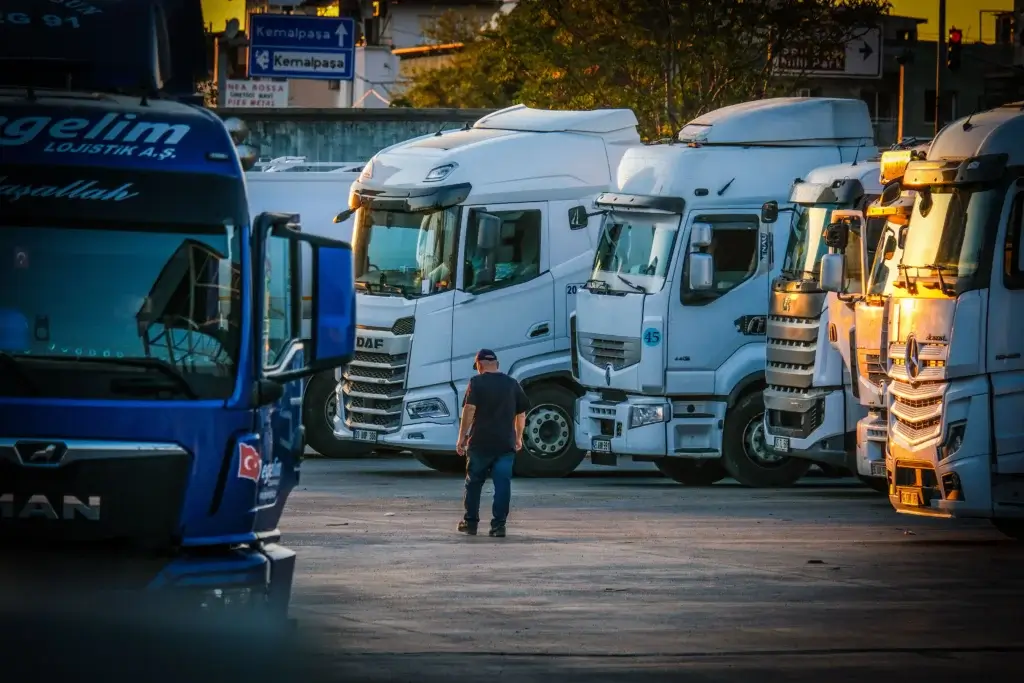
Road haulage says it needs more drivers. But when the industry talks about recruitment, it still too often treats women as a side issue rather than a serious part of the answer. That looks increasingly shortsighted. Across Europe, only around 4% of truck drivers are women, while in the UK the share is below 2%, according to industry bodies. At the same time, the wider driver shortage remains structural rather than temporary.
So, is truck driving “for women”? The real answer is simple: yes, but the job and the industry are still not consistently designed with women in mind. That is why the most useful questions are no longer whether women can do the job, but what still makes the profession harder than it should be and what operators would need to change if they genuinely want to recruit and retain more female drivers.
The myth problem: the barrier is not ability
One of the oldest myths in road transport is that truck driving is somehow naturally “men’s work”. The data do not support that idea. In Britain, research based on HGV test results found that women represented only 9.1% of candidates in 2021–22, yet their overall pass rate was reported to be higher than the industry average. That does not prove women are “better drivers” in every sense, but it does undermine the lazy assumption that lack of ability is the reason there are so few women behind the wheel.
The problem is scale, not competence. IRU says women represent less than 7% of truck drivers in every country it tracks, and Europe still faces a significant driver shortfall. In other words, the industry is drawing from only a narrow part of the labour market while complaining that the labour pool is too small.
Safety is not a “female issue” but it is a decisive one
If there is one issue that keeps resurfacing in research on women in trucking, it is not driving itself but what happens around the job: where drivers stop, wash, sleep and wait. IRU has said that secure working conditions and access to well-equipped rest areas are among the main concerns limiting women’s participation in Europe. Volvo Trucks, drawing on a survey of female truck drivers in Europe, also highlighted recurring complaints about toilets, showers, cleanliness and sexist behaviour.
That matters because a recruitment campaign cannot compensate for poor roadside reality. A profession may look attractive in a social media post or careers fair, but if safe parking is scarce, sanitary facilities are poor, and rest areas feel insecure, many potential recruits will simply decide that the lifestyle is not worth the risk. IRU’s own comments on the driver shortage point in the same direction: infrastructure and conditions remain central barriers, not side issues.
Older research from the Women In Trucking Association, although US-based rather than European, also illustrates how sharply safety concerns can shape perception: large majorities of respondents said truck stops and rest areas felt unsafe for women. The geography is different, but the underlying lesson is familiar to European operators too: if drivers do not feel safe off the road, the industry will struggle to widen its workforce on the road.
Roadside facilities: no showers for women, filthy loos and outdated standards
If road haulage wants to attract more women, it cannot treat roadside facilities as a minor detail. For many female drivers, this is not about comfort or “special treatment”, but about whether the job feels workable in real life.
Scottish Class 1 driver Dawn de Vere made that point powerfully in a recent LinkedIn post. After stopping at a motorway service area following a long shift, she wrote that “many locations still do not have dedicated shower facilities for female HGV drivers.” In some cases, she added, women are expected to use the male driver shower area when it can be closed off. But, as she put it, “female drivers simply avoid using the facilities altogether instead.”
Her wider point goes to the heart of the issue. The haulage industry is actively encouraging more women into driving roles, she wrote, and
“I see that change happening on the roads every year. But infrastructure has not always caught up with that reality.” That is hard to dismiss as a theoretical diversity complaint. It is a direct account of what happens at the end of a working day.
Others in the sector are making the same argument in even blunter terms. In a LinkedIn post highlighted earlier, Keely Priestman wrote that “most women would not put up with the lack of basic facilities” for truck drivers, adding that it is “a waste of time” trying to attract women unless the industry itself becomes more attractive. Her formulation is stark, but it captures a truth the sector often sidesteps: recruitment messaging alone will not solve a retention problem rooted in daily working conditions.
What about pay?
Pay is a more complicated question than the slogans suggest. In principle, truck driving rates are generally tied to role, route, shift pattern and employer rather than to gender. But that does not mean the wage issue disappears. In the broader UK transport sector, Women in Transport’s 2025 Equity Index found that 59% of organisations still reported a gender pay gap of 11% or more, and 65% had no action plan in place. The European Institute for Gender Equality also notes that women in transport face structural barriers that contribute to pay inequality and weaker career progression.
For truck driving specifically, the more realistic issue is often not a formally different rate for the same run, but the wider structure around the job: access to the best shifts, progression into specialist roles, route allocation, training opportunities, and whether women stay long enough in the sector to reach the better-paid parts of it.
So, is truck driving for women?
Yes but not because it needs a sentimental empowerment slogan. It is for women because there is nothing inherent in the job that makes it male, and because the sector plainly cannot afford to ignore half the workforce. The real question is whether operators, customers and policymakers are willing to make the profession more workable, safer and more attractive in everyday terms.
The strongest case for more women in trucking is therefore not symbolic. It is operational. Europe has a driver shortage. Britain has a demographics problem in logistics. And the industry is still underusing a huge potential recruitment pool.
Trucker girls worth following
For readers who want to see what the job actually looks like rather than just read about it, a few public accounts stand out. These are not endorsements of every post, but examples of visible women in trucking with a UK or European connection and a real audience:
Shannon Pettinger (@truckergirl850_1) — a UK HGV driver with a large audience and highly visible day-to-day trucking content. Her posts help make the job feel real and accessible rather than distant or stereotyped.
View this post on Instagram
Amelie Foster (@truckeroak) — UK/European truck-driving content with a younger, road-life angle. She is particularly great at showing how trucking appears through the eyes of a younger generation of drivers.
@truckeroak One of the most common questions asked is ‘how do you get your hgv license?’ Hopefully this video will help breakdown the steps I followed to get my C+E license! 🚛 #girltruckdriver #hgv #class1 ♬ original sound – truckeroak
DriverAmelia (@driveramelia) – A UK truck driver who brings a more informal, social-media-native angle to life behind the wheel.
@driveramelia I doing EVERYDAY 🫨 #everyday #viralvideos #fup #truck #tiktokviral ♬ original sound – Enjoy learning English – Old Songs Old Memories
AiNoa MissTrucker (@ainoa_mtrucker) – is a Spanish lorry driver whose feed feels close to the real road rather than polished PR
View this post on Instagram
Francis Stirn (@highwaybarbie_official) – a German trucking creator who brings a more visible, personality-led take on life behind the wheel, while still keeping one foot in the real world of heavy transport.
View this post on Instagram