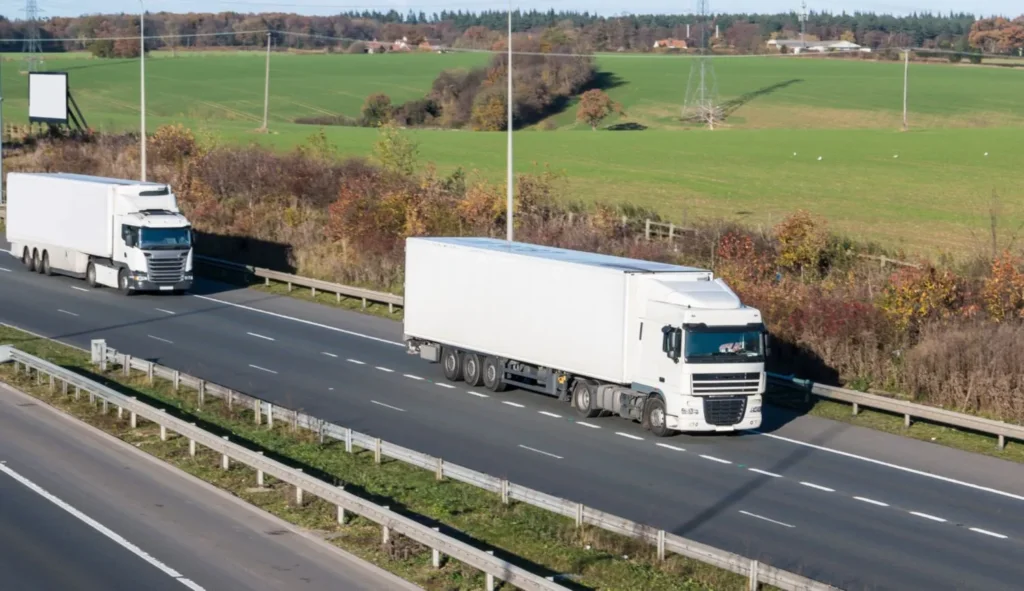
Sunhill Transport Ltd, a family-run haulier based in Deeside, went into administration on 21 May 2026, according to Companies House records. Patrick Alexander Lannagan and Conrad Alexander Pearson of Forvis Mazars have been appointed as administrators.
The company, which was established in 1972, specialised in steel transport and was based in Deeside, with its registered office in Shropshire. Insider Media reported that the business had ceased trading and that around 32 employees had been made redundant.
According to the report, Sunhill Transport had seen a number of years of growth, but recent substantial increases in fuel prices caused the business to suffer losses and cash-flow problems.
Conrad Pearson of Forvis Mazars said the administrators were sorry to see a family-established business cease trading after 50 years, having passed across two generations of the family. He added that, once the director concluded the business was no longer viable, administrators were appointed quickly to prevent the position for creditors worsening.
The case comes as UK hauliers continue to warn that operating costs are putting pressure on already tight margins. The Road Haulage Association said earlier this month that only 39% of operators surveyed were confident of surviving rising fuel prices, and has called for an Essential User Rebate to reduce the cost of moving goods.
The RHA has also said the total cost of operating an HGV has risen by 6% over the past 12 months, following a 10% increase from 2023 to 2024. According to the association, 469 hauliers filed for insolvency in the UK in 2024, a 60% increase on pre-Covid figures.
A live administration tracker for the transport and logistics sector lists 30 UK transport and logistics companies as having entered administration so far in 2026, including three in June. The list includes road, rail, sea, air and warehousing businesses, so it does not represent haulage operators alone, but it shows that failures are continuing across the wider logistics market.
Sunhill Transport’s collapse follows other recent failures among family-run and regional haulage firms, where rising fuel costs, weak margins and cash-flow pressure have made it harder for smaller operators to absorb sudden cost increases.