Michał Pakulniewicz, Transportation Market Analyst at the European Road Transport Institute: Let me start with a very general look at the market situation. In Poland and Germany as well as many other countries, freight activity has remained relatively flat in the course of this year. How is the Danish road transport market performing in 2026?
Erik Ostergaard, CEO of Danish Transport and Logistics Association (DTL): In general, the Danish market is doing quite well. It is not growing at spectacular rates, but it is still growing, and we can see that in traffic statistics. The Danish economy is also performing relatively well, so there is a fair amount of economic activity supporting the transport market.
Of course, costs remain a concern. Fuel prices have increased as a consequence of developments in the Middle East, but most Danish hauliers have some form of fuel adjustment clause in their contracts. That means that, to a large extent, higher fuel costs have been passed on to and reimbursed by their customers (shippers – editor’s note).
Another major cost factor is the kilometre-based road taxation scheme introduced on January 1, 2025. Once fully implemented, it will cost approximately euro 0.20 per kilometre. Here too, the impression is that shippers and forwarders generally understand that these additional costs cannot simply remain with the haulier and have to be passed further along the supply chain.
DTL strongly opposed the new road toll. Why?
Primarily because it is a very expensive way of collecting tax. The debate about kilometre-based road taxation in Denmark goes back almost two decades. The first serious discussions started around 2007. Different governments considered it, dropped it and later returned to the idea. In 2013, one of the reasons for abandoning the proposal was precisely that the system was considered too expensive in relation to the net revenue it would generate. There were also concerns about its impact on more remote parts of Denmark. Eventually, however, there was broad political support in Parliament and the scheme was adopted.
Our alternative proposal was much simpler: increase the existing fuel and diesel taxes. With relatively small increases, the state could raise comparable revenue through an infrastructure that already exists. Fuel taxation is cheap to administer — the collection costs are below 1%.
The road toll is very different. According to the government’s own calculations, it places a gross burden in 2028 of around DKK 3.7 bn (euro 494.9 mn) on the society, while the net fiscal effect is only around DKK 1.2 bn (euro 160.5mn). That is because when one tax increases, there are feedback effects elsewhere in the economy and some other tax revenues decline. From our perspective, putting DKK 3.7 bn of additional cost into the economy to generate DKK 1.2 bn in net revenue is not an efficient way of doing things.
The government rejected higher fuel taxes partly on the argument that they would also affect petrol motorists and therefore consumers. But consumers are affected by the road toll too. Transport costs are built into the price of food, consumer goods and almost everything people buy. So in the end consumers are still paying.
The difference is that this system is much more administratively burdensome, and those costs are then transferred through the supply chain. There is also a potential impact on the competitiveness of Danish exporters. Not to mention that this has been introduced at a time when inflation has already been a major concern.
Despite the industry’s opposition, Danish hauliers seem to have been relatively successful in passing the toll on their clients. Why?
That is also my impression. One important factor was the amount of public debate before the scheme came into force. DTL and the industry were very active, there was a lot of media coverage and there was strong opposition from hauliers. As a result, there was broad awareness in society that road freight costs were going to increase.
Even the Minister of Transport and the Minister of Taxation publicly said that hauliers were not supposed to absorb the tax themselves. In practical terms, hauliers became tax collectors: they pay the road toll and then pass that additional cost to the next party in the supply chain.
We do not have firm data on the resulting increase in freight rates, so I would be careful about giving a precise number. But anecdotally, I have heard about increases in the region of roughly 8–12%. Ultimately, of course, part of that increase will be reflected in the prices paid by consumers.
One of the government’s arguments for introducing the toll was that it would accelerate the green transition. Has it actually pushed Danish hauliers towards electric trucks?
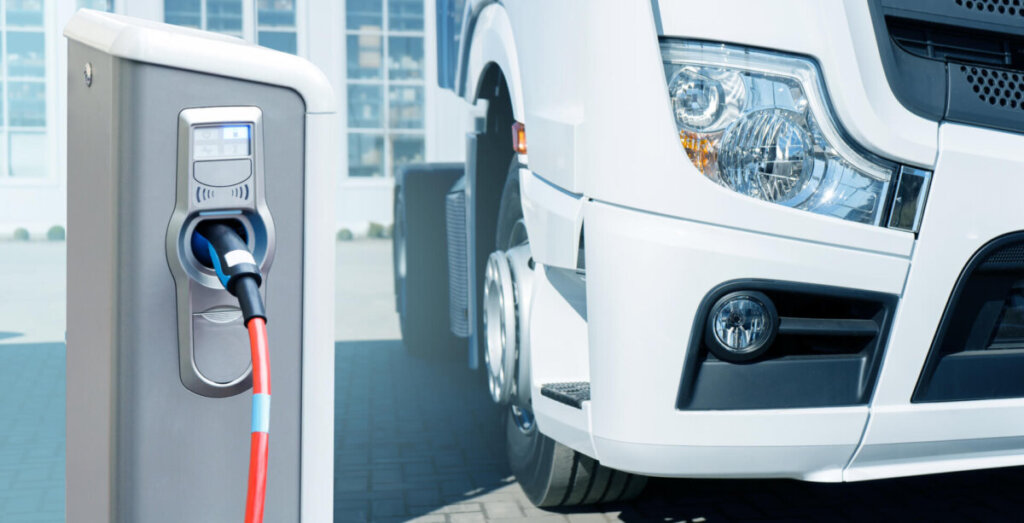
Only to a limited extent so far. When the government introduced the system, it argued that the purpose was to encourage the transition of heavy-duty vehicles towards electric propulsion. Our answer at the time was: that objective is fine, but if you want to force the transition now, where is the charging infrastructure? When the toll was introduced, I believe there were only two places in Denmark where a truck could be charged. Clearly, you cannot base the electrification of an entire heavy-duty fleet on that. The situation is gradually improving, and some hauliers are moving towards electric vehicles where the business case works and where electric trucks fit their operational patterns.
But infrastructure remains a major constraint. Public charging infrastructure is expected to cover only around 10–15% of the total charging needs of heavy-duty vehicles. The remaining 85–90% will have to be handled primarily at hauliers’ own depots, usually overnight.
That means companies need to install charging infrastructure at their premises, and we are hearing about lead times of up to two or even two and a half years. So the fundamental problem is that taxation was introduced before the infrastructure required to support the transition was fully available. And additionally, it is the hauliers who have to bear a significant part of the infrastructure expenses anyway.
Nevertheless, electric trucks now account for around 4.7% of the Danish heavy-duty fleet, while their share of new registrations is considerably higher. Does that not suggest the policy is working?
Yes, it does show that the transition is gaining momentum. But it is important to distinguish between the share of electric trucks in the total fleet and their share of new registrations.
Electric vehicles now account for around 4.7% of Denmark’s heavy-duty fleet, compared with roughly 2% a year earlier, so the increase is already visible. It has moved up, but these are still relatively small figures and until most electric truck are smaller ones – many of them of only 4.25 tonnes of gross vehicle weight.
At the same time, their share of new registrations has been considerably higher, reaching double digits in several quarters of 2025. That suggests the overall share of electric trucks in the fleet will continue to rise as more new vehicles enter service. So there is clearly movement in the market, even if the total fleet share remains relatively low.
Would you say the growth in Denmark’s electric truck fleet is being driven primarily by the significant toll discounts available for zero-emission vehicles?
Electric trucks pay only around 13% of the road tax paid by comparable non-electric vehicles. There are also other substantial economic incentives. In addition, the government has introduced subsidy schemes both for purchasing electric trucks and for installing charging infrastructure at depots.
Altogether, approximately DKK 579mn (2024-2026) (euro 77mn) has been allocated through different subsidy programmes. The first funding round was exhausted extremely quickly — essentially within around 15 minutes.
But the interesting development now is that around one-third of companies whose projects were approved are subsequently withdrawing. That tells us that there is a certain wait-and-see attitude among hauliers. They may have secured the subsidy, but once they look at the investment in detail, they are still uncertain whether this is the right moment to proceed.
That is quite interesting. What is making them hesitate?
There are two major areas of uncertainty: infrastructure and technology. First, there are problems with the electricity grid. The national grid company has fallen behind with the renewal and reinforcement of the grid infrastructure. Demand for new connections has significantly exceeded available capacity.
At one point, this led to a temporary moratorium in investments while the authorities assessed the situation. The government has since introduced a priority system for access to electricity, and trucks and hauliers have been placed in the highest-priority categories.
That is partly because we argued very strongly that you cannot impose a tax on hauliers, and effectively on the society as a whole, in order to accelerate electrification while simultaneously being unable to provide them with sufficient electricity. So the government is now prioritising this sector, which is positive. But the underlying grid constraints have not disappeared.
The second issue is the pace of technological development. The ranges for many electric trucks currently available are somewhere around 350–400 kilometres on a full charge. At the same time, manufacturers, such as Volvo and some Chinese firms are already announcing future models with ranges approaching 900 or even 1,000 kilometres.
That creates a very difficult investment decision. A haulier may ask: why should I buy a truck today with a range of 350 or 400 kilometres if, within a few years, vehicles may be available that can travel twice as far or more? And if I buy today, what will the resale value of that truck be once the next generation arrives?
So there is a combination of technological uncertainty and uncertainty about access to grid capacity. From my perspective, the policy is effectively penalising hauliers before the necessary infrastructure and technology are fully mature.
Nevertheless the figures you cited show that electrification is proceeding fairly rapidly…
Well, yes, definitely. But if you look deep into the matter, behind the general figures, you can see that electrification has been quite uneven depending on market segments. The first movers are generally those operating in very predictable environments. A significant proportion of the trucks electrified so far are used in recycling and refuse collection. These vehicles usually operate in cities, cover relatively short distances and make frequent stops.
City distribution is another obvious segment. Smaller commercial vehicles are also likely to electrify relatively quickly because they are easier to integrate into the existing charging ecosystem.
Another attractive model is fixed point A-to-point B transport. If a haulier has a long-term contract with one customer and repeatedly drives between two known locations, electric transport is much easier to organise. Charging can potentially be arranged at both ends, the daily mileage is predictable and the operator knows exactly how much range is needed. That can also create a commercial advantage because both the haulier and the customer can demonstrate a lower-CO2 transport operation.
The much bigger challenge is the part of the fleet where the operator does not know today where the truck will be driving tomorrow. For those trucks, you need a much denser and more flexible public charging network. Denmark currently has around 2,200 places where trucks can refuel with diesel. We are still a very long way from having a comparable level of flexibility for electric heavy-duty vehicles. Until we get closer to that, electrification will remain difficult for highly variable transport operations, especially for international transport.
Denmark is geographically small, so one might expect current electric-truck ranges to be sufficient for much of the domestic market. Why is range still such an important barrier?
Because range is only one part of the equation. Productivity is just as important. Take a conventional diesel truck with a 600-litre tank. At roughly three kilometres per litre, it can travel around 1,800 kilometres on one tank. Refuelling 600 litres takes perhaps ten minutes. That fits relatively easily into a driver’s working day, which is important because driving and rest times are strictly regulated.
Now take an electric truck with a real-world range of 350–400 kilometres. Depending on the operation, it may have to charge once or twice during the day. Each charging stop may take an hour, perhaps longer, and if the infrastructure is busy the driver may also have to wait for access to a charger. That time is not free. It reduces productivity and becomes part of the economic calculation.
So even in a relatively small country such as Denmark, many hauliers will remain cautious as long as the range is limited and charging takes significantly longer than diesel refueling. The issue is not simply whether the truck can physically complete the route; it is whether it can do so efficiently enough to make economic sense.
From 2027, the Danish toll will also be extended to smaller trucks and a much larger part of the road network. Do you expect another major cost shock?
The scheme currently applies to trucks above 12 tonnes, but from next year it will be extended to vehicles above 3.5 tonnes. At the same time, its geographical scope will also increase significantly. When the system was launched, around 10,000 kilometres of roads were covered. Once it is fully implemented, more or less the entire Danish road network will be included — around 75,000 kilometres.
That will obviously increase costs for both the larger and smaller operators. However, if I had to predict what will happen, I would expect a similar pattern to what we saw with the original introduction. The transition will probably be relatively smooth in commercial terms, because smaller hauliers should also be able to pass the additional cost on to their customers rather than absorb it entirely themselves.