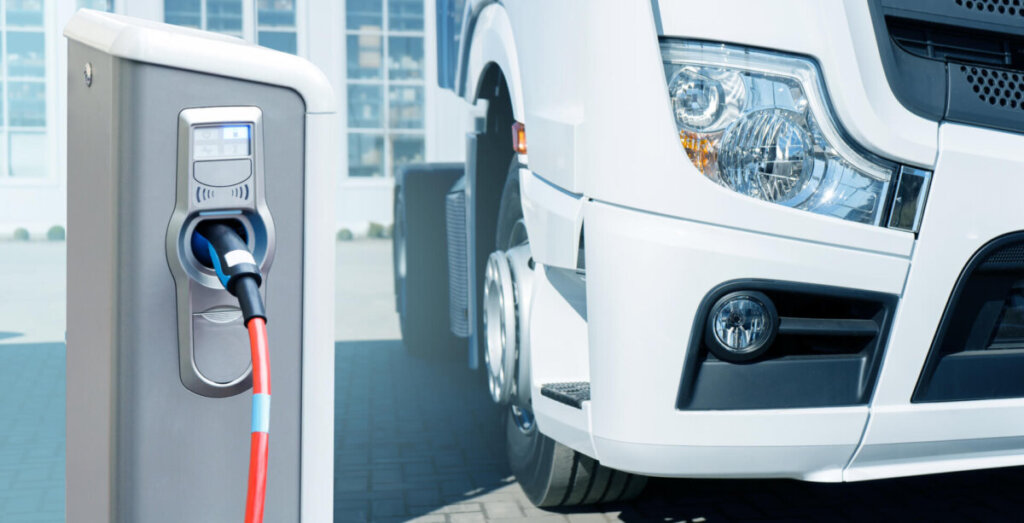
Europe’s truck market returned to growth in the first quarter of 2026, but the recovery was driven far more by diesel than by electric trucks. ACEA’s latest registration data shows diesel truck registrations in the EU increased by more than 7,400 units year on year, while electrically-chargeable trucks added just over 1,000 units.
New EU truck registrations over 3.5 tonnes rose by 10.7% to 81,766 units in Q1 2026, according to the European Automobile Manufacturers’ Association. The recovery was led by heavy trucks over 16 tonnes, where registrations increased by 12.6%, while medium-truck registrations rose by only 0.7%.
But the powertrain breakdown shows that the rebound is still overwhelmingly diesel-led. Diesel trucks accounted for 75,526 new EU registrations in the first quarter, up from 68,054 a year earlier. Electrically chargeable trucks, including battery-electric and plug-in hybrid vehicles, rose from 2,568 to 3,599 units.
That means diesel registrations increased by 7,472 units, while electrically-chargeable truck registrations increased by 1,031 units. In absolute terms, diesel added more than seven times as many trucks as electric and plug-in hybrid models.
Diesel still represented 92.4% of the EU truck market in Q1 2026. Electrically-chargeable trucks rose to 4.4%, up from 3.5% a year earlier, according to ACEA.
Heavy trucks: the freight-relevant segment remains almost entirely diesel
The increase was strongest in the heavy-truck category, which is most relevant for long-distance and high-volume freight. EU registrations of trucks over 16 tonnes rose from 61,803 to 69,608 units. Diesel registrations in this category rose from 57,980 to 65,595 units.
Electrically-chargeable heavy trucks grew strongly in percentage terms, rising 80.6% from 899 to 1,624 units. However, they still accounted for only 2.3% of new heavy-truck registrations in the EU. Diesel still made up around 94.2% of the heavy-truck market.
| Market | Heavy trucks Q1 2026 | Q1 2025 | Change | Diesel Q1 2026 | Diesel change | ECV Q1 2026 | ECV change |
|---|---|---|---|---|---|---|---|
| EU | 69,608 | 61,803 | +12.6% | 65,595 | +13.1% | 1,624 | +80.6% |
| UK | 9,083 | 9,152 | -0.8% | 8,858 | +1.3% | 86 | +41.0% |
| Germany | 13,601 | 12,244 | +11.1% | 12,807 | +8.7% | 497 | +93.4% |
| France | 9,339 | 9,588 | -2.6% | 8,447 | +1.7% | 262 | +14.9% |
| Spain | 6,998 | 5,895 | +18.7% | 6,866 | +21.0% | 14 | -46.2% |
| Italy | 6,384 | 5,903 | +8.1% | 6,311 | +9.4% | 20 | +66.7% |
| Poland | 7,725 | 5,768 | +33.9% | 7,642 | +33.8% | 7 | -22.2% |
Source: ACEA, New heavy truck registrations, Q1 2026. Electrically-chargeable vehicles (ECV) include battery-electric and plug-in hybrid trucks.
Total truck registrations over 3.5 tonnes: diesel drives the rebound
The broader truck table confirms the same pattern. The EU market added 7,893 trucks over 3.5 tonnes compared with Q1 2025. Diesel alone added 7,472 units, while electrically-chargeable trucks added 1,031 units.
| Market | Total trucks Q1 2026 | Q1 2025 | Change | Diesel Q1 2026 | Diesel change | ECV Q1 2026 | ECV change |
|---|---|---|---|---|---|---|---|
| EU | 81,766 | 73,873 | +10.7% | 75,526 | +11.0% | 3,599 | +40.1% |
| UK | 13,604 | 12,522 | +8.6% | 12,651 | +10.5% | 813 | +12.6% |
| Germany | 18,810 | 17,599 | +6.9% | 17,120 | +3.7% | 1,387 | +58.9% |
| France | 11,185 | 11,343 | -1.4% | 9,922 | +1.7% | 552 | +66.3% |
| Spain | 8,231 | 7,030 | +17.1% | 7,962 | +19.0% | 89 | -11.9% |
| Italy | 7,549 | 7,085 | +6.5% | 7,342 | +7.9% | 118 | -18.6% |
| Poland | 8,397 | 6,321 | +32.8% | 8,264 | +32.3% | 49 | +81.5% |
Source: ACEA, Total new truck registrations, Q1 2026. The category covers medium and heavy commercial vehicles over 3.5 tonnes.
Germany leads electric volumes, but diesel still dominates
Germany remained the largest truck market among the main European economies covered in the data. Total truck registrations rose 6.9% from 17,599 to 18,810 units. Electrically-chargeable truck registrations increased sharply, up 58.9% to 1,387 units, the highest electric and plug-in truck volume among the major markets listed.
However, diesel still accounted for the overwhelming majority of new German trucks. Diesel registrations rose 3.7% to 17,120 units, giving diesel a market share of around 91%. In heavy trucks over 16 tonnes, Germany recorded 13,601 registrations, of which 12,807 were diesel and 497 were electrically-chargeable.
France: total market down, electric up
France showed a different pattern. Total truck registrations fell 1.4% from 11,343 to 11,185 units, making it the only major EU truck market in ACEA’s summary to record a decline.
Yet both diesel and electrically-chargeable truck registrations increased. Diesel registrations rose 1.7% to 9,922 units, while electrically-chargeable trucks increased 66.3% from 332 to 552 units. The fall in the French market was mainly linked to the “others” category, which dropped from 1,259 to 711 units.
Spain: strong rebound, but electric registrations fall
Spain posted one of the strongest total increases among the major markets. Truck registrations rose 17.1% from 7,030 to 8,231 units. But the increase was almost entirely diesel-led. Diesel registrations rose 19% to 7,962 units, while electrically-chargeable truck registrations fell 11.9% from 101 to 89 units.
This left electrically-chargeable trucks with a market share of only around 1.1% in Spain. In the heavy-truck segment, the picture was even more diesel-heavy: only 14 of Spain’s 6,998 new trucks over 16 tonnes were electrically-chargeable.
Italy: electric truck registrations fall despite market growth
Italy also recorded growth in total truck registrations, but not in electric and plug-in trucks. Total registrations rose 6.5% to 7,549 units. Diesel registrations increased 7.9% to 7,342 units.
Electrically-chargeable truck registrations fell 18.6% from 145 to 118 units. In the heavy-truck segment, Italy registered 6,384 vehicles, but only 20 were electrically-chargeable.
Poland: the sharpest rebound, but almost entirely diesel
Poland recorded the strongest growth among the major EU truck markets in ACEA’s summary. Total truck registrations jumped 32.8% from 6,321 to 8,397 units. Diesel registrations rose 32.3% to 8,264 units.
Electrically-chargeable registrations increased 81.5% but from a very low base: from 27 to 49 units. This means electrically-chargeable trucks represented only around 0.6% of the Polish truck market in Q1 2026. In heavy trucks over 16 tonnes, Poland registered only seven electrically-chargeable vehicles.
UK truck registrations rise, with diesel doing most of the work
The UK, listed separately from the EU and EFTA in ACEA’s data, also recorded growth in the broader truck category. New truck registrations over 3.5 tonnes rose 8.6% from 12,522 to 13,604 units. Diesel registrations increased 10.5% to 12,651 units.
Electrically-chargeable truck registrations rose 12.6% to 813 units, giving them a share of around 6%. However, the heavy-truck segment moved in the opposite direction: UK registrations of trucks over 16 tonnes fell 0.8% to 9,083 units.
The electric growth headline hides a fragmented market
ACEA’s headline figure of 40.1% growth for electrically-chargeable trucks in the EU suggests rapid progress. The country data shows a more uneven picture: Germany and France delivered much of the increase, while Spain and Italy went backwards in the broader truck category and Poland remained tiny in absolute terms.
| Market | Total ECV trucks Q1 2026 | Q1 2025 | Unit change | Heavy ECV trucks Q1 2026 | Q1 2025 | Unit change |
|---|---|---|---|---|---|---|
| EU | 3,599 | 2,568 | +1,031 | 1,624 | 899 | +725 |
| UK | 813 | 722 | +91 | 86 | 61 | +25 |
| Germany | 1,387 | 873 | +514 | 497 | 257 | +240 |
| France | 552 | 332 | +220 | 262 | 228 | +34 |
| Spain | 89 | 101 | -12 | 14 | 26 | -12 |
| Italy | 118 | 145 | -27 | 20 | 12 | +8 |
| Poland | 49 | 27 | +22 | 7 | 9 | -2 |
Source: ACEA, Total new truck registrations and New heavy truck registrations, Q1 2026. ECV includes battery-electric and plug-in hybrid trucks.
The heavy-truck data also shows that the segment most important to long-distance road freight remains much further behind the broader truck market. Electrically-chargeable vehicles accounted for 4.4% of all EU truck registrations over 3.5 tonnes, but only 2.3% of heavy trucks over 16 tonnes.
ACEA said overall uptake of electrically-chargeable commercial vehicles is still constrained by “insufficient enabling conditions”. The registration figures show where that constraint is most visible: not in the percentage growth rates, but in the small number of electric and plug-in trucks entering the fleet compared with diesel.