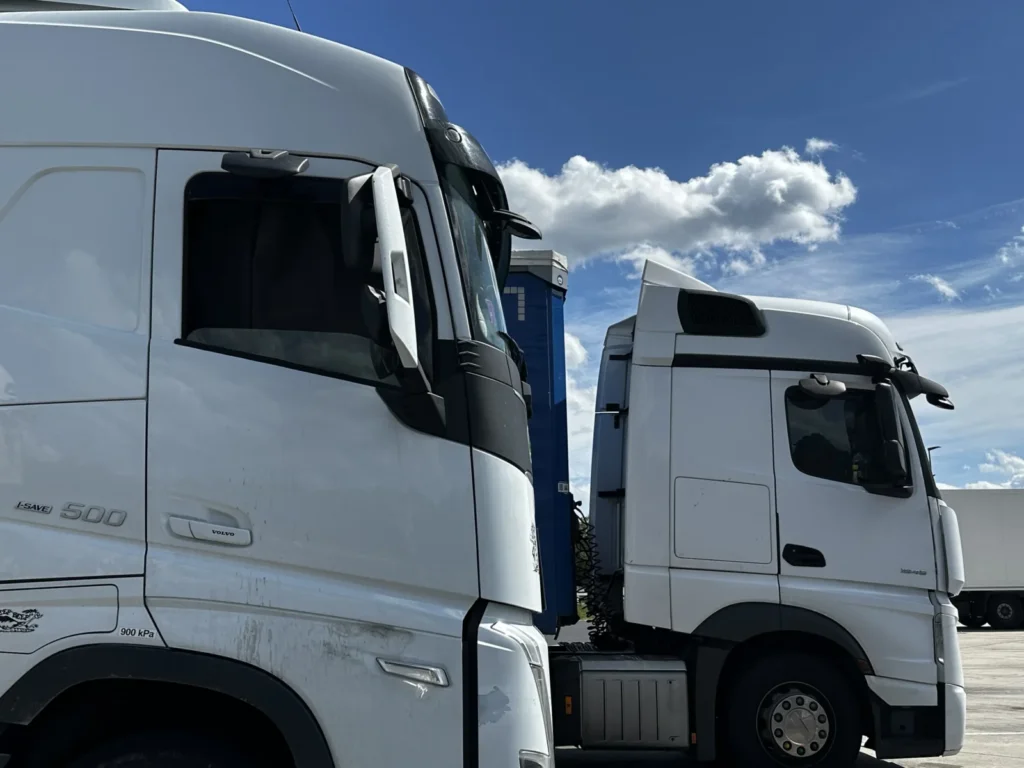
The problem is no longer limited to isolated incidents. More and more often it is organized, and the scale of losses is measured in thousands of liters and tens of thousands of euros. Recent examples from Germany and Austria show that thieves act quickly, methodically, and with little fear of being caught.
Germany: fast hits and precise execution
In Upper Franconia, police are recording a clear increase in fuel theft, especially from trucks and construction machinery. Tanks are deliberately targeted and drained, and the perpetrators follow a repeatable pattern.
As the authorities emphasize, thieves drive up in their own vehicles to parked trucks and then pump the fuel directly into their own tanks and quickly drive off. The whole operation takes little time and often goes unnoticed. Police remind that fuel theft is a criminal offense in Germany. Depending on the method used—for example, forcing open the tank—the offense may be classified as aggravated theft. In such cases, prison sentences of three months to five years may apply.
Austria: theft on an industrial scale
An even more spectacular case was uncovered in Austria, where the scheme was internal and organized. In Neuzeug, five employees of a construction company for months systematically stole fuel from the company’s trucks. The scale is enormous—altogether around 18,000 liters of diesel from four vehicles. According to the company owner, from each vehicle 80 to 100 liters of fuel were disappearing every day.
Findings show that the stolen diesel was then used and sold on. In one case in Hörsching, within two hours as many as 25 cars were refueled with it, as if at a regular gas station.
Police caught the suspects in the act. Some of them admitted guilt. The case concerns activity as part of an organized criminal group and profit-driven theft.
Carriers caught between losses and helplessness
Fuel theft is not new, but its scale is growing. Industry data and accounts show that losses are measured in thousands of liters per year, and companies increasingly feel left to fend for themselves.
Another problem is limited protection effectiveness. Insurance does not cover the fuel itself, only damage to tanks or security devices. In addition, some business owners stop reporting thefts, considering it a waste of time.
How to reduce the risk of fuel theft?
Although eliminating the threat completely may prove impossible, industry experience points to solutions that can genuinely make it harder for thieves to operate:
- anti-siphon mesh – prevents fuel from being siphoned from the tank,
- reinforced locking caps – much harder to force,
- filler neck locks and covers – physically restrict access to the fuel,
- alarm systems and fuel level sensors – alert you to an attempted theft,
- telematics monitoring – allows you to track fuel level in real time,
- security seals – make tampering easier to detect.
Everyday operational practices are just as important. Parking in well-lit areas, positioning the filler cap against a wall or close to another vehicle, and choosing secured parking lots can extend the time needed to steal fuel and effectively deter perpetrators.
With transport costs rising, diesel is no longer just fuel—it is becoming a strategic resource that increasingly requires protection comparable to the carried load.