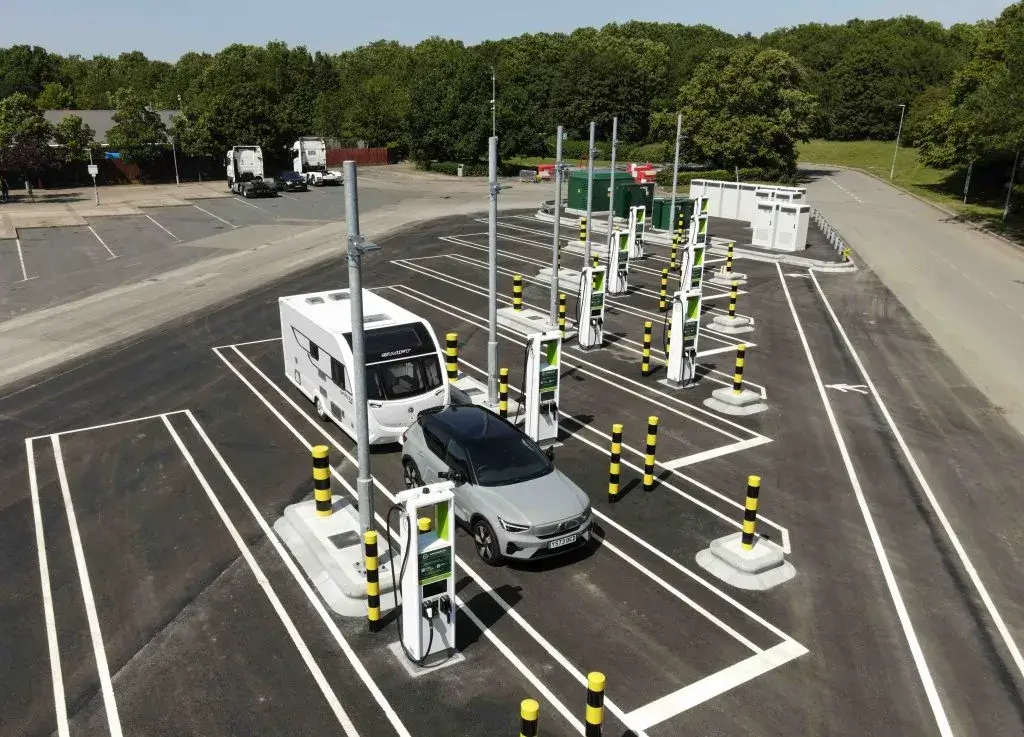
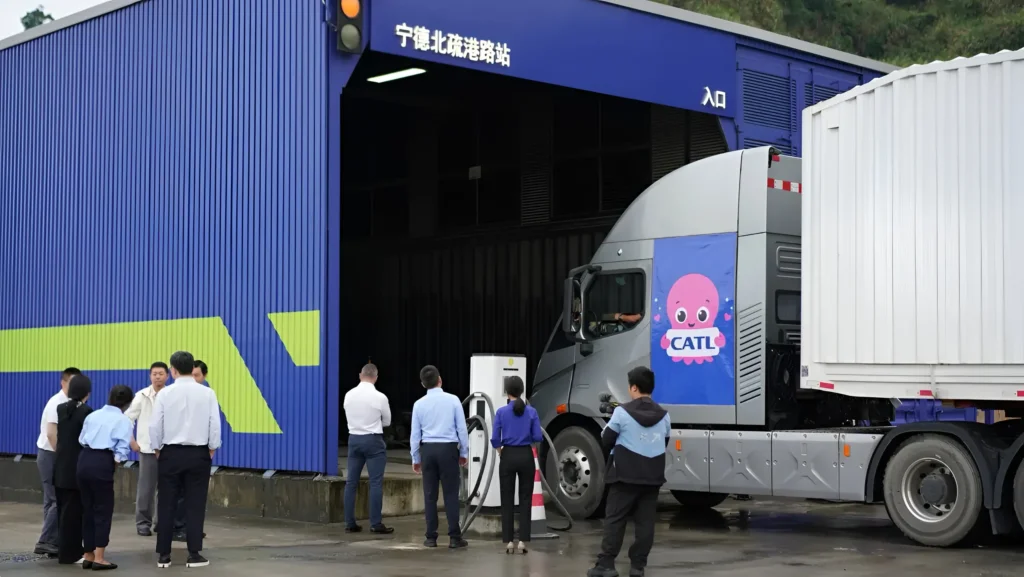
One of the awkward economics of moving heavy goods vehicles to battery-electric power is that charging infrastructure often has to arrive before the vehicles do.
Operators may need substantial grid connections and high-power chargers to support future electric HGV fleets, while initially having only a handful of trucks available to use them. Voltempo argues that opening spare depot capacity to third-party electric van fleets could help bridge that utilisation gap.
Under its DepotCharge model, operators can make unused charging capacity available to registered third-party fleets while retaining control over who is allowed onto the site and when.
The company says this could generate revenue from infrastructure being installed primarily for electric trucks, before enough eHGVs are operating to use the chargers intensively.
Electric van numbers continue to rise
Voltempo’s argument comes as the number of battery-electric vans on UK roads continues to increase.
Latest Society of Motor Manufacturers and Traders data show that 20,248 battery-electric vans weighing below 3.5 tonnes were registered between January and August 2026, 23.7% more than during the same period last year.
Including battery-electric rigids between 3.5 and 4.25 tonnes, total electric LCV registrations reached 22,527, up 26.2% year on year.
Electric vans nevertheless remain a relatively small part of the overall market. Battery-electric vehicles below 3.5 tonnes accounted for 9.9% of registrations during the first eight months of the year, despite the UK’s 2026 zero-emission vehicle mandate setting a considerably higher target for manufacturers.
Voltempo sees those vehicles as a potential source of demand for depot charging, particularly where van drivers cannot install chargers at home because they lack off-street parking.
Simon Smith, chief executive of Voltempo, said electric vans could provide demand while the electric truck market develops.
“Electric vans can help us break that cycle,” Smith said, adding that using existing charging demand could allow truck-ready infrastructure to be built before large-scale eHGV adoption.
Charging around trucks rather than instead of them
The proposition does not mean handing over truck charging capacity indiscriminately. Voltempo says fleet operators would control access to their depots, while its energy-management system could schedule charging according to available grid capacity and electricity prices.
Payments from visiting fleets can be processed through Corpay’s fleet-payment system, including Allstar Chargepass. In principle, that allows an operator to prioritise its own HGVs and sell capacity that would otherwise sit unused.
Whether the model works financially in practice will depend heavily on local demand, electricity costs, grid capacity and how often chargers are genuinely available between an operator’s own vehicle movements.
Voltempo has not, in the material accompanying the announcement, provided operating figures from an individual haulier showing how much revenue a depot has already generated from third-party van charging.
Building before electric truck demand arrives
The wider concern is that charging infrastructure could become a bottleneck if electric HGV uptake accelerates more quickly than expected.
Voltempo pointed to recent Carbon Tracker analysis forecasting that battery-electric heavy trucks could reach total-cost-of-ownership parity with diesel equivalents in Europe around 2030.
The charging company argues that infrastructure therefore needs to be installed ahead of that point rather than after demand begins accelerating.
For hauliers, using smaller commercial vehicles to increase utilisation offers one possible way of improving the investment case in the meantime.
As Smith put it, the aim is to have the charging capability already in place when electric truck volumes begin to grow, rather than having infrastructure “trying to catch up with demand”.