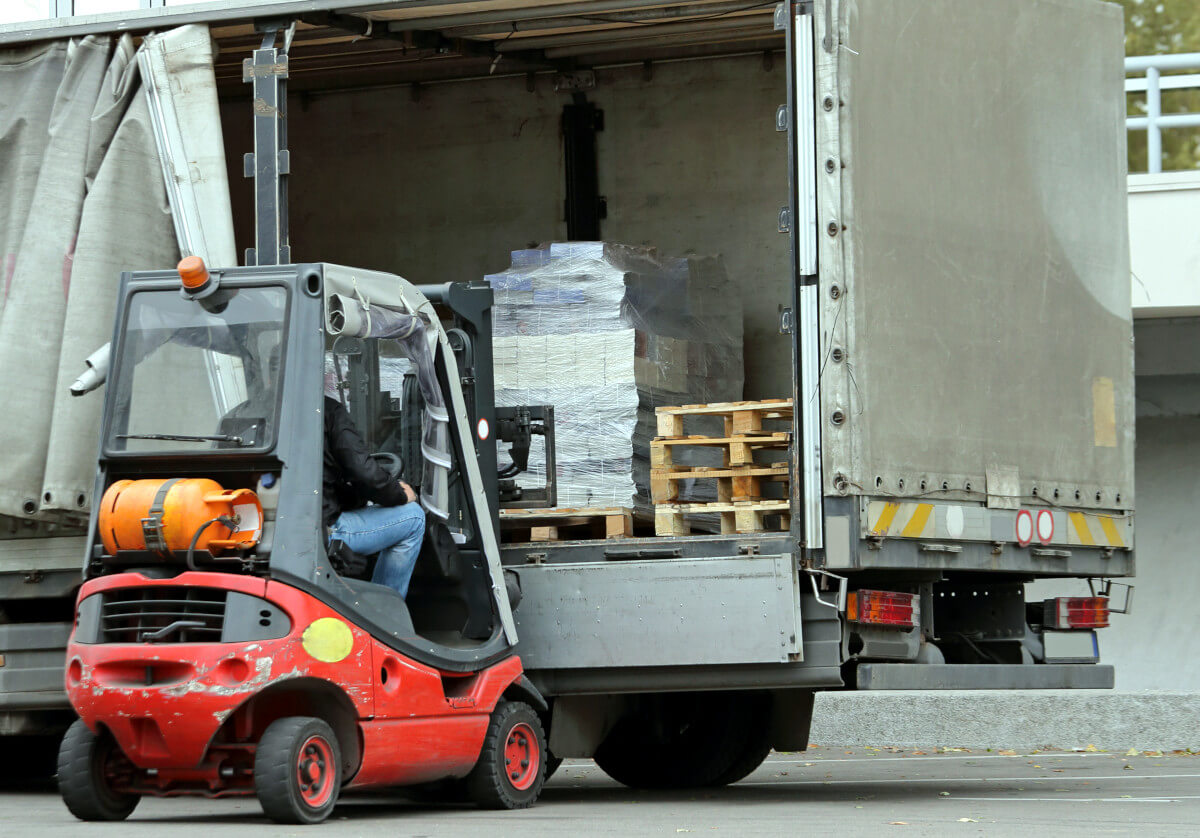

The case highlights how so-called fraudulent carriers operate — using forged documents and stolen identities to impersonate legitimate transport companies and take control of valuable freight. Investigators in Cologne are now working to establish the scale of the scheme and whether other businesses were targeted.
GPS signal led officers to the warehouse
Cologne police arrested three men on Thursday evening, aged 42, 43 and 50. They are suspected of misappropriating goods worth more than €200,000 that were due to be delivered to customers of a freight forwarder based in Remscheid. The company reported the matter to police two weeks earlier after a shipment valued at around €125,000 disappeared and did not reach its destination.
To determine whether the missing load was part of a repeat pattern, the forwarder placed a GPS transmitter in a subsequent shipment. When tracking data showed the truck travelling not to the agreed unloading point but to a warehouse on Industriestraße in Cologne’s Rodenkirchen district, the forwarder alerted police.
Officers attended the site and detained the three suspects.
Truck seized, along with more than 200 pallets of goods
During the operation, police secured the truck and more than 200 pallets of paper products, cosmetics and other items. According to investigators, the value of the recovered goods exceeds €200,000.
The investigation is continuing. Police are seeking to clarify how the fraud was carried out, identify any additional accomplices and establish whether there are further victims.
The trick: make the theft look like a normal collection
Cologne police said the suspects appeared to have followed a common method associated with fraudulent carriers.
The approach typically involves posing as a legitimate haulier using convincing paperwork and stolen identities. This is why verification procedures used by transport platforms — as well as checks carried out by shippers, forwarders and warehouses — are critical. When documentation appears credible, warehouse staff may release freight without suspicion. The load is then diverted and the consignee never receives it.
Such groups typically target high-value goods, including consumer electronics and other fast-moving consumer products.
How to reduce the risk of fraud
The Cologne police investigation is ongoing. Officers are checking whether the detainees are linked to other cargo thefts and whether further suspects — as well as additional affected businesses — will emerge.
In this case, the turning point was the forwarder’s response after the earlier loss: the company fitted the next shipment with a GPS tracker. The tracking data led police to the warehouse, where the goods were secured and three suspects were detained.
How can you vet carriers before releasing a load, what red flags should you watch for, and which legal tools can help limit exposure to this kind of fraud? More in the trans.info article “How to spot fraudulent carriers and which legal tools can help?”