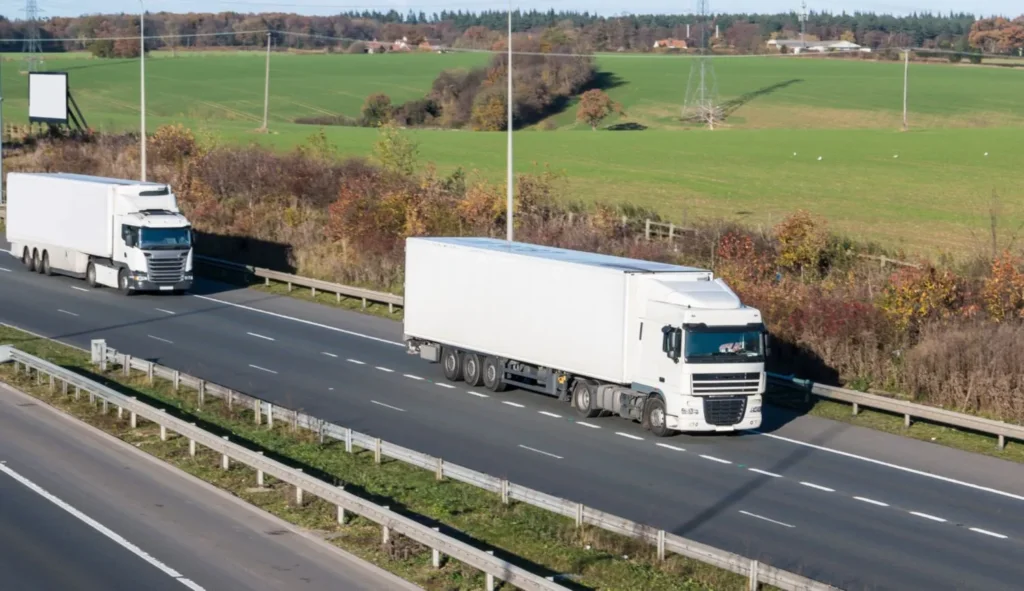
The situation is evolving rapidly and – as examples from Slovenia and Slovakia show – is starting to have a direct impact on how road transport operates in Europe.
Fuel limits are returning to Europe
The most visible effect of tensions linked to the conflict in Iran is administrative restrictions on fuel sales. Slovenia has decided to introduce daily refuelling limits. Private drivers can refuel up to 50 litres per day, while businesses can refuel up to 200 litres. The decision was taken in response to rising demand and disruptions to deliveries to stations.
Prime Minister Robert Golob stressed that the issue is not a lack of fuel in the country, but its distribution. Stocks remain at a safe level, but the logistics of deliveries to stations cannot keep up with the sharp rise in demand. The effects are plain to see: queues, closed stations and nervous reactions from drivers.
One of the key factors destabilising the market is so-called fuel tourism. In Slovenia, lower fuel prices have attracted drivers from neighbouring countries, further increasing pressure on stations. Mass refuelling by foreign drivers and stockpiling by local users have led to operational shortages, despite warehouses being formally full.
In response, the government announced:
- daily reporting of the situation by station operators,
- preparation of special procedures for drivers from abroad,
- logistics support from the military in the form of fuel tankers.
This shows that the problem is not only about prices, but also infrastructure and organisation.
Restrictions hit road transport
From the perspective of the TSL sector, refuelling limits have direct operational consequences.
Slovakia’s example shows the scale of the problem. The introduced refuelling limit of €400 per vehicle means in practice that:
for most trucks, it covers less than 20% of the tank capacity.
As a result, carriers:
- are forced to refuel abroad, often at higher prices,
- incur higher operating costs,
- lose competitiveness,
- have to stop more often to refuel, which affects delivery times.
The industry also warns of broader consequences: higher transport prices and, as a result, higher goods prices, as well as disruptions in supply chains.
Governments respond, but measures are temporary
Some countries are trying to mitigate the effects of the crisis through fiscal instruments. Italy has introduced temporary reductions in fuel excise duty and price control mechanisms to limit increases and counter speculation.
Financial support has also been prepared for the transport sector:
a special tax credit worth €100m, intended to offset the increase in diesel prices in the spring months of 2026.
At the same time, it is emphasised that these are short-term measures, and the situation remains unstable and dependent on how geopolitical events develop.
Our related coverage examines how the war in Iran is disrupting global supply chains and why its effects are already spreading from shipping lanes to European road freight.
Nearly €1 per litre apart: Europe splits on diesel prices as East acts and West waits
AdBlue prices soar as Middle East conflict threatens European supply chains (17 March 2026)
Hauliers with access to Slovenia and Czechia can now buy a cost advantage (17 March 2026)
UK diesel up nearly 20p, but government still won’t extend 5p duty cut beyond August (19 March 2026)
Irish hauliers pause protest threat after minister promises fuel supports (19 March 2026)
UK haulier faces £64,000 weekly diesel hit; how much support could it get abroad? (20 March 2026)