Ti projects growth will cool to 2.5% in 2026, with a compound annual growth rate of just 2.3% through to 2030. In nominal terms, the picture is even starker: the market barely moved in 2025, expanding by just 0.5% when exchange rates are held constant.
The IMF expects global GDP growth to slow to 3.1% this year, weighed down by Middle East conflict and associated energy shocks. The WTO is forecasting merchandise trade volume growth of just 1.9% in 2026, down from 4.6% in 2025. For freight forwarders, that kind of macro drag is hard to outrun.
Sea and air freight face different pressures
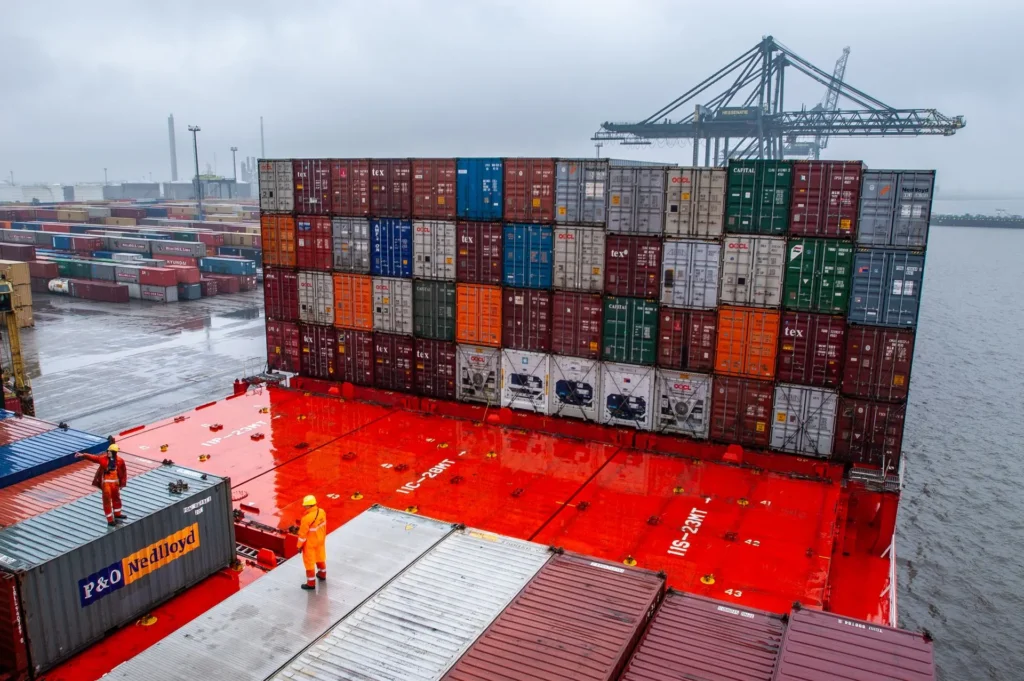
Ocean freight grew 4.6% in 2025, supported by e-commerce volumes, expanding international trade and demand for integrated multimodal transport. But the sector is now wrestling with historic overcapacity, a structural problem that geopolitical disruption has only partly masked by pushing some cargo onto longer routings and alternative corridors.
Ti forecasts sea freight forwarding will grow by 2.6% in 2026 and at a 2.9% CAGR through to 2030, making it the stronger of the two main forwarding segments over the period. Even so, margin pressure is likely to remain a defining feature of the market.
Air freight, meanwhile, posted 4.1% growth in 2025, boosted partly by shippers switching from sea as the price gap narrowed, and partly by Chinese e-commerce volumes and pre-tariff loading into the US.
The outlook for 2026 is more turbulent. Ti says the Middle East conflict that erupted in late February cut global air cargo capacity by 22%, with Asia-Europe capacity through the region down 39%. Forwarders have had to reroute and restructure at pace. Long-term, air freight forwarding is forecast to grow at a more modest 1.6% CAGR through to 2030.
Where freight flows are going next
Behind the headline numbers, a more fundamental shift is under way. Manufacturing capacity is moving from China to Vietnam, India, Indonesia and Mexico, a trend with clear implications for trade lane volumes and the networks forwarders have built around China-centric flows.
Add in the DSV-Schenker merger reshaping the competitive landscape at the top end, and the industry faces a rare combination of demand moderation, supply chain reconfiguration and consolidation pressure at the same time.
As DHL Global Forwarding’s Asia Pacific chief Niki Frank put it, 2026 will be “a year of very different realities for shippers depending on mode, geography and routing.”