The wider damage is much bigger than the value of the missing load. The All-Party Parliamentary Group on Freight and Logistics said there were 5,370 reported HGV and cargo crime incidents in 2023, up 5% year on year. It put the direct wholesale value of stolen goods at £68.3 million, but said NaVCIS estimated the true annual cost at £680–700 million once wider commercial impacts are counted. The RHA, meanwhile, says direct freight crime losses since 2020 have reached £306.8 million, while the total cost to the UK economy is likely above £1 billion.
For operators, that means freight crime is no longer just a security nuisance. It hits margins, knocks deliveries off course, pushes up premiums and leaves already stretched businesses dealing with the fallout long after the load has gone.
A broken system for tracking a growing threat
One of the industry’s biggest complaints is that freight crime is still not consistently recorded as a distinct offence. When a lorry-load theft worth hundreds of thousands of pounds is effectively logged in the same broad universe as ordinary vehicle theft, police forces struggle to identify hotspots, connect patterns and build a clear national picture of organised cargo crime. The Freight Crime Bill, sponsored by Rachel Taylor MP, was introduced specifically to address the recording and investigation of freight crime, according to the UK Parliament website. It was still listed there as of 25 February 2026.
There are signs of movement, but only signs. Logistics UK reported in December 2025 that the government had begun piloting a system allowing police to tag offences as “freight-crime” in national records. For hauliers, that matters because a dedicated flag should make it easier to spot trends, compare incidents across force boundaries and target enforcement more effectively. For the industry, the pilot is welcome — but long overdue.
Cargo thieves do not always need to break in any more
The old image of freight crime is a cut curtain, forced lock or stolen trailer. That still happens, but it is no longer the whole story. Aon warned on 17 March that strategic cargo theft is becoming more organised, more targeted and more deceptive, with losses increasingly shaped by fake instructions, fraudulent paperwork and disputed hand-offs across the supply chain.
In practical terms, that means a load can disappear without anyone smashing a padlock or slashing a trailer. If criminals can manipulate paperwork, impersonate a legitimate party or exploit a weak release procedure, the theft may start long before a vehicle is opened. For operators, physical security is no longer enough on its own. Document controls, release checks and subcontractor verification now matter just as much as locks, alarms and trackers. If there is a gap in the paperwork process, cargo thieves will look for it.
Drivers run out of hours, park where they can. And thieves know it
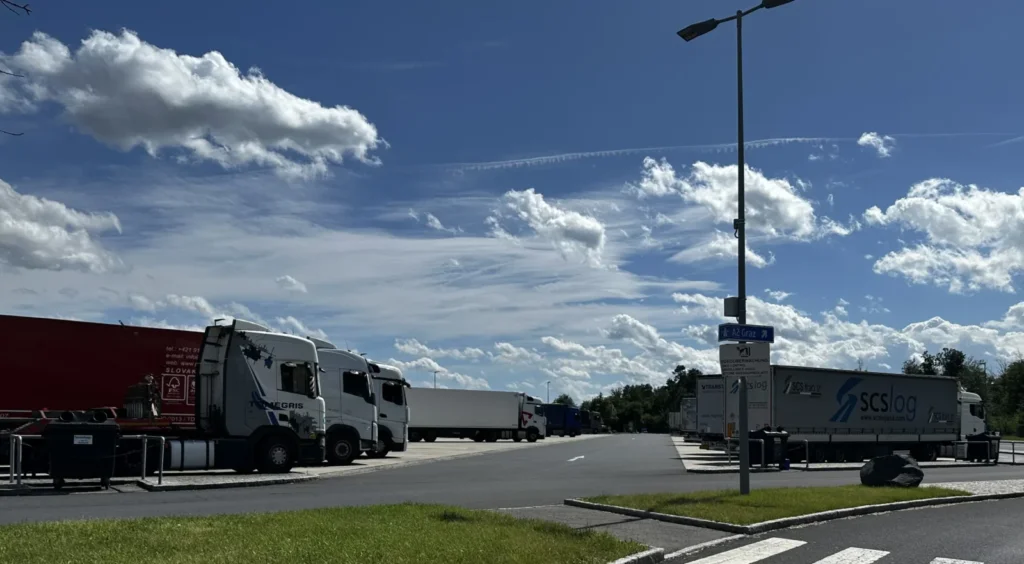
Parking remains one of the most painful weak points. NaVCIS has backed TT Club’s call for an urgent overhaul of lorry parking security across the UK, warning that too many loads are still being left exposed because drivers often have no realistic choice about where to stop.
The standards themselves are not the main problem. TT Club’s task-and-finish work points to three recognised frameworks already in use: Park Mark Freight, TAPA’s Parking Security Requirements and the EU’s Safe and Secure Truck Parking Areas standard. The real problem is that coverage is patchy, accreditation is not always clearly visible or easy to verify, and too many journeys still depend on whatever parking is available rather than what security requires.
That is why many in the sector see insecure parking as a system failure, not a driver failure. When a driver hits their legal hours limit, there may be no secure, accredited place within reach. In that situation, the load is exposed not because somebody was careless, but because the network left them with no good option. TT Club says 36% of European cargo theft incidents in its claims data happened where vehicles were parked in unofficial parking locations, with another 21% taking place in official parking locations.
The UK is not alone, and that should worry international operators
For hauliers running cross-Channel work, the problem does not stop at the UK border. TT Club and BSI reporting shows that Germany, the UK, Italy, Spain and France are among the European countries seeing the highest theft rates. Parked vehicles in unsecured rest areas and poorly secured warehouses remain prime targets, while more technologically sophisticated and deceptive thefts are also rising.
That matters because the same weak points keep appearing across multiple markets: insecure stopping places, fragmented intelligence, inconsistent reporting and organised gangs targeting loads that can be moved quickly and sold on fast. For UK operators on international routes, the threat does not begin at Dover and end at Calais. It follows the network.
Read more: Where in Italy are trucks most frequently robbed? New data reveals the scale of the threat
What this really costs a haulier
The stolen load is only the start of the damage. One incident can mean missed deliveries, customer disputes, downtime, higher premiums at renewal, recovery costs and real stress for the driver involved. If the theft also involves questionable paperwork or a disputed hand-off, the argument over who carries the loss can drag on long after the goods have gone. That is why cargo theft is increasingly being seen not just as a security problem, but as a liability problem too.
Hauliers and trade bodies keep coming back to the same basics: proper freight crime coding, stronger intelligence-sharing and more secure parking that drivers can actually use. None of that is especially radical. The frustration is that operators have been saying the same things for years while the losses keep climbing.
Until those basics are in place, organised cargo theft will remain exactly what criminals want it to be: profitable, low-risk and hard to stop.
To report freight crime or access industry guidance, contact NaVCIS at navcis.police.uk or speak to your trade association.