Key takeaways:
- Every hour a truck spends waiting creates €30 to €70 in fixed costs, excluding lost revenue.
- Appointment systems do not always shorten queues. Poor integration with transport operations and rigid time slots can make delays even longer.
- Artificial intelligence may reduce waiting times, but technology alone cannot replace effective warehouse operations.
Truck downtime can cost up to €70 per hour
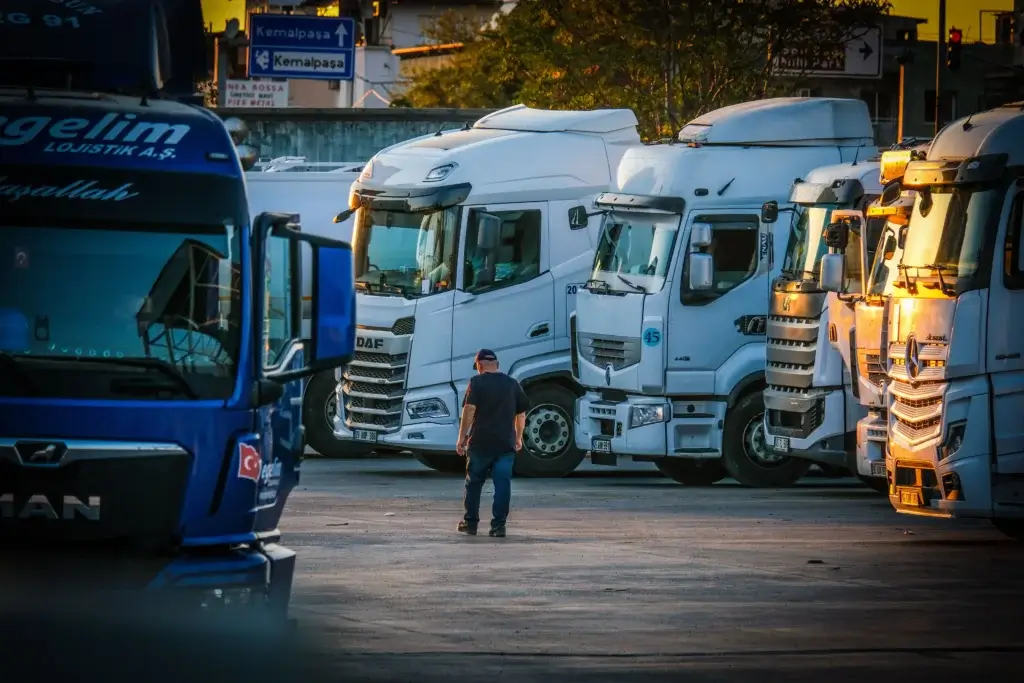
Waiting for loading or unloading remains one of the most expensive operational challenges in European road transport. Despite the growing use of TMS platforms, dock appointment portals and vehicle tracking, trucks still regularly spend several hours outside warehouses.
The Market Insights ON report for Q4 2026, prepared by CargoON, part of Trans.eu Group, suggests that the main obstacle is no longer a lack of digital tools. Instead, the bigger issue is insufficient coordination between carriers, warehouses, production teams and sales departments.
The total financial impact is difficult to measure precisely. The report’s authors note that there is no comprehensive study covering the entire European market. Available figures mainly come from individual companies and industry organisations.
According to the Stratton Institute, one hour of truck downtime in the European Union creates €30 to €70 in fixed costs. This estimate excludes variable expenses and the revenue lost when the vehicle cannot complete its next assignment.
The figures cited in the report indicate that the problem affects multiple markets. A 2022 Federtrasporti/Districò study found that trucks in Italy waited an average of 4.5 hours to be loaded or unloaded. Research by CargoON and Spain’s Centro Español de Logística, meanwhile, found that 70% of Spanish carriers waited more than one hour for service. The report does not specify the methodology used for that study.
Individual waits of up to 10 hours have also been reported in Poland, Lithuania and Romania. These examples should not be treated as market-wide averages.
Waiting costs ultimately reach the shipper
Long delays do not affect carriers alone. Over time, their financial consequences are also felt by manufacturers, warehouse operators and the customers receiving the goods. Łukasz Muzyka, product manager and technology systems expert at Trans.eu Group, says the risk of delays is reflected in transport rates.
If a consignee is known for making trucks wait several hours to unload, it will probably receive freight rates 12% to 25% higher in the next tender. Carriers are simply pricing in the risk, including the cost of equipment and driver time being tied up, he estimates.
Muzyka also estimates that a lack of control over dock service times can cost a manufacturing company between 1% and 3% of its annual revenue. There may also be penalties for missing the OTIF target (On Time In Full), which measures whether deliveries are made complete and on schedule. In relationships with retail chains, such penalties can amount to 1% to 5% of the order value.
As Muzyka points out, direct detention charges are only part of the damage. Delayed deliveries, weaker service-quality metrics and reputational damage among customers may prove more costly over time.
Why appointment systems fail to clear truck queues
One of the report’s most significant findings is the gap between the level of logistics digitisation and actual truck-handling efficiency. Wojciech Sokołowski, president of the Stratton Institute, a European transport analyst and former truck driver, identifies three main causes.
The first is poor system integration. Carriers use their own TMS platforms, while consignees often require them to register through separate appointment portals. Information frequently has to be entered manually, and a driver serving several customers may need to work across multiple systems.
The second problem is rigid appointment windows. If a truck is delayed by congestion, a roadside inspection or a late unloading operation earlier in the route, its slot may be lost. The driver can then be sent to the back of the queue because the system offers no practical way to move the booking.
The third issue is planning based on theoretical warehouse capacity rather than actual throughput.
If eight truck combinations arrive at 08:00 but the site can realistically handle only three, the rest will be waiting, Sokołowski says.
Other constraints include staff shortages, limited buffer space and delays in preparing the goods. A warehouse may have an available dock but still be unable to begin handling the vehicle because no forklift operator is available or the shipment is not ready.
13 docks, but only six operators: a Spanish case study
The difference between nominal and actual warehouse capacity is illustrated by Spanish food producer CAPSA Food. According to Adrián Fariña, the company’s transport director, CAPSA Food handles around 190 trucks a day from Monday to Friday across several warehouses.
At our main warehouses, the average loading process takes one hour and 40 minutes, from the truck’s arrival until its departure with the load. We use three-hour appointment windows, which allow us to organise vehicles according to distance and expected arrival time, Fariña says.
Even so, increasing throughput is not simply a matter of opening more docks. One CAPSA Food warehouse has 13 loading positions, but no more than six forklift operators can work there at the same time. Adding more staff would create interference in the manoeuvring area.
The example shows that actual site productivity depends not only on the number of docks, but also on available space, staffing levels and the way work is organised.
Italy pays for delays as Spain and Romania tighten the rules
Long waits are increasingly attracting the attention of lawmakers. The most far-reaching compensation rules have been introduced in Italy. Rules in force since July 2025 allow a 90-minute waiting period before loading or unloading must begin. Once that period is exceeded, the carrier is entitled to €100 for every hour of delay, or part of an hour, provided the delay was not caused by the carrier.
Exceeding the loading or unloading time agreed in the contract is treated separately. Compensation may also apply in that situation, without another 90-minute grace period.
In Italy, certain parties in the transport chain may also share liability for ensuring that the compensation is paid.
In Spain, a compensation system for excessive waiting has been in place since 2022. Once the first hour has elapsed and the statutory conditions are met, a carrier may claim compensation calculated at twice the daily IPREM rate. Based on the rate applicable in 2026, the basic amount is €40 per hour or part of an hour, subject to statutory calculation rules and caps.
Spanish law also restricts the assignment of loading and unloading work to drivers of vehicles with a gross vehicle weight above 7.5 tonnes, subject to specified exceptions.
Romania is the latest country to introduce new rules. Law No. 100/2026, in force from 24 July 2026, prohibits forcing drivers carrying out commercial transport with vehicles above 12.5 tonnes gross vehicle weight to load or unload goods. The legislation includes exceptions and financial penalties for violations.
Romania’s approach focuses primarily on liability for carrying out loading work rather than on establishing a general hourly compensation rate for waiting.
AI can help, but it cannot replace an efficient warehouse
The report identifies artificial intelligence as a possible next step in improving truck handling, particularly through dynamic management of appointment windows.
Traditional appointment systems assign vehicles to fixed slots. More advanced analytical tools can also take into account live road conditions, estimated arrival times, staff availability, dock utilisation and whether the goods are ready.
The report cites estimates published by Modern Materials Handling in 2023, suggesting that AI-supported planning can reduce truck waiting times by 15% to 25% and cut the cost of downtime by around 20%.
In one example, a logistics operator reduced the average wait from 95 to 72 minutes, or by roughly 24%.
A 2024 McKinsey analysis cited in the report points to the possibility of reducing costs linked to inefficient handovers between supply-chain participants by as much as 40% through a combination of real-time transport visibility, automation and AI-enabled communication.
These results cannot be expected at every warehouse. The effectiveness of any implementation depends on data quality, process design and the ability to respond quickly when operations change.
Łukasz Muzyka of Trans.eu Group stresses that tracking a vehicle’s location alone does not address the underlying cause of delays.
Vehicle tracking shows where the problem is, but it does not solve the problem, he says.
CargoON is developing a solution designed to analyse more than 40 logistics and warehouse parameters to support dock allocation and determine the order in which trucks are served. This remains a planned development, however, rather than a confirmed implementation result.
Not every warehouse needs AI
The report also points out that advanced algorithms are not always economically justified. At smaller sites handling regular routes and a limited number of deliveries, a well-configured appointment system integrated with the warehouse management system may be enough.
Advanced analytics offer greater potential at facilities handling more than 100 vehicles a day, where schedules change frequently and dock and staff availability is limited.
Experts also recommend simpler operational measures: plan appointment windows around actual throughput, create time buffers, prepare goods before the vehicle arrives and adjust warehouse staffing to match the busiest periods.
Integration between carrier and consignee systems is equally important. Automatically sharing estimated arrival times could allow a booking to be moved without requiring manual contact with the warehouse.
In practice, the number of available tools matters less than whether the information they generate actually changes how the operation is run.
Who should pay for waiting time?
The CargoON report highlights a fundamental issue: the cost of operational inefficiency is often borne by the supply-chain participant with the least control over its cause. A carrier may arrive exactly as scheduled and still lose several hours because the goods are not ready, the warehouse is understaffed or no dock is available.
For a transport company, that means losing productive driver and vehicle time. For a shipper, it can mean higher freight rates, less reliable deliveries and additional order-handling costs.
The Italian and Spanish models show that lawmakers can try to change who bears the financial responsibility for delays. Regulation alone, however, does not guarantee shorter queues.
Experts say the solution requires several measures working together: realistic capacity planning, integrated systems, flexible appointment management and clear rules for settling delay-related costs.

Source: Market Insights ON, Q4 2026, “Managing appointment windows, AI and the new economics of the warehouse yard”, CargoON/Trans.eu Group. Information on the legal regulations was supplemented with official legislation and administrative guidance.