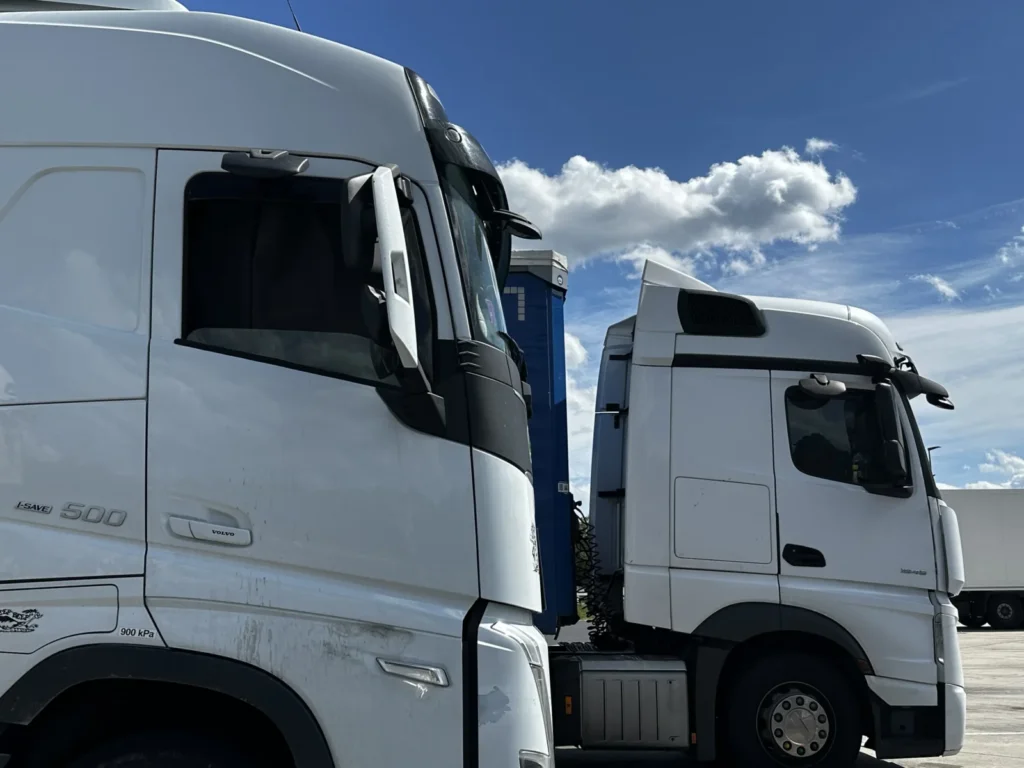
UNATRAS says the decision was taken on May 7 during an extraordinary meeting of the union’s leadership. The strike will only be called off if the Italian government responds immediately to the sector’s demands – demands that, according to the union, have so far gone unanswered.
What the hauliers are demanding
UNATRAS is asking the authorities to introduce three specific measures.
First, it wants a temporary suspension of contribution and insurance payment obligations, intended to ease the financial pressure on companies struggling with cash flow.
Second, the union is calling for the deadline under the so-called “silent consent” rule to be cut when applying for a tax credit, from the current 60 days to no more than 10. Under this mechanism, if an office does not respond within the set period, the request is treated as automatically approved. Hauliers argue that waiting this long makes day-to-day operations far harder.
Third, UNATRAS wants dedicated financial support for companies that, despite the difficult economic environment, continue investing in road safety and environmental protection. The organisation says the amounts have already been calculated in preliminary form.
Fuel costs push the dispute to a breaking point.
The immediate trigger for the escalation is the sharp rise in diesel prices. UNATRAS warns that for a large share of its member companies, operating under current conditions means running at a loss.
The union leadership stresses that hauliers have so far acted responsibly and kept supply chains moving. However, without government intervention, many businesses may be forced to suspend operations.
UNATRAS also argues that the continued lack of response from the authorities is being read as a downplaying of a problem that, if left unresolved, could hit Italy’s broader production system and weaken the country’s competitiveness.
On May 6, all national associations listed in the Road Transport Register agreed to send a letter to Prime Minister Giorgia Meloni, Deputy Prime Ministers Matteo Salvini and Antonio Tajani, and Economy Minister Giancarlo Giorgetti.
In the letter, the organisations point to the strain on the sector linked to the international crisis in the Middle East and the resulting tensions in energy markets. They are asking for a tax relief measure that would allow hauliers to “fully recover the unpaid excise duty on commercial diesel” for the period from March 19 to May 22, 2026.
How the protest is expected to unfold
UNATRAS says the mobilisation will be carried out in full compliance with strike regulations and the applicable self-regulation code. The first step will be interregional meetings aimed at uniting the sector ahead of the planned stoppage.
Local structures will be required to submit formal notifications to police chiefs, prefectures, the traffic police, and local unions representing employed workers.
The strike will be accompanied by a broad information campaign, including leaflets, pickets at key logistics hubs, and press releases. The organisation says that at every stage of mobilisation, road safety and clear communication to drivers will remain priorities.
What a haulier’s strike could mean for Italy’s economy
The most immediate risk is to supermarket replenishment and potential price increases driven by product shortages. Between the third and fifth day, pressure would likely spread to just-in-time industries such as automotive, pharmaceuticals, electronics, and fast-moving production. Plants with little or no buffer stock could be forced to slow down or pause production cycles.
Italian associations warn that the strike would primarily translate into slower deliveries, shipment delays, and possible disruption to distribution for supermarkets, businesses, and retail outlets.