Key points
- Two tourist traffic sites at the former Folkestone Racecourse and Lydden Hill cost around £1.6m and were stood down in August without being used.
- Operation Brock cost £1.4m to run in July and August, according to Freedom of Information figures.
- In 2025, Brock cost more than £3m, MPs said in a parliamentary motion.
- “Brock 2.0” will hold 1,700 lorries between junctions 8 and 9 of the M20, down from 2,000.
Built for EES queues that never came
The two sites were prepared by the Kent and Medway Resilience Forum (KMRF) with central government ahead of the summer holidays. They were meant to give car and coach passengers somewhere to wait off the road if new checks under the EU’s Entry/Exit System (EES) caused long queues at the border.
- Former Folkestone Racecourse, Westenhanger: available from 25 July to 11 August, for up to 1,000 vehicles,
- Lydden Hill Race Circuit, near Dover: earmarked from 16 July to 11 August, for up to 1,200 vehicles.
According to Freedom of Information figures, the government spent around £1.6 million on surfacing, lighting, toilets, catering and security. The predicted queues of six to eight hours did not happen, and both sites were stood down in August.
The Kent Prepared website says the layover sites are used only in the event of major disruption. Kent County Council said the sites were funded by the UK government, not Kent taxpayers, and could be used again if data shows they are needed.
Brock: £1.4m in six weeks
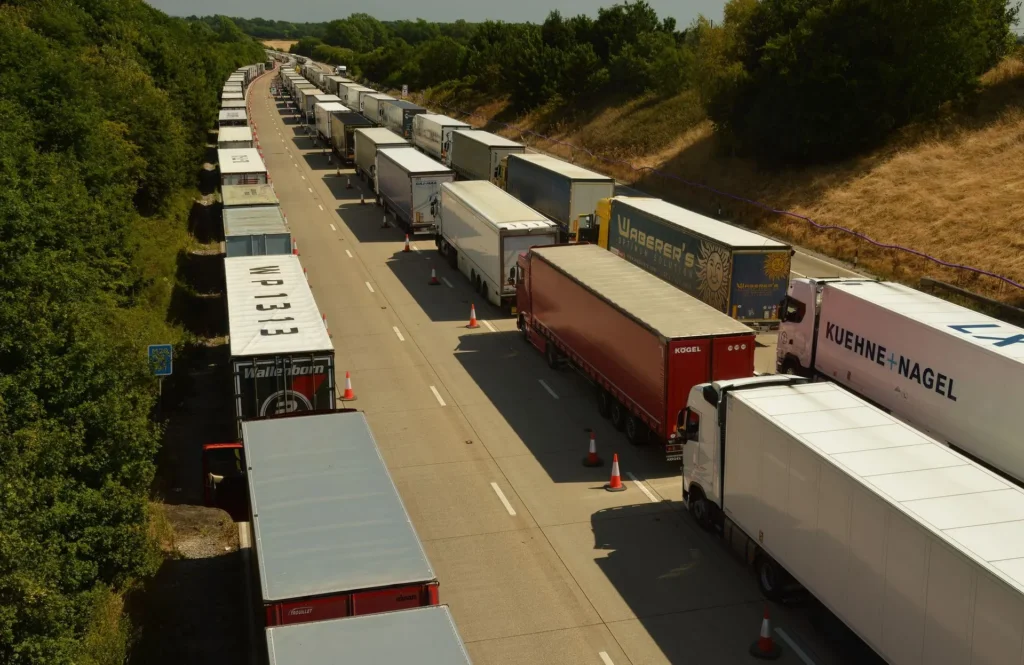
For hauliers, Operation Brock matters more. When it is active, lorries heading for the Port of Dover or the Eurotunnel are held in a queue on the coastbound M20, while other traffic uses a contraflow.
Brock was in place in July and August this year and cost £1.4 million to deploy, according to Freedom of Information figures. In 2025, its deployment and operation cost more than £3 million, Ashford MP Sojan Joseph said in a parliamentary motion calling for a long-term solution.
Brock 2.0: 300 fewer lorry spaces
National Highways and the Department for Transport have started work on a scaled-down version, known as “Brock 2.0”. The main changes:
- the contraflow will start further east, away from junction 8 (Leeds Castle),
- capacity between junctions 8 and 9 will fall from 2,000 to 1,700 lorries,
- the aim is to reduce congestion in the A20 villages of Harrietsham, Lenham and Charing.
According to Kent County Council, Brock 2.0 will not go live until EES checks at Dover and the Eurotunnel are fully rolled out and the authorities are confident they will not cause problems. The French authorities have not yet activated all EES kiosks at Dover.
What about Christmas?
The Kent and Medway Resilience Forum decides on Brock case by case, based on Department for Transport data and booking information. In previous years, it has been switched on for the Christmas and New Year getaway. If 300 fewer lorries can be held on the M20 under Brock 2.0, any overflow could mean more use of other holding measures, such as Dover TAP on the A20.
For now, drivers heading for Dover or the Eurotunnel should check National Highways traffic updates before the holiday peak and allow extra time. Kent’s EES preparations have been followed closely, including the Port of Dover’s testing.