


Transport Secretary Heidi Alexander discussed the Entry/Exit System with EU Commissioner for Sustainable Transport and Tourism Apostolos Tzitzikostas on 13 July. According to the Department for Transport, the two agreed to work together to make cross-Channel journeys as smooth as possible during the summer and autumn.
The new £20 million funding will be used to increase the number of passport-control booths at Dover and expand the port’s capacity to process vehicles. It comes on top of £10.5 million previously invested across Dover, Eurotunnel and Eurostar to prepare for the new checks.
However, the government has not said how many booths will be installed or when the additional infrastructure will become operational. Its announcement says the investment will reduce waiting times and congestion “in future years”, leaving open the question of how much difference it will make during the current summer peak.
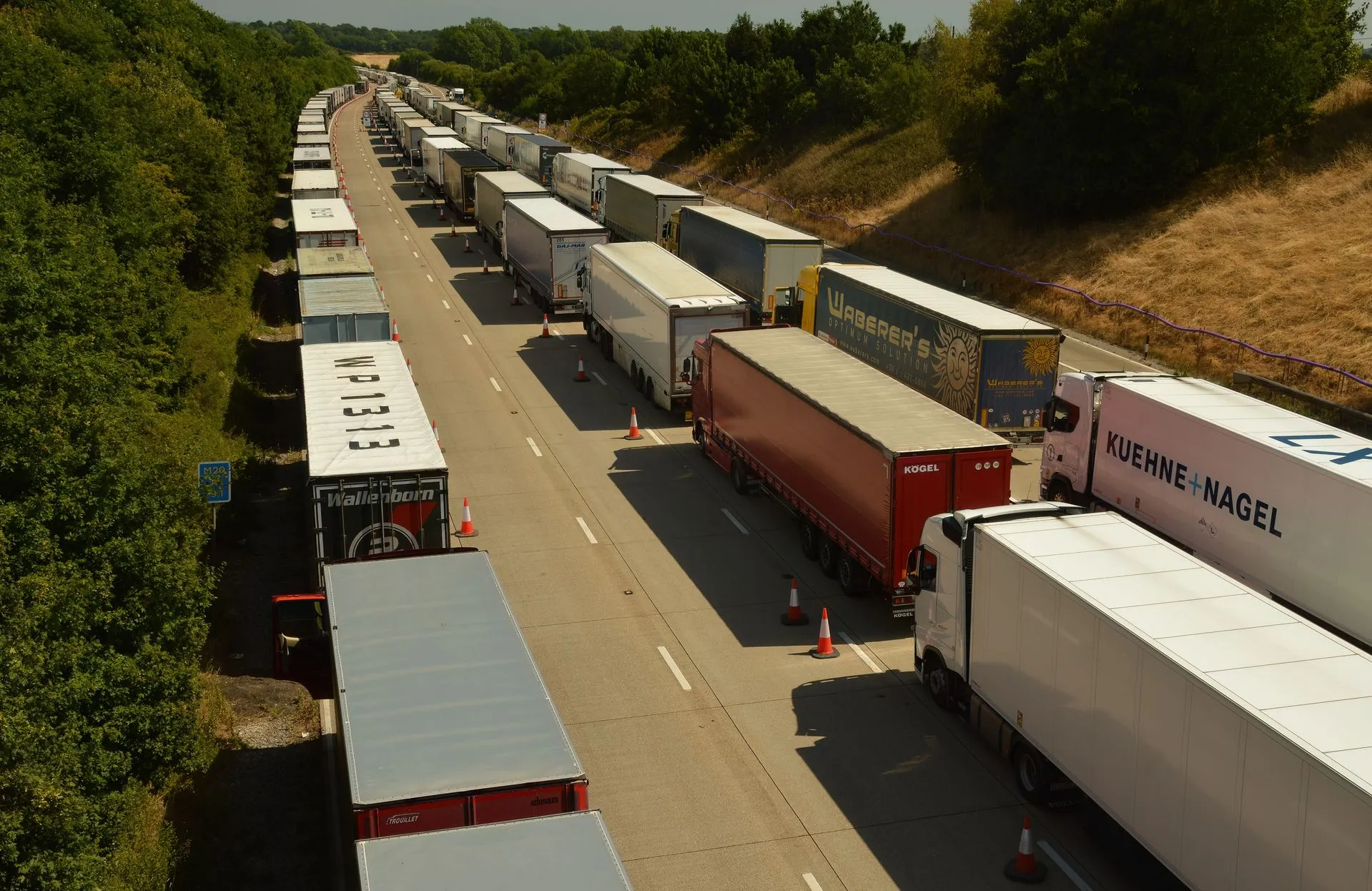
Freight could be caught behind tourist traffic
Most European lorry drivers travelling through Dover are not required to register under EES. Nevertheless, HGVs use the same constrained approaches to the port as passenger vehicles and can become trapped when tourist traffic backs up.
Dover has warned that first-time EES registration for car and coach passengers could cause queues to spread beyond the ferry terminal and onto the surrounding road network.
During the May half-term period, queues reportedly reached around 4.5 hours after only several hours of EES processing, on a day when approximately 8,500 tourist vehicles used the port. Dover expects more than 12,000 tourist vehicles on busy summer days.
The port has previously called for EES checks to be suspended during the summer or temporarily stood down before forecast congestion becomes severe. Dover argues that once passenger queues have formed, freight traffic is already caught in the disruption.
The government announcement contains no indication that the European Commission has agreed to suspend, relax or alter the checks.
EES applies to non-EU nationals entering or leaving the Schengen area for short stays. Travellers are registered electronically using passport information, a facial image and fingerprints. At Dover, the checks are conducted before departure because French border controls operate on the UK side of the Channel.


