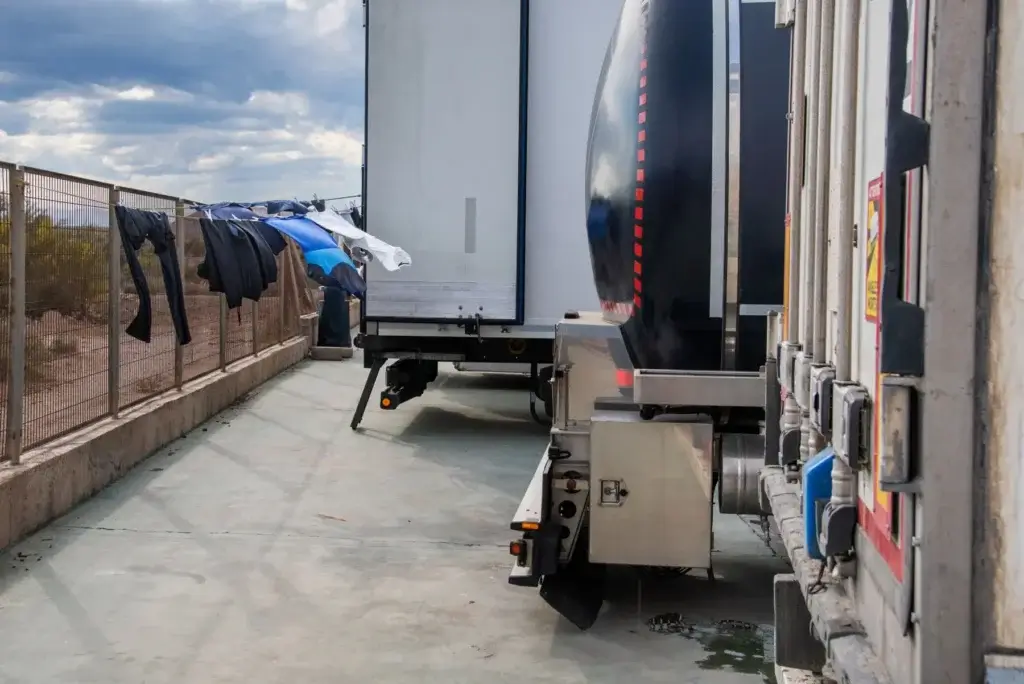
An international agreement provides for the arrival, training and legal employment of Turkish drivers, who could soon become a new and significant support for the Spanish transport market.
Currently, road freight transport in Spain employs more than 390,000 professional drivers, but as many as 30,000 positions remain unfilled – nearly 10% of the entire active workforce in the sector.
The problem is compounded by demographics: most drivers are between 45 and 55 years old. If the trend does not change, within the next decade one third of current specialists will retire, which threatens an even bigger shortage and disruption to the logistics chain. The Spanish transport organisation Fenadismer stresses that the situation is causing serious concern, and that the lack of staff is already limiting the growth and stability of transport companies.
Read more: Electrification, the stiff collar of road transport: uncomfortable, costly, but no longer optional
Turkey – a source of drivers for Spain
The Turkish government has prepared a dedicated recruitment service within the Public Employment Service, aimed at more than 300,000 Turkish truck drivers who are looking for work. The goal is relocation, training and subsequent employment in Spanish transport companies.
The agreement was formalised through a Protocol on cooperation in the promotion of employment, signed by the Turkish Ministry of Labour and Social Security, the Andalusian association USINTRA and the Campus Foundation in Córdoba. This is the first step in an international strategy to mitigate the driver shortage in Spain.
Training, language and legalisation in Spain
One of the key elements of the agreement is comprehensive preparation of Turkish drivers for work in Spain. The training will include:
- obtaining the required qualifications within the Spanish legal and transport system,
- learning Spanish,
- full legalisation of residence and documents,
- accommodation and meals during the training.
This will allow drivers to enter the Spanish labour market fully prepared, without the risk of legal violations or competency gaps.
Official presentation in Córdoba
The project will be publicly presented on 3 February at 11:00 at the Campus in Córdoba. The event will be attended by representatives of the Turkish government and the project partners. Participation is open to transport companies and other interested entities, following prior registration.
For the industry, this is the first tangible step in tackling the driver shortage which, although it does not solve the problem in full, may in the short and medium term stabilise transport operations in Spain.