If you pull Amazon trailers, or any customer-owned trailer, and you think the paperwork is their problem, Britain’s traffic commissioner has a message for you: it isn’t. It never was. And a haulier that learned this lesson the hard way has now become a cautionary tale published on the regulator’s own website.
The Office of the Traffic Commissioner confirmed this week that HGV Quick Transport Ltd argued, during a formal public inquiry, that it did not need to keep trailer records because Amazon owned the trailers. The commissioner’s response was unambiguous: the traction operator — the company whose name is on the licence and whose cab is pulling the load — is responsible for walkaround checks, defect recording, and access to every safety inspection and test record, full stop.
The myth:
“It’s Amazon’s trailer, so Amazon handles the compliance paperwork.”
The reality:
The operator whose licence covers the movement is responsible for checks, records, and defect rectification. Every time.
How it unravelled — starting with a roadside stop
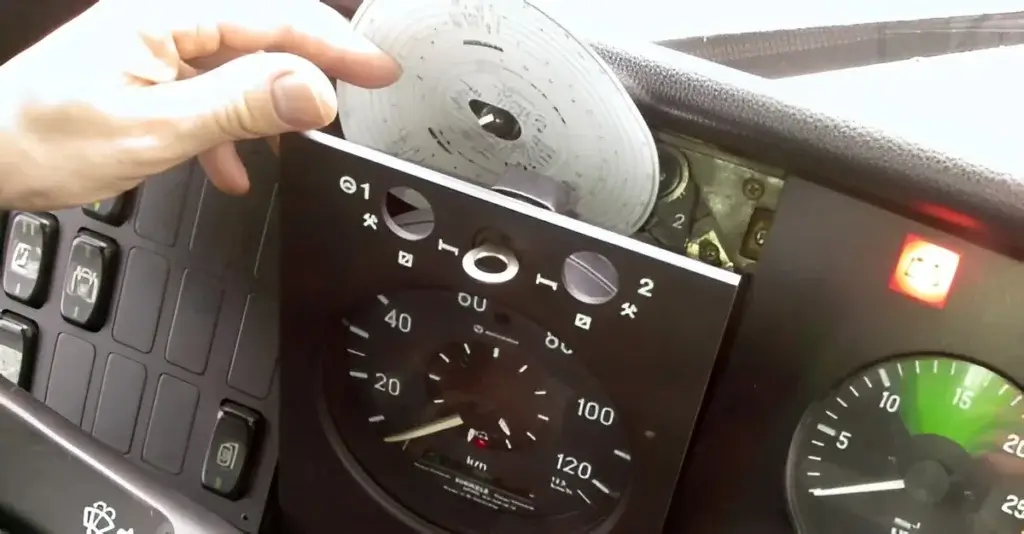
Everything began in May 2025 when DVSA stopped an HGV Quick vehicle at the roadside. What followed was an investigation that revealed a compliance operation in serious disarray. One driver’s card had not been downloaded for 115 days. There were instances of short-notice driving without a card inserted, a weekly rest breach, and a pattern of missed tachograph downloads across the fleet.
The transport manager, Sergiu Florin Leho, was found to have lost his good repute — the professional standing that allows someone to hold a Certificate of Professional Competence and legally manage a fleet. His disqualification runs for at least 12 months.
The regulator’s exact position: “Operators cannot outsource or abdicate their compliance responsibilities. Where vehicles or trailers are run under an operator’s licence, the licence holder remains fully accountable.” — Office of the Traffic Commissioner, 30 March 2026
The written agreement you almost certainly don’t have
Beyond the headline finding, the written decision contains a detail that will affect thousands of subcontractors and contract hauliers across the country: operators should have a written agreement with any trailer owner that covers inspections, safety documentation, and defect rectification procedures. Not a handshake. Not an assumed arrangement buried in a platform’s terms. A written agreement.
If you haul customer trailers regularly and that document doesn’t exist, this is the moment to create one.
The five failings that keep triggering action in the UK
This case is not an isolated incident. Traffic commissioners have recently flagged a cluster of recurring mistakes they keep seeing at public inquiry:
- Downloading driver cards too infrequently (the legal maximum gap is 28 days)
- Wrong split rest breaks — legal on paper, but improperly sequenced
- Removing the driver card mid-shift
- Driving without the card inserted at all
- Transport managers signing off infringement reports without proper investigation
The improvement that came too late
The commissioner noted that HGV Quick did eventually bring in a compliance consultant — but only after official intervention. In public inquiry decisions, timing matters enormously. Steps taken to fix a problem before a regulator knocks on the door carry far more weight than a scramble to demonstrate improvement once proceedings have begun.
The message for any operator reading this is uncomfortable but clear: review your trailer agreements, audit your tachograph download schedules, and don’t wait for a roadside encounter to find out where your compliance gaps are.
Know an operator hauling customer trailers? Forward this before their next inspection
More Traffic Commissioner cases
How a haulage licence bleeds out: Traffic Commissioner suspension explained
Haulier stripped of licence over tyre safety failures and ‘nil defect’ paperwork
Traffic Commissioner puts a price tag on knowingly running overloaded vehicles
UK haulier loses licence over “helping hand” arrangement
Fitness “tarnished”: operator hit with one-month curtailment after DVSA findings
Tachograph card-sharing crackdown: driver banned indefinitely, transport manager flagged
Banned boss and ‘death trap’ lorries: why a UK fleet was forced off the road
Routine roadside check turned into bizarre haulage case in Great Britain


![Costs up 11%, rates up 5%: FarEye’s Suryansh Jalan on the hidden “inefficiency tax” in Europe’s last mile [INTERVIEW]](https://cdn-trans.info/uploads/2026/10/264940df8e8870b74281e69aeac-1024x769.webp)