Simpsons Transport Ltd, which held a standard national licence authorising two vehicles and two trailers, will have its licence revoked from 21 February 2026, according to a written decision published on the UK government website by the Traffic Commissioners for Great Britain. The decision was issued by Anthony Seculer, Deputy Traffic Commissioner for the West of England. According to the ruling, the company will also be disqualified for 12 months from holding or obtaining an operator’s licence, starting on the same date. (Source: Gov.uk regulatory decision, “Decision for Simpsons Transport Ltd (OH2012485)”.)
The company’s nominated transport manager, William Jordan Simpson, was found to have lost good repute and will be disqualified from acting as a transport manager for 12 months, again from 21 February 2026, the decision states.
A long trail of warnings
The ruling sets out a compliance history stretching back to the licence being granted in August 2018, when the operator was called to a public inquiry due to “adverse licensing history” and the licence was issued with undertakings and conditions.
In the years that followed, the Office of the Traffic Commissioner issued multiple warnings, including after a public inquiry in 2019, a traffic examiner visit marked “unsatisfactory” in 2022, and a maintenance investigation visit in 2024 that was also rated “unsatisfactory” and resulted in an audit undertaking.
An RHA audit conducted in February 2025 identified shortcomings and prompted a DVSA investigation, the decision states.
The immediate issue: hours, training and maintenance controls
The case returned to a public inquiry after a traffic examiner’s visit, completed in July 2025, was rated “unsatisfactory,” with shortcomings recorded in driver licensing and training, drivers’ hours and record-keeping, and working time directive controls.
A subsequent maintenance investigation visit in August 2025 resulted in a “report to OTC”, with problems flagged across maintenance records, driver defect reporting, inspection facilities and arrangements, wheel and tyre management, and load security.
The decision also cites the operator’s five-year performance indicators: a mechanical prohibition rate of 35.71% versus the national average of 23.43%, and an annual test initial failure rate of 18.18% versus the national average of 10.13%.
“The most serious and worrying aspect”: tyre prohibitions
But it was the prohibition history — and what the deputy traffic commissioner described as its road safety implications — that dominated the decision.
According to the ruling, DVSA evidence showed a trend of safety-critical defects, particularly tyres with deep cuts and cords exposed. The decision states that 100% of the immediate prohibitions (PG9(I)) in the sample were considered safety critical.
The vehicle examiner’s view, as quoted in the written decision, was that these defects “could have been detected by the driver” if daily walkaround checks were properly carried out — a point the deputy traffic commissioner returned to repeatedly.
Despite that, the operator supplied driver defect reports which recorded no reportable defects at all, effectively “nil defects” every time vehicles were used, the decision says. DVSA later encountered the operator four times in a review period and issued three PG9(I) and two PG9(D) prohibitions relating to tyres and suspension air bags. On each occasion, the driver defect reports for the dates in question recorded no defects, according to the addendum report cited in the ruling.
Paperwork gaps and a lack of corrective action
The decision also points to incomplete records. According to the vehicle examiner, the operator supplied only partial copies of safety inspection reports — front pages without the sections needed to confirm inspections had been fully completed. The examiner also noted the absence of wheel fitting security and re-torque records after wheel or tyre replacement following prohibitions.
The deputy traffic commissioner highlighted that, despite the repeated prohibition pattern and the obvious links to driver checks, the operator was unable to provide evidence of disciplinary action against drivers.
Transport manager repute and time commitment
The ruling also focuses on the role of the transport manager. The deputy traffic commissioner noted evidence that William Simpson worked as a driver for Yodel for “25–30 hours” per week, concluding that he had not devoted sufficient time and commitment to his transport manager and director responsibilities.
In the addendum report cited in the decision, the vehicle examiner said they did not feel the transport manager was effectively carrying out duties or proactively managing the operation, pointing to a lack of continuous review of procedures and a lack of recorded quality reviews.
“Highly unlikely” to comply in future
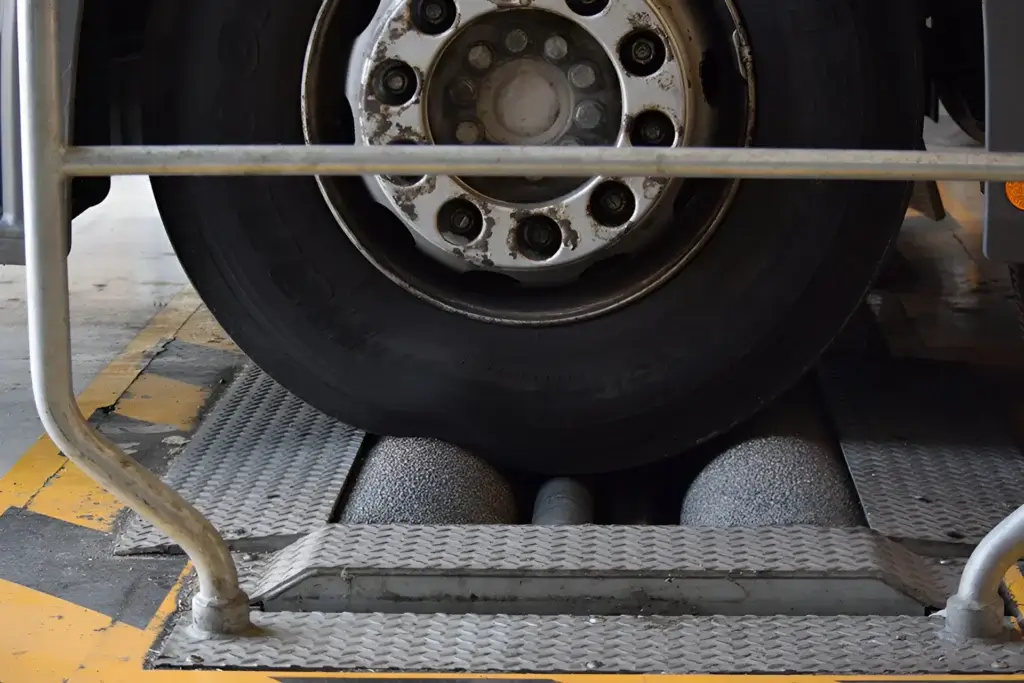
In weighing the outcome, the deputy traffic commissioner acknowledged “minimal improvements” in some areas, including rolling road brake tests and a maintenance planner. But those, he concluded, were outweighed by repeated prohibitions in known risk areas, ineffective walkaround checks, incomplete maintenance records, a poor MOT pass rate and an ineffective wheel and tyre management policy.
Applying established legal tests referenced in the ruling, the deputy traffic commissioner concluded it was “highly unlikely” the operator would comply in future. He also answered “yes” to the question of whether the conduct was such that the operator ought to be put out of business.
The decision states that repeated immediate tyre prohibitions on 44-tonne vehicles created an unacceptable risk to road users, and that revocation — effectively ending the licensed operation — was “appropriate and necessary”.