Key points:
- Traffic Commissioners closed 16,803 LGV and PCV driver conduct cases in 2025-26, up from 15,613 a year earlier.
- Suspensions rose by 35% to 639, while revocations fell slightly to 102. Another 3,480 licence applications were refused.
- Tachograph fraud is treated most harshly: magnets or using another driver’s card usually mean revocation and a 12-month ban.
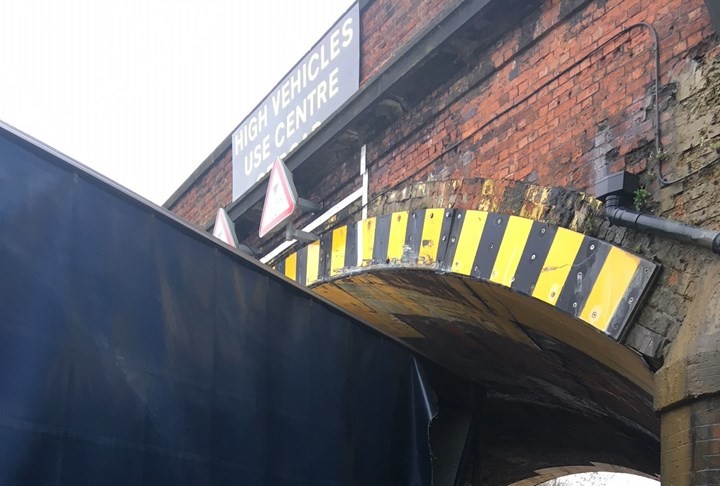
- A hand-held phone typically costs four weeks off the road, and a bridge strike can lead to revocation and a six-month disqualification.
More cases, more suspensions
Traffic Commissioners decide whether lorry and bus drivers are fit to hold their vocational entitlement. Cases are referred to them by the DVLA, often after a court conviction, a roadside check or a report from an employer. The Commissioners do not punish drivers – that is a matter for the courts – but they decide whether a driver can keep driving professionally.
According to the Traffic Commissioners’ annual report for 2025-26, the number of closed cases rose by almost 8%. Most of them never reached the stage of losing a licence.
| Outcome | 2024-25 | 2025-26 | Change |
|---|---|---|---|
| Total cases closed | 15,613 | 16,803 | +8% |
| Licences refused | 3,421 | 3,480 | +2% |
| Licences suspended | 473 | 639 | +35% |
| Licences revoked | 110 | 102 | −7% |
| Licences granted | 546 | 581 | +6% |
| Verbal warnings | 514 | 686 | +33% |
| Warning letters | 3,769 | 4,288 | +14% |
| No action taken | 4,650 | 4,396 | −5% |
| Called to a hearing | 1,904 | 2,176 | +14% |
Source: Traffic Commissioners for Great Britain, Annual Report 2025-26 (LGV and PCV driver conduct)
Warnings and no action together account for more than half of the outcomes. Only around 4% of cases ended with a suspension or revocation. But the number of suspensions grew much faster than the number of cases, and the Commissioners note a rise in drug driving cases in particular.
What the 12-month register shows
The Office of the Traffic Commissioner publishes a register of driver conduct decisions. It does not list the offence behind each decision, but it shows how long sanctions last.
- Short suspensions dominate: most last one to two weeks or four weeks. Suspensions of six to twelve weeks or three months appear less often, and the longest ones run for six months.
- Revocations usually come with a disqualification of three to six months, but the register also includes 12-month, 20-month, three-year and ten-year bans, as well as indefinite disqualifications.
- Many applications are refused because the driver failed to attend the hearing. Under the guidance, an applicant who does not turn up without good reason will normally be refused.
- LGV drivers make up the large majority of cases, with PCV-only drivers the smallest group.
Which offences cost the most
The link between offences and sanctions is set out in the Senior Traffic Commissioner’s Statutory Document 6, revised in November 2025. It is the most substantial revision in over a decade and gives clearer starting points. The case examples below are illustrative – each decision depends on the driver’s history and mitigation.
| Offence | Typical starting point |
|---|---|
| Hand-held mobile phone (CU80) | 4-week suspension |
| Drivers’ hours breaches | 4 weeks (2 weeks for less serious, 8 weeks for frequent and persistent) |
| Each deliberately falsified record | 4-week suspension per record |
| Tachograph magnet / manipulation | Revocation and 12-month disqualification |
| Using another driver’s card | Revocation and 12-month disqualification |
| Large-scale manipulation devices | 12 months to 4 years |
| Bridge strike | Revocation and 6-month disqualification (1–2 months with mitigation) |
| Drink driving (first offence, 24-month court ban) | Extra 8 weeks of vocational disqualification |
| Intimidating a DVSA officer | 6-month suspension |
| Overloading by 25% | 2-week suspension |
Source: Statutory Document 6, case examples (updated November 2025)
The guidance is clear that falsification is more serious than the offence it hides. A driver who falsifies records to cover up a drivers’ hours breach can expect a cumulative and significant disqualification. Using a magnet or another person’s card typically ends with the loss of the licence for a year.
Bridge strikes were added as new case examples in the revised guidance. Drivers involved in them can expect a hearing, and the Commissioners may also look at the operator and the transport manager.
Not a second sentence
The Commissioners stress that driver conduct hearings are not a second sentencing exercise. They assess the driver’s history, fitness and the risk to road safety. In practice, behaviour at the roadside also matters: in one case, abusive behaviour towards examiners added to a three-month suspension. In another, a driver’s persistent conduct led to the revocation of his licence.
The annual report also points to growing workload problems. The Commissioners say the DVSA’s restructuring of their office had negative effects, most notably on driver conduct work.