According to DNV’s Maritime Forecast to 2050 2026, 39.4% of gross tonnage currently on order can use an alternative fuel in addition to conventional fuel oil, down from 49.5% a year ago. DNV says regulatory uncertainty may have contributed to the decline, with some shipowners delaying investment decisions while waiting for clarity over the International Maritime Organization’s Net-Zero Framework.
However, DNV stresses that this is not simply a retreat from alternative fuels. The main reason for the falling share is a change in the composition of the global orderbook. Alternative-fuel technologies have so far been adopted most strongly by containerships, cruise vessels and car carriers, while recent orders increasingly comprise tankers and bulk carriers, where uptake remains considerably lower.
LNG remains the dominant choice
LNG continues to lead the alternative-fuel orderbook. DNV records 672 LNG-capable vessels on order, alongside 319 gas carriers that can use LNG. Methanol also has a sizeable pipeline, with more than 294 methanol-capable vessels on order. The orderbook additionally contains 42 ships fitted with ammonia fuel systems and 25 hydrogen-capable vessels.
The differences between shipping segments are substantial. Around 26% of car carriers, counting vessels in operation and on order, have alternative-fuel capability, compared with 11% of containerships and just 1.1% of bulk carriers.
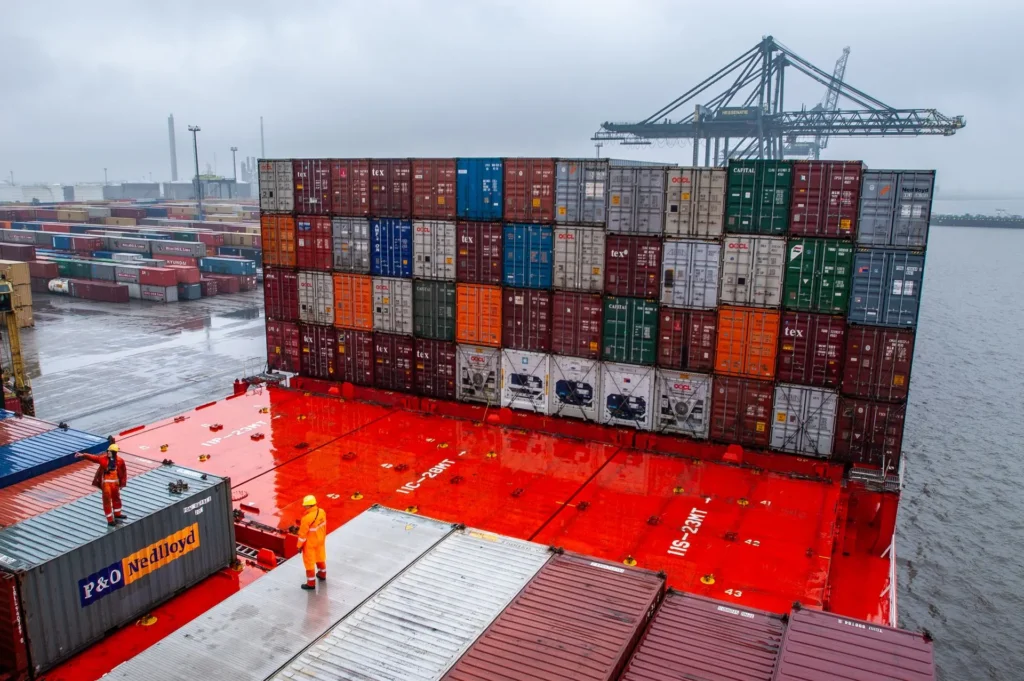
Containerships remain one of the most active segments. DNV says there are currently around 6,700 container vessels in operation, of which 335 are equipped with alternative-fuel capability. Another 585 alternative-fuelled containerships are expected to enter the fleet by 2030 based on the current orderbook.
LNG has regained the lead over methanol among container vessel orders, with 424 LNG-capable containerships on order, although the segment still accounts for the largest methanol orderbook, at 158 vessels.
Most of today’s fleet remains tied to conventional fuel
The longer-term shift is nevertheless significant. Excluding LNG carriers, alternative-fuel-capable vessels represented just 0.4% of global fleet gross tonnage in 2020. By August 2026 that share had climbed to 5.2%. The number of such vessels rose from 213 to 1,329 over the same period. Despite that rapid growth, conventional fuel remains overwhelmingly dominant. DNV estimates that 89.8% of the gross tonnage currently in operation can run only on oil-based fuels.
Even among vessels being built, 60.6% of ordered gross tonnage — and 79.5% of ships by number — lack alternative-fuel capability. Unless subsequently converted or fitted with other emissions-reduction technology, these ships will depend on drop-in alternatives such as FAME or HVO if operators want to reduce their fuel-related emissions.
IMO uncertainty complicates investment decisions
The changing orderbook comes as shipowners face considerable uncertainty over future global emissions rules. The IMO’s Net-Zero Framework was approved in principle in April 2025, but its adoption was postponed after member states failed to reach agreement later that year. Negotiations have continued in 2026, with further discussions scheduled ahead of the IMO Marine Environment Protection Committee meeting in December.
DNV says this uncertainty is affecting the environment in which owners make long-term fleet decisions. Ships ordered today may remain in service beyond 2050, meaning fuel and propulsion choices made now could determine their exposure to future emissions rules for decades.
At the same time, regional measures are already exerting pressure. FuelEU Maritime and the EU Emissions Trading System are influencing fuel choices and operating decisions for vessels trading to and from European ports.
DNV therefore cautions against interpreting the decline in the alternative-fuel share of the orderbook as a reversal of the transition. Alternative-fuel capability continues to expand within the segments that have led adoption so far, but the combination of a tanker- and bulker-heavy orderbook and uncertainty over future global regulation has slowed the headline rate of growth.