
Key points
- The initial failure rate in the HGV annual test fell from 10.4% to 10.0% in 2025/26. In 2008/09 it was 32.4%.
- The final failure rate fell from 7.1% to 6.7%, down from 17.7% in 2008/09.
- 69.1% of HGV operators are now in DVSA’s green “low risk” band, up from 66.5%.
- Reported accidents involving HGVs fell by 5.3% between 2023 and 2024 and by 74% since 2004.
The report was launched on 8 October at Logistics UK’s Transport Manager conference in Falkirk. It is the business group’s annual assessment of how well the road freight sector follows the rules.
“This year’s report shows that, against the backdrop of an increasingly complex operating environment, with rising costs and economic uncertainty adding pressure, our sector continues to make great strides in compliance,” said Logistics UK Chief Executive Ben Fletcher.
A two-thirds drop in failures
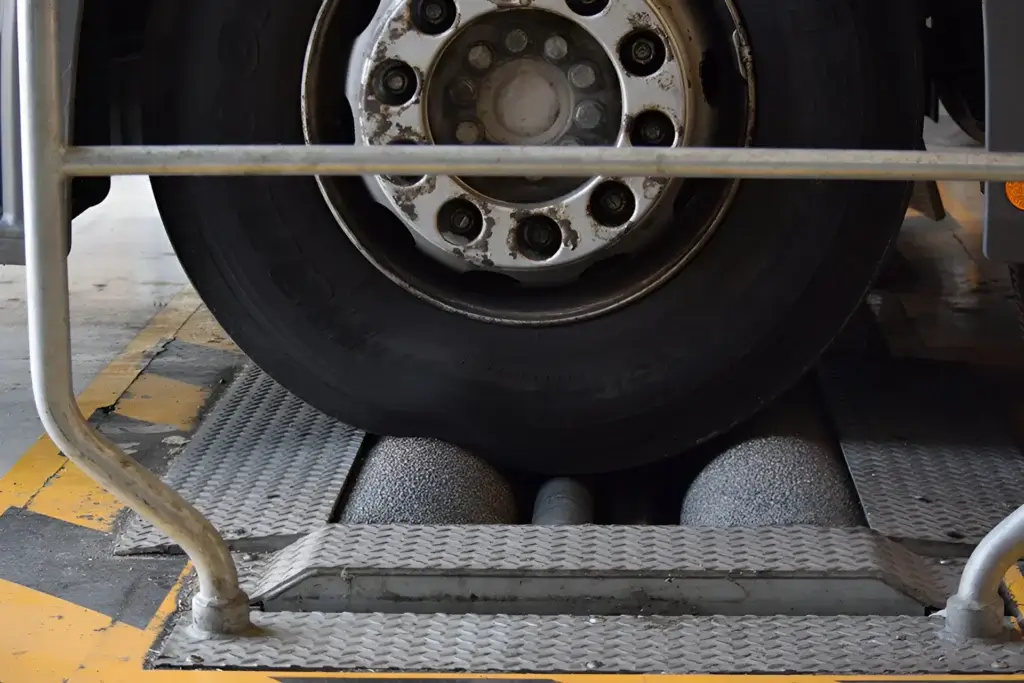
The HGV annual test is the lorry equivalent of a car’s MOT. In 2025/26, the initial failure rate fell to 10.0%, from 10.4% a year earlier. That is a fall of more than two-thirds since 2008/09, when almost one in three trucks failed at the first attempt.
The final failure rate, after defects found during the test are fixed, fell from 7.1% to 6.7%. In 2008/09 it was 17.7%.
The scale is large. DVSA data show that around 453,000 annual tests of lorries were carried out in Great Britain in 2025/26, plus about 289,000 trailer tests. Even at a 10% rate, tens of thousands of trucks still fail at the first attempt every year, and each failure means a retest, extra workshop time and a vehicle that is not earning money.
More “low risk” operators
DVSA uses the Operator Compliance Risk Score (OCRS) to decide which vehicles to target for roadside inspections and depot visits. Operators are placed in bands from red (highest risk) to green (lowest), with blue for exemplary compliance.
According to the report, the share of HGV operators in the green band rose from 66.5% to 69.1%, and the blue band from 0.6% to 0.7%. The report notes a strong link between OCRS and test results: 98.7% of blue band operators passed their annual tests first time.
For operators, a better score means fewer roadside stops and less time lost. A poor score works the other way. DVSA has stepped up checks on vehicles, including foreign HGVs, and roadside prohibitions remain common: in April–June 2026, examiners issued mechanical prohibitions to 27% of the British HGVs they checked, according to DVSA enforcement data.
Fewer collisions
Reported accidents involving HGVs fell by 5.3% from 2023 to 2024, and casualties by 4.6%. Since 2004, accidents are down 74% and casualties by almost 75%.
The report links this to technology such as advanced driver assistance systems, higher vehicle safety standards, better training and fleet safety management. Fletcher said operators were investing in the latest technology, maintaining vehicles to a high standard and training staff.
The pressure has not gone away
Logistics UK warns that long-term problems remain, especially the supply of drivers. Its Employment and Skills Report 2026 showed 283,000 HGV drivers employed in the last quarter of 2024, down from 313,000 a year earlier. The average driver is 48.1 years old and only 4% are under 25. We covered these figures in our article on the shrinking UK driver workforce.
“Without drivers, we would not have clothes in our stores, food on our supermarket shelves and medicine in our pharmacies,” Fletcher said.
For hauliers, the report sends a mixed message. Compliance is at record levels and pays off in fewer stops and lower risk scores. But maintaining that standard costs money at a time when margins are already thin.