Key points
- More than 240 zero-emission trucks and 40 charging sites have been deployed; around 300 trucks and 70 sites are expected by the end of 2026.
- By mid-June 2026, monitored trucks had completed 85,000 trips and 3.6 million km, carrying 550,000 tonnes with 81% lower emissions than diesel.
- Electric trucks averaged about 1,350 km a week, against about 2,600 km for diesel trucks, although some already reach 4,000 km a week.
- Without grants, total cost of ownership is typically higher than diesel; with grants and high utilisation, it can already be lower.
- The hydrogen project HyHAUL was terminated, and hydrogen trucks in another project were cut from 16 to three.
ZEHID (Zero Emission HGV and Infrastructure Demonstrator) ZEHID is the UK government’s largest real-world test of zero-emission trucks. Its first annual report, prepared by the independent technical evaluator WSP, was published at the beginning of October. It covers the 38-44 tonne segment, which the report describes as “hard-to-abate”, and it is based on real commercial operations rather than models or short pilots.
Why the UK needs this trial
Road freight is a big target for decarbonisation. According to the report, around half a million HGVs in the UK cover more than 17 billion miles a year, employ around 280,000 drivers and generate about £17 billion in gross value added. They also emit around 18 million tonnes of CO₂ a year, about 17% of the UK’s domestic transport emissions. Air pollution from HGVs is estimated to cost more than £150 million a year in healthcare.
The government plans to end the sale of new non-zero-emission HGVs of up to 26 tonnes by 2035, and of heavier HGVs by 2040. A consultation on a new HGV CO₂ regulatory framework was launched this year.
But the report is clear that the industry itself makes the transition difficult. More than 90% of the tens of thousands of haulage businesses are SMEs, margins are tight, contracts are short and customers put strong pressure on prices. That limits operators’ ability to invest in expensive vehicles and depot upgrades, or to pass higher costs on to customers.
What ZEHID actually tests
ZEHID is funded with approximately £150 million by the DfT and delivered through Innovate UK. It builds on earlier trials, including the Low Emission Freight Trial (LEFT), the Battery Electric Truck Trial (BETT) and the Zero Emission Road Freight Trial feasibility studies.
The programme tests two technologies: battery-electric trucks with static charging, and hydrogen fuel cell trucks with low-carbon hydrogen refuelling. Vehicles and infrastructure were procured in 2024–2026, and the five-year monitoring phase now runs until 2031. WSP collects data from vehicle telematics, charger monitoring, haulier reports and surveys of drivers and managers, and will use “digital twin” modelling to analyse operations in detail.
The evaluation covers six areas: operational capability, energy efficiency, use of infrastructure, total cost of ownership (TCO), emissions, and operations and safety.
Three projects, one cancelled
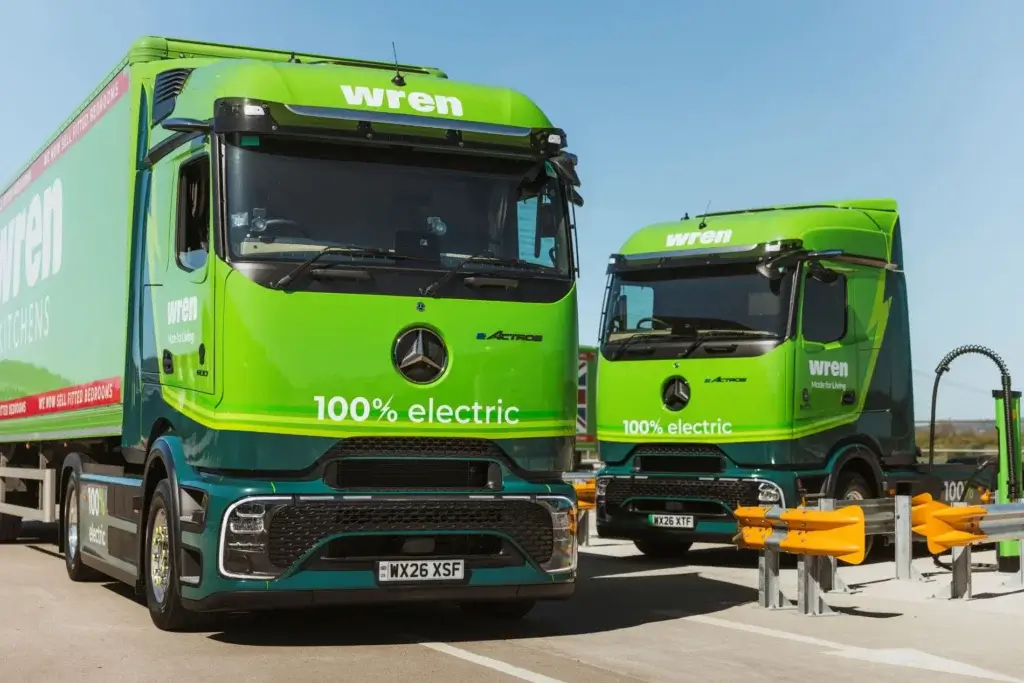
Electric Freightway, led by GRIDSERVE, is the UK’s largest electric HGV demonstration, with more than 40 organisations involved. It has 162 battery-electric HGVs, 11 public charging sites, depot charging and a shared-user charging site used by several operators. The project costs £83.5 million, including £60.9 million in grants. In 2025, it accounted for 24% of all new electric HGV registrations in the UK. Operators include Tesco, Royal Mail, Amazon, DP World, DSV, GXO, Kuehne+Nagel, Maritime, XPO, Currys and Samworth Brothers.
eFREIGHT 2030, led by Voltempo, has 88 electric HGVs, 33 depot charging sites and one public site, plus 12 trucks available through an associate lease scheme. It costs £63.7 million, including £49.2 million in grants, and delivered the UK’s first megawatt-scale charging hubs. Eddie Stobart withdrew from the project, while Tarmac and I.J. McGill joined, adding construction and SME use cases. Because infrastructure was so expensive, the project cut the number of depot sites and focused on fewer, more intensively used locations. Operators include Kuehne+Nagel, Maritime, Marks & Spencer, Menzies, Tarmac, Welch’s Transport and GXO.
ZENFreight compares battery-electric and hydrogen trucks in real operations. It has 56 electric HGVs, three hydrogen HGVs, 19 depot charging sites and one hydrogen refuelling facility, at a cost of £34.7 million, including £27.6 million in grants. Several original participants, including Wren Kitchens, BP, Royal Mail and Culina, withdrew and were replaced by other operators. Hydrogen plans were cut from 16 vehicles to three. Operators include DFDS, Gregory Distribution, Maritime, Russell Logistics and WS Transportation. The project also developed RouteZero software, which helps plan electric truck routes taking into account battery size, cargo weight, speed, temperature and terrain.
HyHAUL was meant to put around 30 hydrogen fuel cell trucks on the M4 corridor, rising to 100 by 2027 and 300 by 2030, with its own hydrogen production of around 30 MW. It was terminated in December 2025 after failing to secure binding customer or fleet leasing agreements. According to the report, the reasons included cost, vehicle availability, infrastructure readiness, the difficulty of offering a competitive value proposition and of aligning all elements, including funding, in time.
The numbers so far
By 17 June 2026, 172 funded trucks were sending telematics data. A further 76 were being added to monitoring and 62 had not yet entered service. Together, the monitored trucks had:
- completed 85,000 trips of over 1 km,
- covered 3.6 million km (2.24 million miles),
- carried 550,000 tonnes of freight,
- received 4,500 MWh of electricity from chargers,
- saved more than 4,000 tonnes of CO₂ on a well-to-wheel basis.
Greenhouse gas emissions were 81% lower than for diesel trucks covering the same distance, assuming average grid electricity and 10% losses. Electric trucks typically use less than half the energy of diesel ones.
The programme includes trucks from six manufacturers and 35 operators, bought directly or leased. Most operators report minimal disruption to their operations, with payloads of up to around 25 tonnes. “Our customers have commented on how little change they need to make to accommodate these trucks,” said Dave Rose, CEO of Voltloader.
Lesson 1: trucks on the road are not the same as trucks in use
The most important finding concerns utilisation. In early deployment, electric HGVs averaged about 1,350 km a week, compared with about 2,600 km for a sample of diesel trucks. The report stresses that the operations are not directly comparable: early deployments include training and testing, and run on routes that today’s charging network can support.
The best examples show what is possible. A few electric trucks already cover up to 800 km a day, or 4,000 km a week. According to the report, success “will not be measured only by the number of trucks and chargepoints deployed, but by utilisation”. Partners are expected to move to increasingly demanding duty cycles.
Lesson 2: payload and long distances are still hard
Electric HGVs are typically about 3.5 tonnes heavier when empty than diesel trucks. That reduces payload by about 1.5 tonnes for a 42-tonne 4×2 tractor and by up to about 3.5 tonnes for a 6×2. Hauliers report that axle limits can be reached before the gross weight limit, which reduces capacity further.
As a result, many lower-mass or volume-led duties are viable, while heavier sectors are deploying electric trucks selectively, on lighter and shorter routes.
Long-haul operations of more than 400 km a day and trucks of 40 tonnes and more are moving towards cost parity more slowly, because they need larger batteries and rely on en-route charging, which typically costs more. Yet they matter most: according to the Energy Systems Catapult, they account for about 45% of HGV emissions, despite making up only about 12% of the fleet.
Lesson 3: the cost depends on how you use the truck
The funded electric trucks cost around 2.7 times as much as diesel ones to buy, but are at least twice as energy efficient. Without grants, the purchase cost makes up 45–85% of the total cost of ownership, and electricity 20–60%.
Electric Freightway calculated that in some specific use cases, electric trucks could save £60,000–120,000 per vehicle over eight years with current grants. In most cases, however, a substantial cost gap remains. The report concludes that with grants and effective utilisation over eight years, a favourable TCO is “already possible”, but without subsidy it is typically higher than for diesel.
TCO is very sensitive to utilisation, energy prices, the mix of depot and public charging, and how infrastructure is financed. Smaller operators face greater risk because of limited capital and less flexibility in contracts and site investment.
Lesson 4: charging infrastructure is the bottleneck
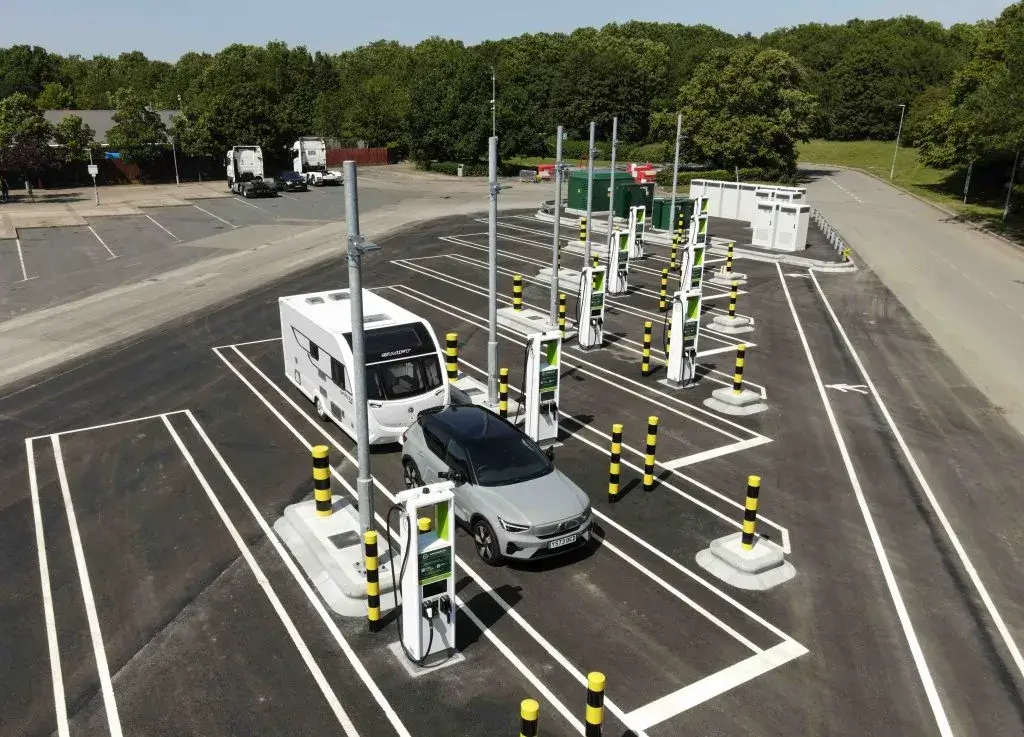
More than 40 ZEHID-funded charging sites had been commissioned by July 2026, using six chargepoint providers and ranging from a single 43 kW charger to a 5 MW ultra-rapid facility. One example is the UK’s first megawatt-scale eHGV charging hub at a Kuehne+Nagel depot.
But building them was difficult. The first sites were usually depots with spare grid capacity, supportive landowners and few physical constraints, and even then timelines were “complex and sometimes fragile”. Grid connection times and costs varied widely. One eFREIGHT 2030 site was quoted five years for a connection, and the project moved to other locations instead.
According to the report, wider roll-out will need action on grid reinforcement, multi-party land negotiations, and planning and permitting. In a survey, fleet managers said the availability of chargers limits which routes can be electrified, and many said only a small proportion of existing routes are currently suitable. Managers expect charging mainly at depots and planned in advance; drivers are less sure, and both groups are worried about charging during breaks, lost time and the reliability of public chargers.
Lesson 5: energy is now part of fleet management
Electricity is one of the few costs fleets can actively optimise. Charging behaviour affects costs, vehicle availability and the load on the grid, so energy management becomes part of day-to-day operations. Smart charging could let electric trucks act as flexible energy assets and create additional value beyond transport.
The transition also affects many roles, from site and procurement managers to maintenance staff and drivers. Fleets need to manage the balance between electricity supply and vehicle demand across sites, routes and time.
Lesson 6: drivers like them
Driver experience is generally positive. Even drivers who were sceptical adapt quickly and report smoother acceleration, less noise and less vibration. “Our EVs have been a hit with everyone including our drivers,” said David Munday, UK transport operations manager at DP World, adding that many were convinced after a single try.
Lesson 7: hydrogen is falling behind
Hydrogen trucks could offer advantages in payload, range and refuelling time where battery-electric trucks cannot do the job. But aligning vehicle supply, refuelling stations, low-carbon hydrogen, fleet demand, funding and financing has proved challenging. High vehicle and fuel costs make the business case difficult. The three hydrogen trucks in ZENFreight, expected to enter service shortly, should provide the first operational data.
Free tools for operators
ZEHID projects have already published more than 25 reports and tools, available on the Innovate UK Business Connect website. Among the most practical for hauliers:
- an HGV Carbon and Cost Calculator, developed by Hitachi ZeroCarbon for Electric Freightway, to assess the costs and emissions of electrifying a fleet,
- a pre-feasibility financial assessment tool from eFREIGHT 2030, covering costs, revenues, cash flow and carbon savings,
- an eHGV charger connections guide explaining how to connect chargers to the electricity network,
- BSI Flex 2071 recommendations on designing public charging sites for electric HGVs, and BSI Flex 2072 on workshops for zero-emission heavy vehicles.
What comes next
By the end of 2026, ZEHID is expected to have around 300 vehicles and 70 sites. Between 2026 and 2028, the evaluation will expand data, benchmark TCO and infrastructure and study how operations adapt. From 2028 to 2031, it will focus on long-term performance, battery degradation, seasonal variation and wider effects on the energy system.
According to the report, an early message from eFREIGHT 2030 was the need for further grants for vehicles and infrastructure. In 2026, the DfT announced £1 billion of additional support through the Zero Emission Truck Grant and the Depot Charging Scheme.
Read more: UK offers longer runway for truck electrification.