Key points
- In the 2025 national day of action, 59.2% of the 120 vehicles stopped across the UK had insecure loads, down from 73.6% of 131 vehicles in 2024.
- Sussex Police’s commercial vehicle unit and the DVSA carried out new checks on the A23 in September.
- The DVSA issues around 2,000 prohibitions a year for insecure loads.
- Drivers can face a fixed penalty, three penalty points and, in court, an unlimited fine. Operators can risk their licence.
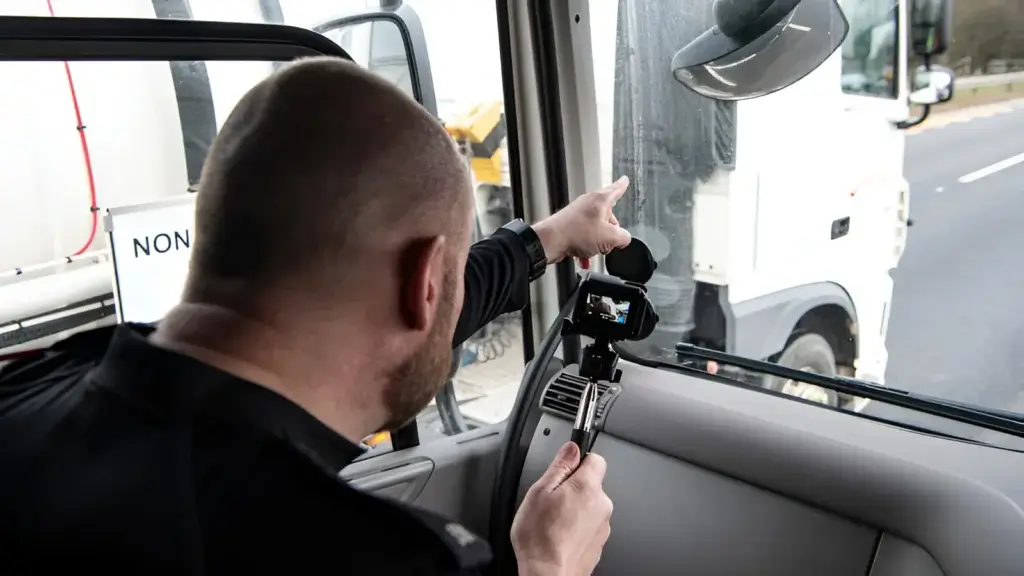
According to Commercial Motor, Sussex Police’s commercial vehicle unit (CVU) worked with the Driver and Vehicle Standards Agency (DVSA) on checks along the A23 last month. Officers looked at open-bed trucks, lorries and tractors towing trailers. Enforcement is also getting harder to spot: unmarked HGV patrols catch what patrol cars miss.
The results of national days of action show the scale of the problem. In 2024, 73.6% of the 131 vehicles stopped had an insecure load. In 2025, the share fell to 59.2% of 120 vehicles. That is an improvement, but still close to six in ten.
A campaign driven by a family tragedy
In 2022, 11-year-old Harry Dennis was killed in Hooe, East Sussex, when he was hit by an unsecured scaffold board that fell from a van. His mother, Maria, later approached the police to help prevent similar accidents.
PC Barry Freeman described her as the inspiration behind the campaign. Maria’s message to drivers is simple: “The accident happened but it didn’t have to happen.” She urges them to take the extra time to check that their load is secure.
Who is responsible?
Police want drivers to take personal responsibility for making sure their load is safe before they set off. People who load vehicles and trailers must also play their part.
The law covers both sides. Under section 40A of the Road Traffic Act 1988, it is an offence to use a vehicle whose load creates a danger of injury, but also to cause or permit its use. That means both the driver and the operator can be held liable.
The industry stresses that drivers should not carry the burden alone. Logistics UK, which has just published an updated load security guide, says responsibility is shared between the consignor, operator, driver and consignee. As we reported, insecure loads trigger around 2,000 DVSA prohibitions a year.
What drivers and operators risk
- A prohibition: the vehicle cannot move until the load is made safe, which means delays and missed delivery slots.
- A fixed penalty for the driver: for a section 40A offence in a goods vehicle, it comes with three penalty points.
- Court action: the fine for a goods vehicle is unlimited, and a repeat offence within three years can lead to disqualification. Operators can be prosecuted too.
- The Traffic Commissioner: the DVSA may check training records, risk assessments and maintenance. Serious failings can lead to a public inquiry and an operator’s licence being suspended, curtailed or revoked. Drivers can face a conduct hearing.
How to avoid a prohibition
- Check the load before departure, and again after each drop. As a load gets smaller, the weight can shift and affect braking and steering.
- Use the right restraints, such as straps, nets, locator boards and dunnage, and check their condition regularly.
- Plan the load for the whole route, including the order of drops.
- Know what your vehicle body is certified for, for example EN 12642-XL, and its limits.
- Operators should have a written load security policy, train drivers and keep records.
- If someone else loaded the trailer, check it anyway. The driver is the one on the road.
Official advice is available in the DVSA’s load securing guidance for vehicle operators.
For hauliers, the cost of a prohibition is counted in hours and missed deliveries. The cost of a load falling onto the road can be counted in lives.