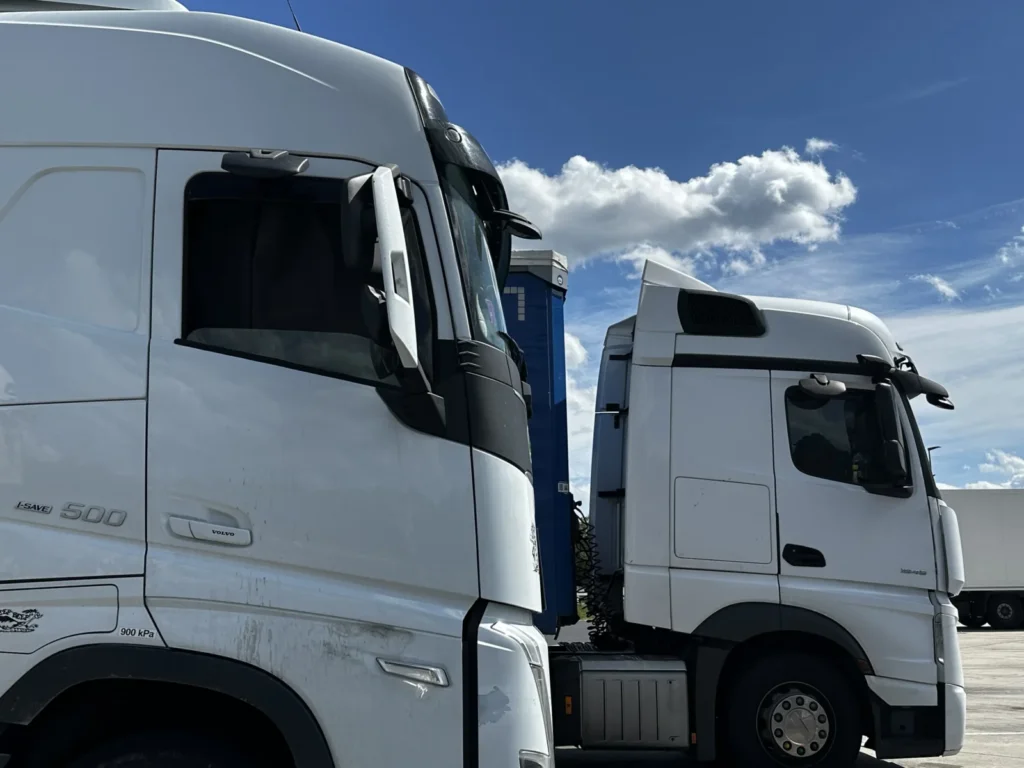
The driver halted the vehicle on the way to the consignee in Almelo. Reportedly, he has already been staying in the truck cab for dozens of days and refuses to deliver the load until the pay issue is resolved. The situation is covered in detail by the Dutch regional portal “Oost”. The publication shows that the conflict has long since gone beyond the boundaries of a typical employment dispute.
The driver has been parked by an “Esso” fuel station for twelve days now. The cab has become his temporary home – without a shower, without basic amenities and, most importantly, without heating. According to the driver, he has been practically living in it since last July. He has not seen his family for eight months already.
The situation escalated further when the truck’s engine was switched off remotely – from Lithuania. As a result, the man can no longer use the heating system. To keep warm, he uses a small gas burner placed in the cab between his legs – the only way to warm up at least a little.
“It’s very hard for me, it’s very cold in the truck,” the driver is quoted as saying.
Pay dispute
According to the driver, his wages were paid for the first two months, but later the payments became too small or did not reach his account at all. He claims that other colleagues are facing similar problems, but he was the one who decided to take action.
On the way to Almelo, where he was supposed to deliver the load, he stopped and stated that he would not hand it over until he is paid.
The driver is relying on the so-called right of retention – a principle under which the load may be withheld until the amount due has been paid. In this case – his wages.
“Modern-day slavery”?
Ricardo Ouwerkerk, a representative of the Dutch trade union FNV, assesses the situation very harshly. According to him, if the driver is not paid the wages due of EUR 60–100 per day, it may be considered exploitation, even “modern-day slavery”.
FNV and the VNB organisation are monitoring the situation, trying to contact the Lithuanian company and even informing its customers in order to increase pressure.
Police and attempts to take over the truck
The police have already been involved in the conflict. On the second day of the protest, officers arrived after the employer reported a possible misappropriation of the vehicle. However, the police did not support the company’s version and left.
After a few days, three police patrols came to the truck – after several people tried to get into the cab and pull the driver out. It is believed this may have been an attempt by the employer to take control. The driver locked himself in the cab.
“I feel like I’m in prison,” Muhammad says.
Solidarity at the fuel station
While the dispute remains unresolved, trade union representatives periodically bring food – rice, eggs, meat, bananas. Visitors to the fuel station also sometimes bring coffee or sandwiches.
“We’re trying to make it as humane as possible for him,” says R. Ouwerkerk.
Union representatives emphasise that it is important to show the driver that he has not been left alone.
The situation escalated further when the engine was switched off remotely – from Lithuania. As a result, the man can no longer use the heating system. To keep warm, he uses a small gas burner placed in the cab between his legs – the only way to warm up at least a little.
The police have already been involved in the conflict. On the second day of the protest, officers arrived after the employer reported a possible misappropriation of the vehicle. However, the police did not support the company’s version and left.
After a few days, three police patrols came to the truck – after several people tried to get into the cab and pull the driver out. It is believed this may have been an attempt by the employer to take control. The driver locked himself in the cab.