

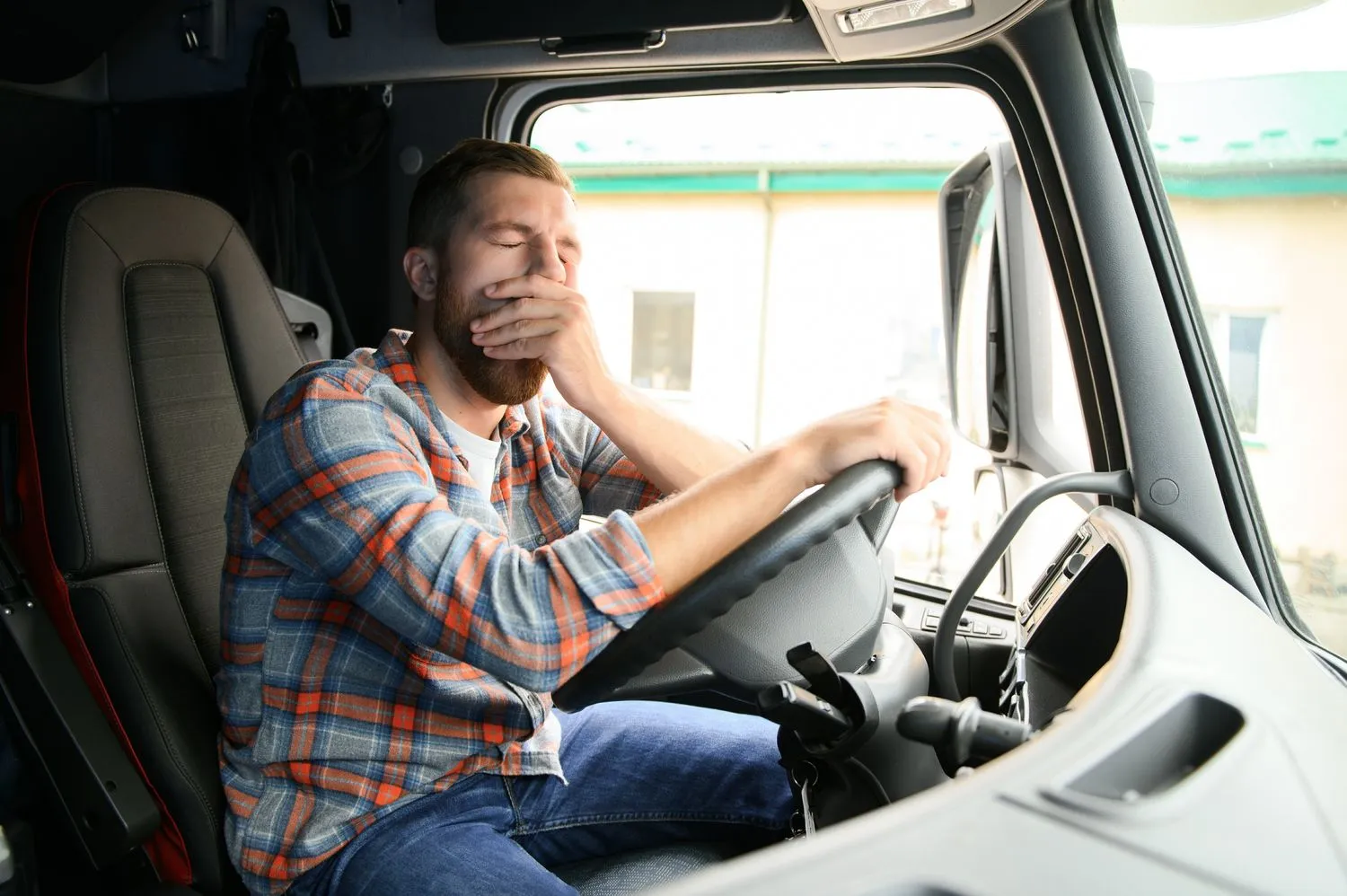

On 21 June, the European Transport Workers’ Federation (ETF) and its affiliated unions will coordinate activities across multiple European countries. The aim is to draw attention to fatigue in both freight and passenger road transport, and to push for stronger enforcement of existing rules alongside improved working conditions for drivers.
The campaign draws on the symbolism of the year’s longest day, but ETF argues that for many professional drivers the “longest day” does not come once a year — it is almost every day. In the federation’s view, tiredness behind the wheel cannot be treated as a private matter: it increases risk for the driver, the load being carried and all road users.
What the numbers say about truck and bus drivers
Research cited by ETF suggests that more than 60% of truck drivers admit they regularly continue driving even when fatigued. Among bus drivers, the figure is higher, at 66%.
The federation also points to data on drivers falling asleep at the wheel. According to ETF, one in three truck drivers has experienced this, as has one in four bus drivers. In many cases, drivers said they were unable to stop and rest at the moment they genuinely needed to.
ETF cites long working hours, irregular schedules, breaks that are too short or inadequate, and a shortage of suitable rest areas as key factors. It also links these issues to organisational pressure in supply chains and weak enforcement of existing regulations.
A growing road safety problem
The federation is calling on decision-makers, governments and employers to ensure EU road transport rules are not only respected but enforced effectively. In ETF’s view, a safe transport system is impossible when drivers are chronically overworked, poorly paid and left without a realistic opportunity to rest.
For far too many professional drivers, every day feels like the longest day. Chronic fatigue is built into their daily work. This is a safety crisis driven by weak enforcement, unjustified pressure and supply chains that have become unhealthy — often relying on very long subcontracting chains. We need to fix the root causes. A job that isn’t good enough for an EU citizen isn’t good enough for people from so-called third countries. — Livia Spera, ETF general secretary
Spera’s comments also touch on a sensitive issue in European road transport: the sector’s reliance on drivers from outside the European Union, and complex subcontracting models which — according to ETF — can shift pressure down to the weakest links in the chain.
Campaign actions across Europe
For four years, unions affiliated with ETF have run awareness activities in the week leading up to 21 June. Their representatives meet drivers face to face, discuss working conditions and seek to bring the scale of fatigue in road transport to the attention of the wider public.
This year’s flagship action is planned in the border area between Belgium, Luxembourg and Germany. The event is being organised by Belgian unions ACV and BTB together with partner organisations from Luxembourg and Germany.
Drivers, union representatives and enforcement authorities are expected to attend. Discussions will focus on working conditions, fatigue and road safety. A shared breakfast with drivers is also planned, giving organisers an opportunity to hear directly about day-to-day experiences on the road.
The European Transport Workers’ Federation represents more than 5 million transport workers organised in 200 unions across Europe. It brings together unions from across the sector, including road, rail, aviation, maritime, urban transport and logistics.


