Port chief executive Doug Bannister told Liam Byrne MP, chair of the Business and Trade Committee, that Dover remains concerned about the impact of the Entry/Exit System on traffic flows through Kent during the peak season.
Most drivers leaving the UK through Dover hold European passports and do not need to complete EES registration. But their vehicles could still be caught in wider congestion if passenger traffic backs up on the approaches to the port — a scenario that would hit time-sensitive freight including medicines, automotive components and fresh food.
The EU Entry/Exit System became fully operational across the Schengen area on 10 April 2026, replacing manual passport stamping for non-EU nationals on short stays. It records passport details, entry and exit data, facial images and fingerprints. At Dover, checks happen before departure because French border controls operate on the UK side of the Channel.
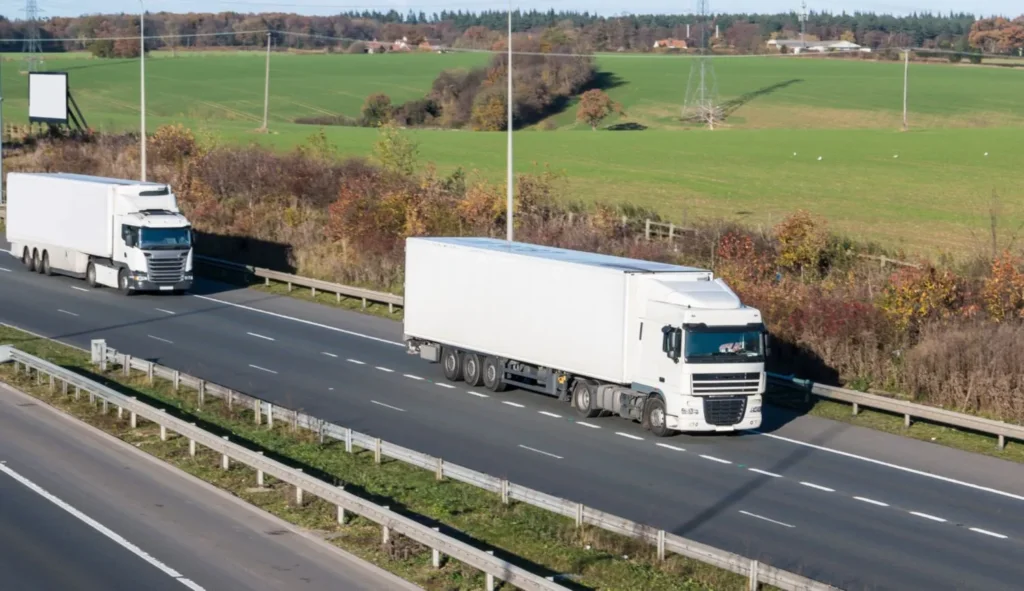
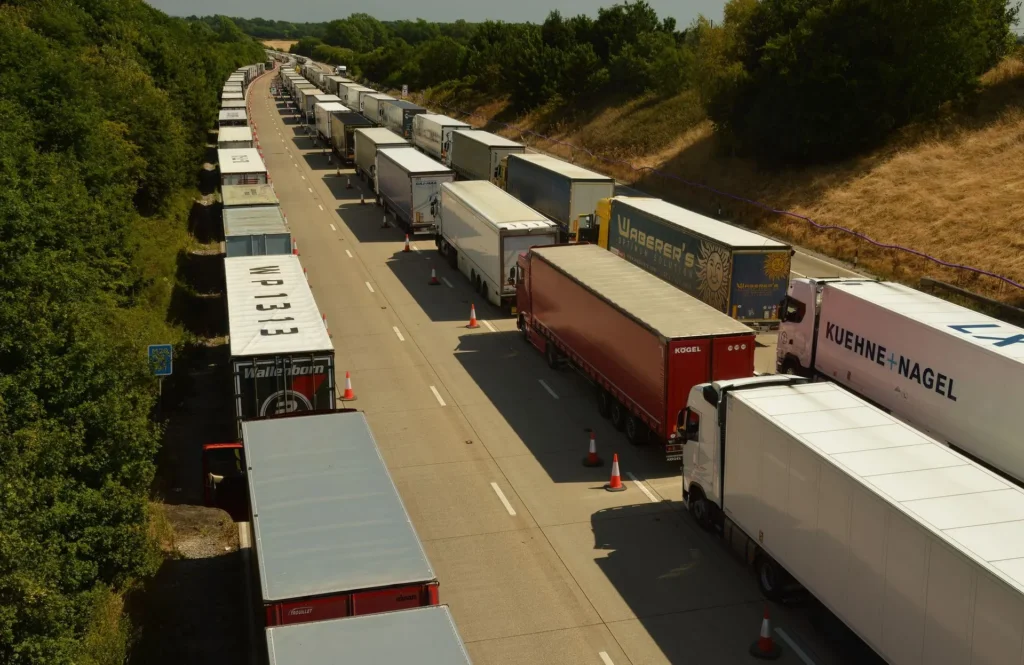
Tourist cars and coaches requiring first-time EES registration risk creating queues that spill back into the local road network and onto the M20. Once that happens, HGVs sharing the same approaches face delays regardless of whether their own drivers need processing.
£40m Dover facility not being used as planned
Dover has built a £40 million EES facility at the Western Docks, with 84 kiosks designed to process passenger data away from the most constrained part of the ferry terminal. The facility is not being used as intended. Interoperability problems with EES kiosk technology mean French policy currently requires car EES profile creation to happen at the Eastern Docks Ferry Terminal instead — a location with far less traffic space, and one where queues are more likely to disrupt wider port operations.
Dover has already seen how fast this can escalate. During May half-term, a critical incident was declared after queues hit around 4.5 hours — the result of just a few hours of EES processing on a day with roughly 8,500 tourist vehicles. Summer days regularly bring more than 12,000.
Freight movements through Dover do not pause for holiday peaks, and the port remains one of the busiest UK–EU links for just-in-time traffic. Dover also argues the short straits route is hard to substitute: a lorry would need to miss around 20 ferries, or face a delay of more than 16 hours, before rerouting became commercially worthwhile — and alternative capacity may not exist even then.
Port wants EES stood down before queues form
Dover wants EES suspended for the summer period entirely. Failing that, it is calling for a system that allows processing to be stood down selectively whenever traffic forecasts point to a serious congestion risk.
Bannister’s argument is one of timing: contingency measures need to kick in before queues form, not after — by which point freight and passenger traffic are already tangled together.
The port has raised the issue with the Department for Transport, the Home Office, the Prime Minister, the European Union, the French Ministry of Interior, Police aux Frontières and the Calais prefecture. French border police have indicated they will provide additional resources, but Dover maintains that staffing alone will not solve a problem rooted in where and how EES processing happens.