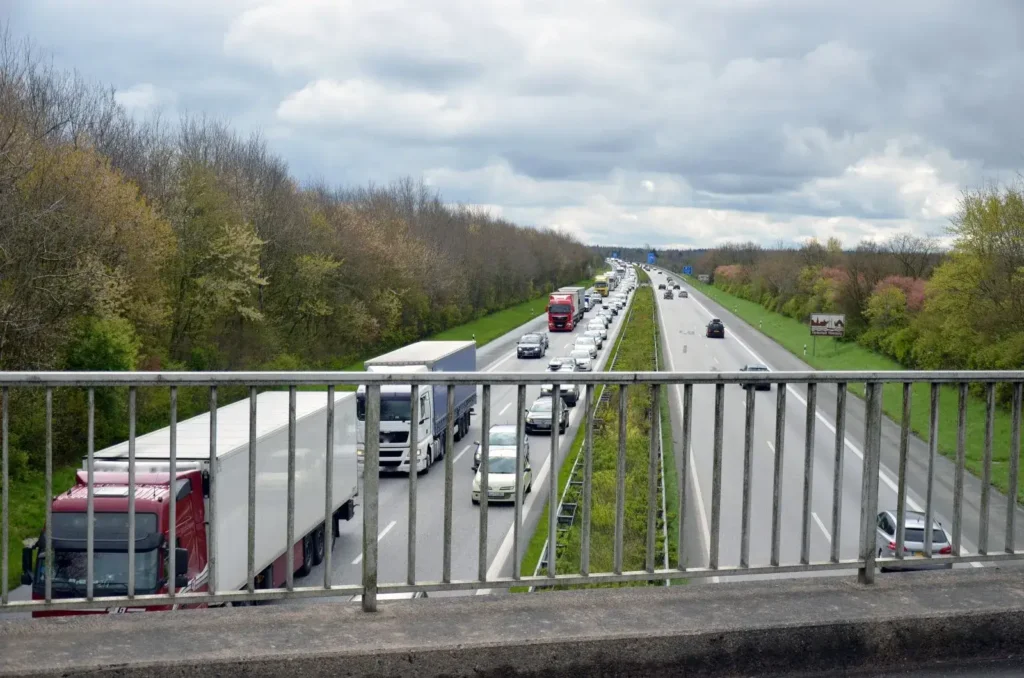
European toll regimes remain highly fragmented. According to IRU, four main models currently operate across the European Union.
Cyprus, Finland and Malta do not levy tolls on trucks. Eleven countries use distance-based systems relying on GNSS or roadside DSRC equipment. Six countries use time-based vignettes, while seven still rely on conventional toll plazas.
That mix is set to evolve.
The revised Eurovignette Directive will generally prohibit truck vignettes on the core TEN-T network from March 2030, subject to justified exceptions. The wider trend is clear: more charges will be linked to the actual distance travelled.
For carriers, this matters most on international routes. The final cost increasingly depends on the length of the journey, the vehicle’s Euro standard, its CO2 class and the way each national toll system is designed.
Poland: higher rates and 645 km added to the toll network
From the perspective of Polish carriers, 2026 has already brought a significant increase in costs. Poland raised toll rates in two stages, leaving them approximately 40% higher than in 2025. At the same time, the tolled road network grew by 645 km.
That distinction is important because a carrier’s bill depends on more than the price per kilometre. The number of tolled kilometres on a given route matters just as much. Czechia, Latvia and Slovakia followed a similar path in 2026 by expanding their tolled road networks.
IRU also stresses that Poland’s planned CO2 and air-pollution components remain proposals. They should not be treated as rules already in force.
CO2 is now almost as expensive as the road itself
The biggest shift in European tolling is the growing role of emissions. In distance-based systems, charges may combine four elements: infrastructure costs, air pollution, noise and CO2.
As of 25 March 2026, an air-pollution component based partly on the vehicle’s Euro standard became mandatory on tolled networks across the European Union, although the rules provide for some exceptions.
CO2 classification is becoming even more significant. Vehicles are assigned to five classes, from class 1, which carries the highest rate, to class 5, covering zero-emission trucks.
Germany provides a clear example. IRU calculations show that a 40-tonne, five-axle Euro VI combination in CO2 class 1 pays around €0.35 per kilometre on German motorways. Of that amount, 45.4% is linked to the CO2 component, while 44.5% covers the infrastructure itself.
In other words, the emissions charge is now almost as large as the road-use charge. Assuming fuel consumption of 30 litres per 100 km and diesel prices from mid-September, IRU estimates that fuel and tolls together account for approximately €1.09 per kilometre.
A truck’s CO2 class can change without any technical modifications
The number of countries including CO2 in toll calculations also increased in 2026. Before that year, nine countries used such a mechanism. Bulgaria joined them in June, and IRU estimates that the toll cost for a Euro VI heavy vehicle rose by around 17% as a result. Similar arrangements began in the Netherlands and Flanders in July.
On 1 July, Germany also introduced stricter reference values for assigning CO2 classes.
For carriers, this means the same vehicle can be placed in a less favourable class even if nothing has changed technically. IRU therefore recommends checking each vehicle’s CO2 classification regularly with the relevant toll-system operator.
The Netherlands: temporary relief followed by a sharp increase
The Netherlands shows that toll changes do not always move in only one direction. After launching its distance-based system on 1 July, the country reduced all rates by 22.3% from September through December in response to higher fuel costs. The reduction is temporary.
From 1 January 2027, the full rates are expected to return, with an additional 2.6% indexation increase. For a Euro VI truck weighing more than 32 tonnes in CO2 class 1, the rate would rise from €0.156 to €0.206 per kilometre.
According to IRU calculations, this would make the bill approximately 32% higher, or nearly €500 more for every 10,000 tolled kilometres. The organisation notes, however, that the rates published for 2027 were still provisional in mid-September.
Romania has already switched to distance-based charging
On 1 October 2026, Romania replaced the vignette for heavy vehicles over 3.5 tonnes with the distance-based TollRo system. For a Euro VI truck with a gross vehicle weight of at least 12 tonnes, the motorway rate is 0.48 lei per kilometre, or approximately €0.10. The rate on national roads is half that level.
Until 15 January 2027, payments are expected to be made using a route ticket or an app. Onboard units and EETS support are then due to be introduced, allowing tolls on several systems to be paid through one device.
Lithuania is moving to Via Toll in January
One of the most important reforms at the start of 2027 will take place in Lithuania. The Via Toll system is scheduled to launch on 1 January, with charges based on distance travelled and including a CO2 component. According to IRU, the average rate for a Euro VI truck weighing more than 12 tonnes and with no more than three axles is expected to be approximately €0.111 per kilometre.
The scale of the change is also reflected in projected revenue. Annual toll income is expected to increase from around €70 million to €110 million, despite broadly similar traffic volumes. That points to higher average costs, particularly for carriers running extensive transit operations.
Slovakia: carriers face an onboard-unit change
From 1 January 2027, Slovakia plans to move toll collection to a state-run system. For carriers, the key issue will be the onboard equipment. Companies using SkyToll units will have to switch to new national OBUs or use an EETS provider.
IRU says the procedure for replacing the devices has not yet been published. Slovakia’s state audit office has also described the implementation timetable as risky.
France: new tolls in the east
Companies operating through eastern France are also facing major changes. From 1 January 2027, the R-Pass system in Alsace is expected to cover around 200 km of roads. Trucks weighing more than 3.5 tonnes are expected to pay between €0.07 and €0.34 per kilometre.
From 1 April, a similar charge is also planned for the rest of the Grand Est region, covering approximately 525 km of roads. The details have not yet been finalised. Interoperability will be another important consideration for companies serving this corridor.
From 2027, as many as six toll systems will operate alongside one another in the Grand Est region. A single active 4G EETS device can replace separate tickets for individual networks, provided the provider covers every system required for the journey.
Croatia is moving away from toll plazas
Croatia is preparing another major change. From March 2027, traditional toll plazas are scheduled to be replaced with a free-flow system that can charge vehicles without requiring them to stop. Vehicles used for freight transport will need the appropriate tag or onboard unit.
Drivers will no longer have to queue at conventional toll points, but carriers will need to prepare their fleets in advance for the new system.
Sweden will extend its vignette system
IRU also reports that Sweden plans to extend its vignette system to goods vehicles over 3.5 tonnes in March 2027. This arrangement is unlikely to remain in place indefinitely, as European Union rules are gradually phasing out vignettes on the core TEN-T network.
Denmark and Poland: not everything is settled yet
IRU highlights two proposed changes that are sometimes presented as final, even though they have not yet been formally adopted. The first concerns Denmark and a planned extension of its distance-based charging system to vehicles over 3.5 tonnes. The second is Poland’s proposal to introduce CO2 and air-pollution components.
In both cases, carriers should follow the legislative process rather than treat the announced arrangements as rules already in force.
Older onboard units could become a problem
The changes involve more than rates and tolled roads. French mobile-network operators are expected to shut down 2G by the end of 2026, while Germany is planning a similar transition for 2028. New toll systems will not support 2G, so fleets need to check whether their current onboard units will have to be replaced.
EETS will become more important not only because it allows tolls in several countries to be paid through one device, but also because it can help carriers meet the technical requirements of newer toll systems.
Full exemptions for electric trucks will not last forever
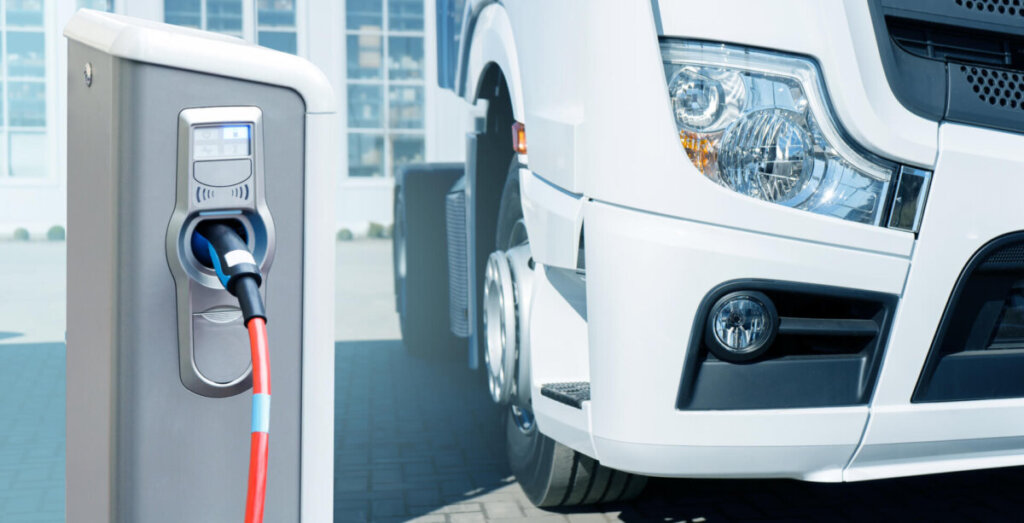
Zero-emission vehicles will also be affected. From mid-2031, member states will no longer be allowed to exempt these trucks completely from road tolls.
Instead of a full exemption, operators will be able to offer a 50–75% reduction. This is another sign that European toll systems are moving towards more complex tariffs based on distance, emissions and the characteristics of each vehicle.
Annual updates are no longer enough
IRU’s analysis shows that international carriers can no longer treat road tolls as a cost that can be updated once a year using the latest price list.
In 2026, the changes went beyond rate increases. Countries expanded their tolled road networks, introduced new emissions components, adjusted CO2 classes and changed the way some tolls are collected.
The start of 2027 will bring several more reforms on key international freight routes.
For carriers, this means monitoring rates, the scope of tolled roads, each vehicle’s CO2 class, the required onboard equipment and the timing of upcoming changes. In practice, a price list alone is no longer enough. Increasingly, costs depend on which vehicle is being used, which road it takes and when the journey is made.