Both chambers of the Swiss Parliament approved the LSVA reform in a final vote on 2 October 2026, completing the parliamentary stage of the legislative process.
LSVA (Leistungsabhängige Schwerverkehrsabgabe) is a charge levied on heavy vehicles using Swiss roads. The amount depends, among other factors, on the distance travelled, the vehicle’s maximum permitted weight and its emissions category.
Electric and hydrogen trucks remain exempt until the end of 2030
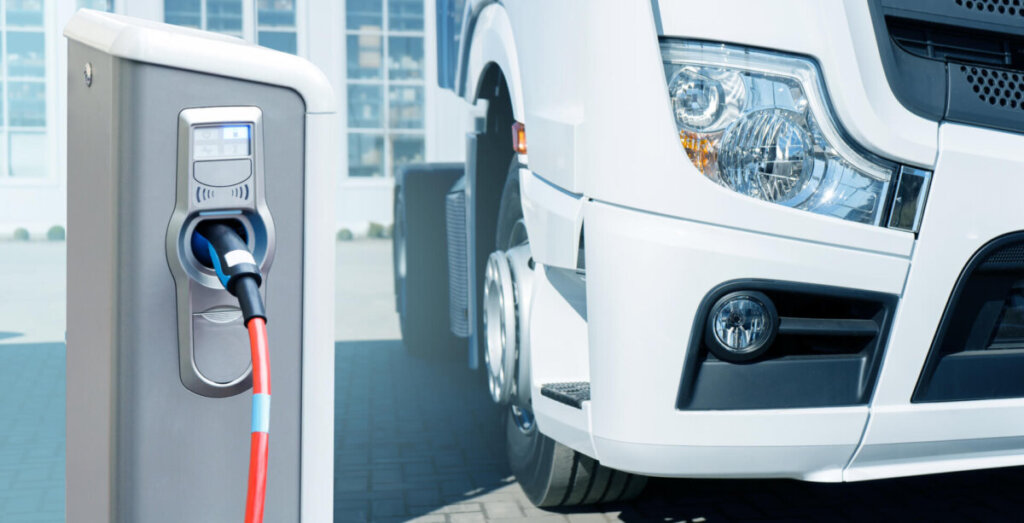
The changes primarily affect battery-electric trucks and vehicles powered by hydrogen fuel cells.
These vehicles are currently fully exempt from LSVA, and that exemption will remain in place until the end of 2030.
Zero-emission trucks will enter the charging system in 2031, but operators will benefit from declining discounts for several years. The statutory discount in 2031 will be at least 70%, meaning carriers will pay no more than 30% of the standard rate.
According to the schedule presented by ASTAG, the discounts will be:
- 2031 – 70%,
- 2032 – 50%,
- 2033 – 30%,
- 2034 – 20%,
- 2035 – 10%.
Electric and hydrogen trucks are expected to face the full LSVA rate from 2036.
For carriers considering electric trucks today, the reform provides a clearer roadmap for their gradual incorporation into Switzerland’s charging system.
Euro 6 could move into a more expensive category
The reform does not overhaul the LSVA framework. The system will continue to use three tariff categories linked to Euro emissions standards, and the existing calculation method will remain in place. The main change concerns how individual emissions standards are assigned to those categories.
ASTAG says Euro 6 is expected to move from the cheapest category, III, to category II in 2029. The final decision will rest with the Federal Council because the individual reclassifications are not set out directly in the legislation.
The proposed change is linked to the introduction of Euro 7 and the unusually long period during which Euro 6 has benefited from the most favourable charging category.
Euro 7 may receive a discount of up to 15%
New Euro 7 vehicles are expected to be placed in category II, with a possible discount of up to 15%. In practice, this could result in an effective rate close to the one currently paid by Euro 6 vehicles.
ASTAG points out that the legislation also allows the Federal Council to reduce this discount. The final level of the incentive will therefore be determined in the implementing ordinance.
Seven years’ notice for tariff-category changes
The reform is also intended to make future tariff changes more predictable. Any decision to reclassify vehicles into another LSVA category will have to be announced seven years in advance.
For example, if the government wanted to move a specific vehicle class into a more expensive category in 2035, the decision would have to be communicated in 2028.
This was one of the transport industry’s main demands. The LSVA is a significant factor in calculating a vehicle’s total cost of ownership and depreciation period. ASTAG notes that trucks often remain in service for at least 10 years, so a late change in tariff classification can materially alter the financial case for an investment.
No special incentive for alternative fuels
Parliament rejected the idea of using the LSVA to promote alternative fuels. The main concern is the difficulty of verifying which fuel a vehicle is actually using. Separate incentives would be difficult to enforce and could increase the risk of abuse.
LSVA will not be indexed automatically
The mechanism for adjusting the LSVA for inflation will also remain unchanged. The Federal Council will still be able to raise rates periodically, but Parliament rejected a proposal for automatic indexation.
Each increase will therefore continue to require a separate decision.
Federal Council will decide some details
The reform still faces a 100-day period during which an optional referendum could be launched. A nationwide vote would require 50,000 signatures. As of early October, no party or organisation had announced plans to start the referendum process, and ASTAG considers a referendum unlikely.
The next step is for the Federal Council to prepare the implementing ordinance. It will set out details including the specific tariffs and the final allocation of some vehicles to the LSVA categories.