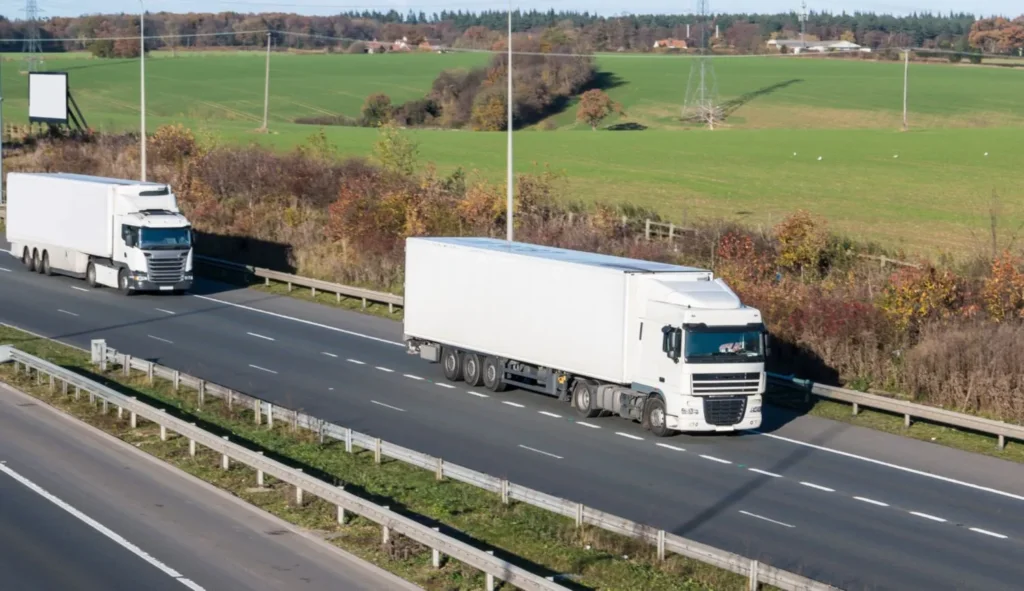
Back then, when oil climbed above $100 per barrel, the industry was under pressure, but demand was strong and the direction was clear. Today, the backdrop is far less certain. Across Europe, consumption has been softening for months, and transport volumes are no longer growing at the same pace.
Now, with new geopolitical tensions driving fuel prices up again, the challenge is not just cost. It is unpredictability on top of existing pressures and difficult market conditions.
Prices are moving quickly, sometimes within days, and the differences between markets are becoming more pronounced. In some regions, prices remain lower or are partially controlled, creating an international market where costs are an even more strategic element.
Carriers are adjusting in real time. Some are reducing speed to limit consumption. Others are planning refueling across borders or rethinking routes altogether. Governments are also stepping in, from tax measures to price caps, trying to contain the impact.
But these are short-term responses. The underlying reality is that fuel is more expensive, and the rise in prices is now affecting every decision across the transport chain.
For forwarders: rising fuel costs are now a capacity risk
Fuel is not just a carrier’s issue. It directly affects forwarders’ ability to secure transport.
Fuel accounts for up to 30–40% of a carrier’s operating costs. When prices increase by €0.20–€0.30 per liter, the impact is immediate. Transport becomes more expensive, and carriers become more selective about the loads they accept.
At the same time, many carriers are still operating on payment terms of 45 to 90 days. This means they are financing fuel upfront. When costs rise quickly, smaller carriers start limiting activity or rejecting underpriced loads.
For forwarders, this leads to reduced availability, higher rates, and more uncertainty.
Layered sourcing is becoming too expensive
In many European markets, freight is still sourced through multiple intermediaries. Each layer adds margin, but also reduces transparency and slows down decision-making.
In a stable market, this model can work. In a volatile one, it becomes inefficient.
As fuel prices rise, carriers increase rates, intermediaries protect their margins, and forwarders absorb the difference. This often happens without full visibility into where the cost is coming from.
Working directly with carriers becomes one of the fastest ways to regain control.
Contracts cannot keep up with market reality
Fuel prices now change weekly or even daily, while contract rates remain fixed. This creates a growing gap between real costs and agreed prices.
Forwarders relying only on contracts risk slower response times, limited access to capacity, and shrinking margins.
The spot market is increasingly where real prices are formed.
How Trans.eu helps forwarders respond
In this environment, speed and access matter more than ever.
With Trans.eu, forwarders can:
- access over 25,000 verified carriers across Europe
- compare offers in real time
- secure capacity faster
- work directly with carriers and avoid additional margins
This allows forwarders to react to market changes as they happen, instead of waiting for contract adjustments.
👉 Register on Trans.eu and start working directly with carriers
For carriers: empty kilometers are becoming more expensive than ever
Carriers are facing the same problem from a different angle.
Fuel has always been one of the largest cost components in transport. Now it is also one of the most unpredictable.
When prices rise by €0.20–€0.30 per liter, a long-haul trip can cost hundreds of euros more. If part of that journey is empty, the loss is immediate.
Every empty kilometer costs more today than it did just weeks ago.
The real pressure: rising costs and fixed revenues
Many carriers are still operating under fixed contract rates that do not adjust quickly enough. While fuel costs increase immediately, revenues remain unchanged.
This puts direct pressure on margins.
As a result, more carriers are turning to the spot market, where rates reflect current conditions and allow for more flexibility.
Fuel prices are rising, but not equally
The situation varies across Europe.
In Germany and the Netherlands, diesel prices have increased sharply, by as much as €0.40–€0.50 per liter within weeks. In Poland, part of the increase has been absorbed through reduced margins, while in Hungary prices have been capped. In Central and Eastern Europe, fuel is still cheaper overall, influencing where carriers refuel and operate.
This uneven landscape is already shaping carrier behavior and route planning.
Why reducing empty kilometers is now critical
In this environment, efficiency alone is not enough.
Carriers who consistently find return loads, avoid empty runs, and react quickly to market rates are better positioned to stay profitable. Even occasional empty routes now have a significant financial impact.
How Trans.eu helps carriers stay profitable
With Trans.eu, carriers can:
- find return loads faster across Europe
- reduce empty kilometers
- access current spot rates
- choose better-paying loads in real time
In addition, solutions like SafePay help carriers secure faster payments and reduce financial risk, which becomes critical when fuel costs are high and cash flow is under pressure.
👉 Find loads faster and reduce empty kilometers on Trans.eu
Key takeaway: a fragmented market requires faster decisions
Fuel prices are rising across Europe, but not evenly.
This creates a fragmented market where:
- costs differ by country
- carrier behavior is changing
- availability is less predictable
For forwarders, this means securing capacity faster and reducing reliance on intermediaries.
For carriers, it means reducing empty kilometers and reacting quickly to market rates.
In both cases, the ability to access real-time information and a broad network is becoming essential.
FAQ: Fuel prices and their impact on transport
Why is the spot market becoming more important?
Spot rates reflect current market conditions, including fuel price changes, while contracts adjust more slowly.
How can carriers reduce the impact of rising fuel costs?
By reducing empty kilometers, finding return loads faster, and using platforms that provide access to real-time rates.
How can forwarders secure capacity during price volatility?
By expanding their carrier network, working directly with carriers, and using freight exchanges to compare offers quickly.