
Girteka said 2025 was another difficult year for Europe’s road haulage market. With fewer loads available and excess capacity still in the system, rates and margins remained under pressure. In response, the company simplified parts of its operation, worked to improve fleet utilisation, and shifted its focus towards segments where fleet ownership is most critical: temperature-controlled transport and high-value cargo.
“The result is not yet where we want it to be, but the direction is clear — we are building a more efficient, disciplined, and profitable business,” said group CFO Marius Junda.
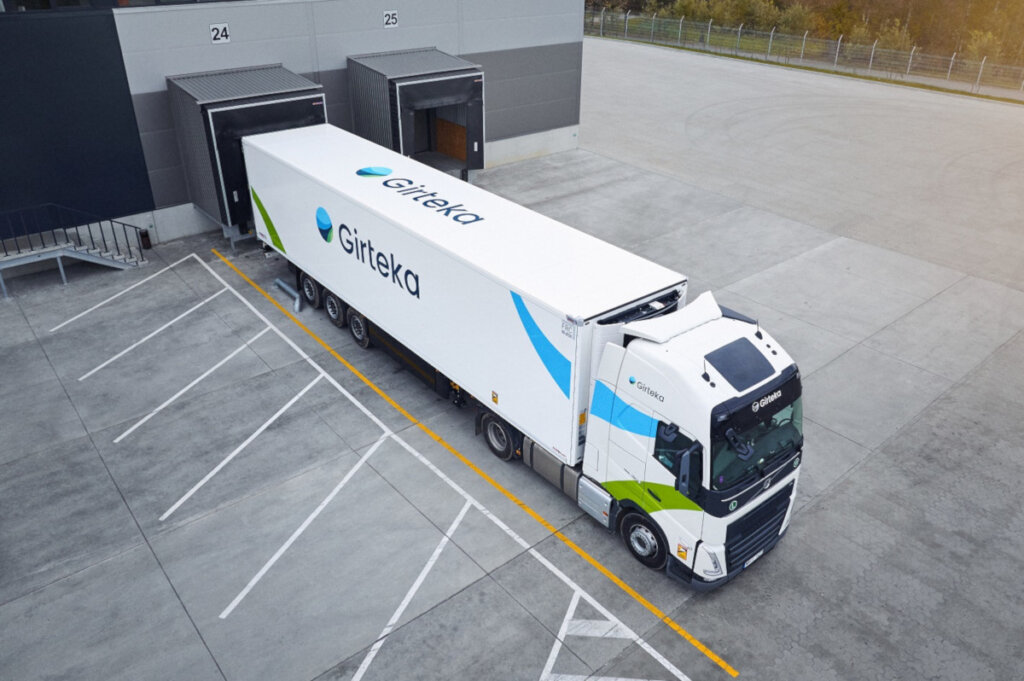
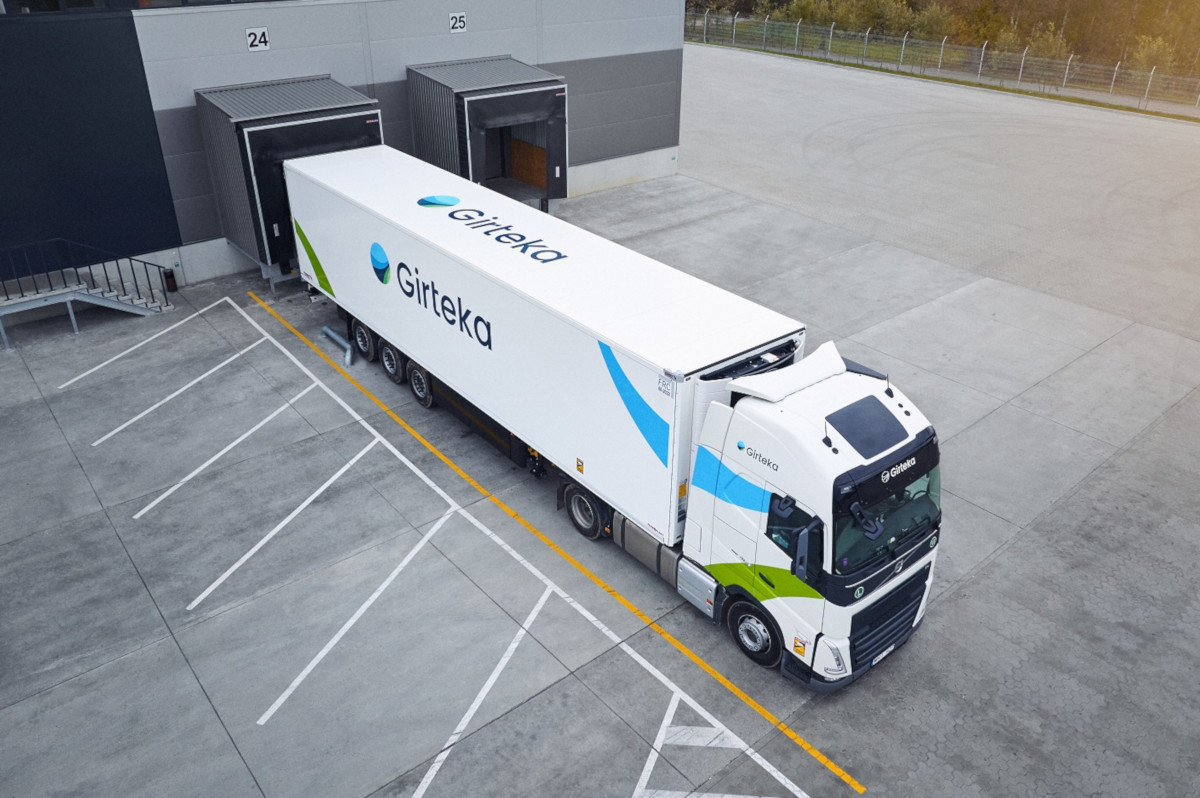
Girteka operates around 6,500 tractor units and 8,000 trailers. In 2025, it ordered 2,800 new tractors, and the average vehicle age stands at 2.5 years. Each year, the fleet completes roughly 800,000 full truckload (FTL) shipments.
“The improvement in EBIT shows our efficiency measures are starting to deliver. For us, it’s not only about revenue — it’s also about how effectively we use our assets and how well we manage costs,” Junda said.
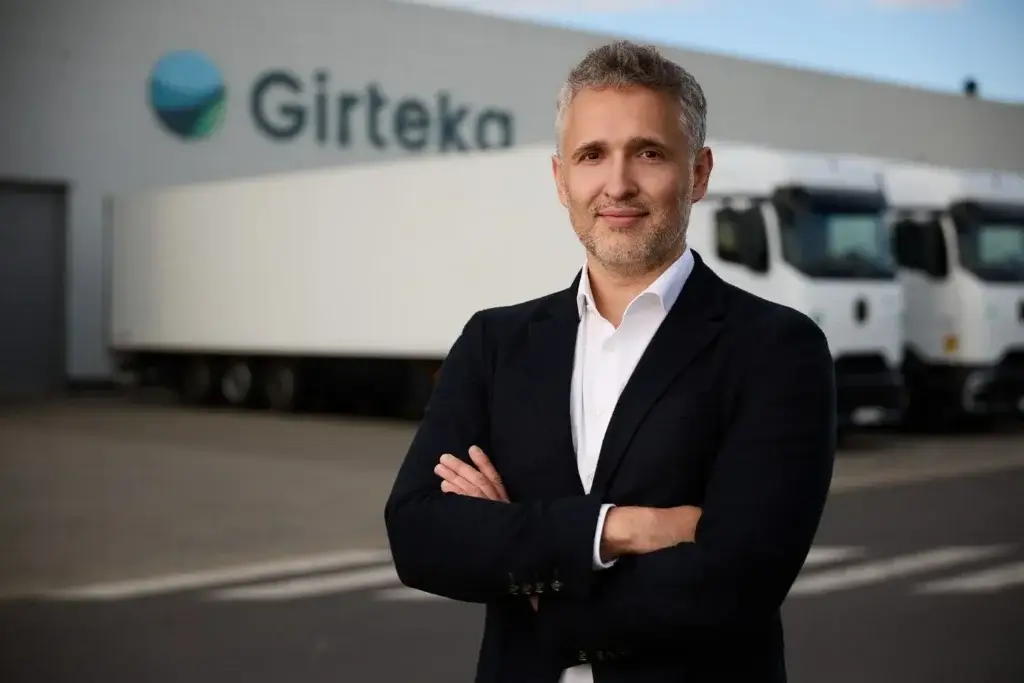
Marius Junda / Photo: Girteka
Digital tools to speed up workflows and cut manual work
Digitalisation is a central part of Girteka’s operating model overhaul. The company has been running a digital transformation programme since 2020 and said it plans to allocate around €120m to it by 2028.
“Technology matters to us when it helps us run operations better — make decisions faster, plan transport more effectively, and reduce the risk of errors,” said Junda.
More than 100 customers are already integrated with Girteka’s digital solutions, and about 40% of orders are generated through digital channels. In 2025, automation helped save around 32,000 hours of manual work.
Intermodal volumes up about 50% year on year
Alongside its road operations, Girteka is expanding its intermodal business. In 2025, the company moved more than 27,000 trailers by rail, while partners in its intermodal network covered nearly 25.2m kilometres.
According to the company, this translated into a reduction of almost 29,000 tonnes of CO2 emissions. Girteka said its intermodal volumes are growing by roughly 50% each year. In 2025, it organised 718 full train runs.
Taxes and growth plans
Girteka also highlighted its contribution to Lithuania’s economy. In 2025, the company paid €64.5m in taxes, up from €62m in 2024. Across 2023–2025, the total exceeded €250m.
At the same time, due to existing regulations and a limited ability to recruit drivers to Lithuania, the size of the domestically registered fleet is expected to remain stable. Further fleet growth is planned in Poland and Latvia, where Girteka said it is gradually expanding its operational capacity. Lithuania is set to remain the group’s main management hub.
Girteka employs nearly 15,000 people, including around 10,000 professional drivers. The company said it will continue investing in training, safety and operational processes.
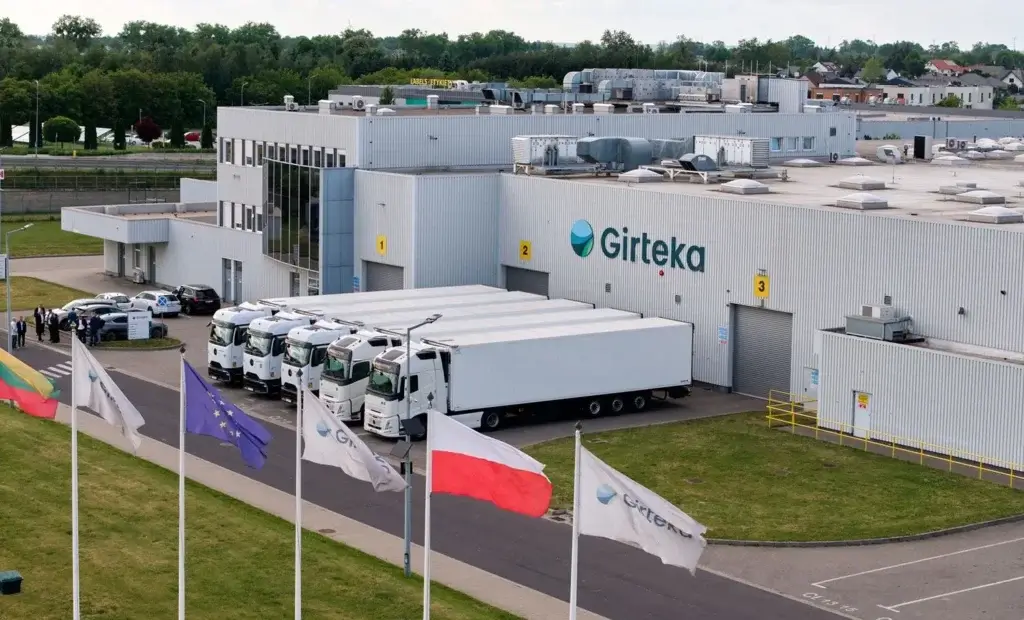
Girteka transport base in Sadachy, Poland / Photo: Girteka
More cost discipline — and readiness for a market rebound
Girteka said it is positioning itself for the next growth phase once Europe’s transport market shows a clearer recovery. The carrier added that in 2026 its priority will be to lift productivity and improve profitability.
“We have a clear direction, a modern fleet, a strong customer base, and a team capable of delivering the changes we need,” Junda said.