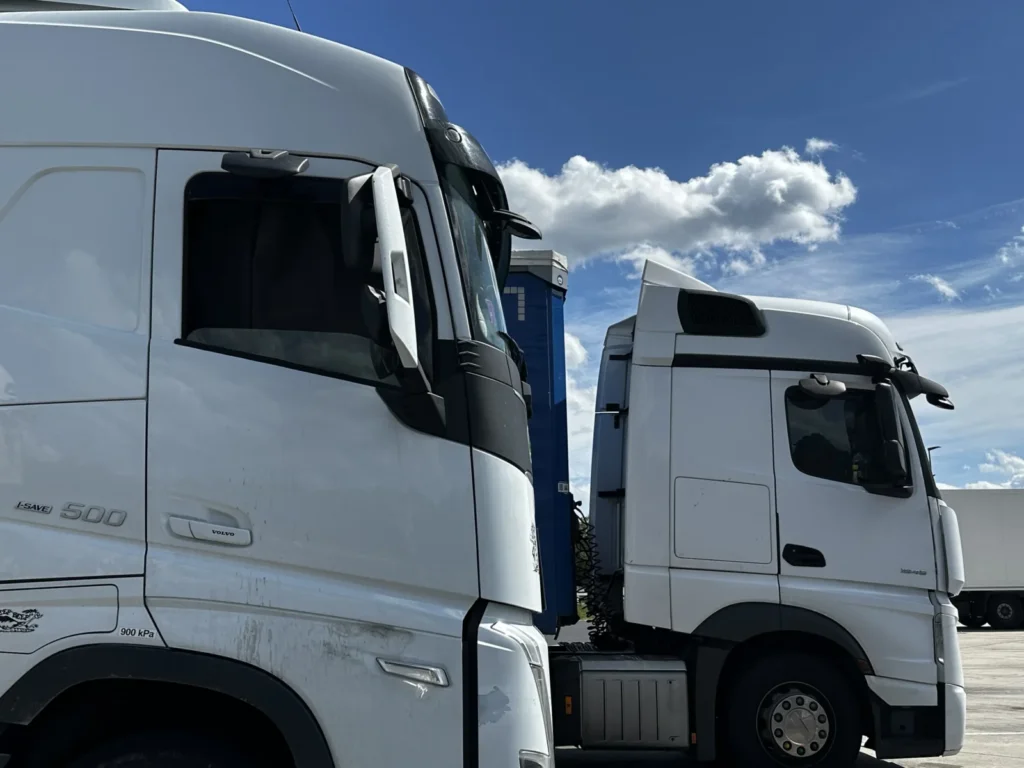
Piano Neve is a traffic management tool for the winter period, designed to reduce risks associated with snowfall, ice and freezing rain.
During winter, road transport – especially heavy vehicles – is particularly vulnerable to disruptions, accidents and infrastructure blockages. One of the key pillars of the plan is the organisation of dedicated parking and stopping areas for heavy vehicles, which are activated during crisis situations.
During the winter period, road infrastructure managers can issue orders requiring the use of winter tyres or the carrying of snow chains. Tyres approved for winter driving must be marked with the M+S symbol and comply with the specifications listed in the vehicle registration document. The requirement applies to all motor vehicles except mopeds and two-wheeled motorcycles.
Parking for trucks over 7.5 tonnes
As part of the plan, a map of stopping areas and parking facilities for trucks with a gross vehicle weight over 7.5 tonnes has been developed. These locations are activated when the authorities decide to temporarily halt heavy traffic in order to prevent traffic paralysis and safety risks.
The parking areas are mainly located near the most critical sections of national roads and motorways managed by ANAS, the authority responsible for managing Italy’s national road and motorway network, particularly in areas prone to heavy snowfall. This network complements the infrastructure of other motorway operators, creating a coordinated nationwide system for road transport.
From the transport industry’s perspective, the parking and stopping areas provided under the snow-clearing plan serve as an important safety buffer. They allow truck drivers to stop safely away from the carriageway, reducing the risk of accidents and lane blockages.
At the same time, they enable road services to carry out snow clearance, surface treatment and maintenance work more efficiently. For transport companies, this means greater predictability of winter routes, improved stop planning and reduced delays in transport operations.
Truck blockades and traffic management
In the event of snow or ice, the relevant authorities can temporarily halt heavy goods vehicle traffic and direct drivers to designated stopping areas. These may include public car parks, industrial zones, interports, dedicated manoeuvring areas and suitably adapted service areas.
Operational coordination is handled by Viabilità Italia, the National Traffic Coordination Centre operating within the Ministry of the Interior and the traffic police. The centre monitors weather conditions, infrastructure status and traffic intensity, enabling uniform decisions to be taken across Italy.
Access to data and route planning
The official list of parking and stopping areas included in this year’s plan has been published by ANAS in the form of an online document.
It contains detailed information on locations, reference roads, kilometre markers and the type of area, broken down by region. The document is a practical tool for carriers and freight forwarders planning road transport in Europe during the winter season, and also supports enforcement authorities.