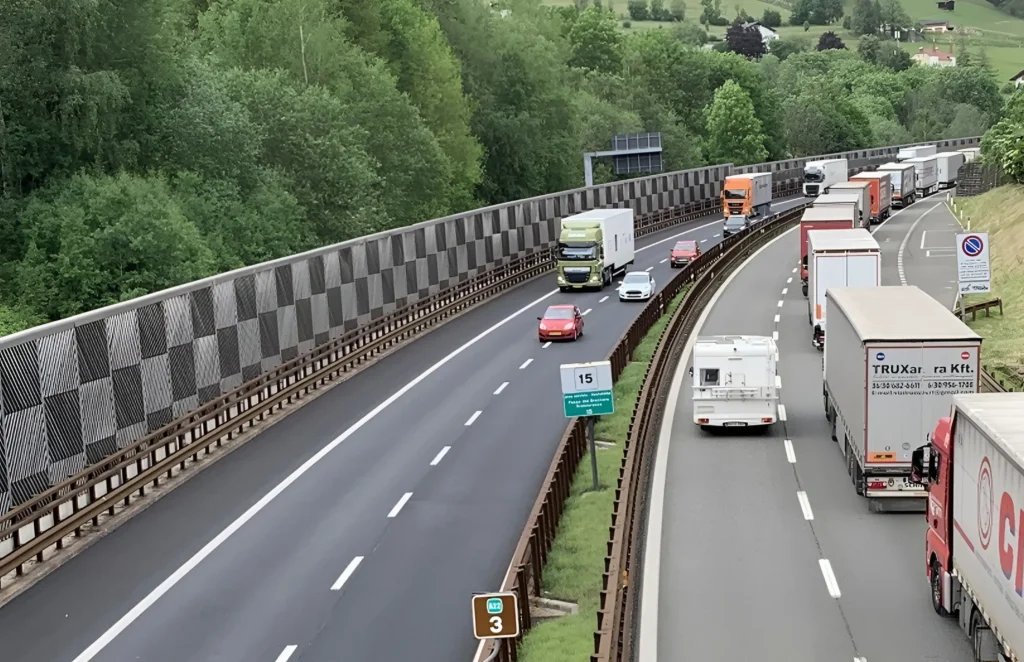
Snow, ice and freezing rain test the resilience of Europe’s road transport system every year. In Italy, the response to these risks is known as Piano Neve – a winter traffic management system that introduces a coordinated plan for truck parking and rest areas. The plan plays a key role in driver safety, traffic flow and the continuity of supply chains.
On 6 January 2026, Italian authorities activated Piano Neve for the first time this season, following heavy snowfall in central and northern parts of the country. The most affected areas included sections of the A1 motorway near Florence and routes leading into the Apennines.
Winter tyres and mandatory equipment
Under Piano Neve, road operators may require the use of winter tyres or the carriage of snow chains. Tyres approved for winter conditions must be marked with the M+S symbol and comply with the specifications listed in the vehicle’s registration documents.
The requirement applies to all motor vehicles, with the exception of two-wheeled mopeds and motorcycles.
Parking areas for trucks over 7.5 tonnes
As part of the winter plan, a map has been prepared showing designated parking and rest areas for vehicles with a gross vehicle weight exceeding 7.5 tonnes. These areas were activated on 6 January 2026 to prevent traffic gridlock and safety risks during heavy snowfall.
The most critical parking locations are situated near sensitive sections of national roads and motorways managed by ANAS, which are particularly vulnerable to snow and ice. This network operates in coordination with the infrastructure of other motorway operators, forming a nationwide support system for road transport.
For hauliers and drivers, these sites act as a safety buffer, allowing vehicles to stop safely away from the carriageway, reducing the risk of accidents and lane blockages. They also enable road services to carry out snow clearance, gritting and maintenance work more effectively.
Truck stoppages and traffic management
In severe winter conditions, the competent authorities may temporarily suspend truck traffic and divert vehicles to designated rest areas. These may include public car parks, industrial zones, interports, manoeuvring yards and adapted rest facilities.
Operational coordination is handled by Viabilità Italia, the National Traffic Coordination Centre operating within the structures of the Italian Ministry of the Interior and the road police. The centre monitors weather conditions, infrastructure status and truck traffic density, ensuring a consistent approach across the country.
Access to information and route planning
The official list of parking areas covered by Piano Neve 2026 has been published by ANAS and is available online. The document includes detailed information on locations, reference roads, kilometre markers and the type of facility, broken down by region.
For hauliers and freight forwarders, this serves as a practical tool for winter route planning, helping them anticipate stops and limit delays. At the same time, it supports road operators in maintaining traffic safety and traffic flow during challenging winter conditions.