In a comprehensive study, the German Environment Agency outlines how the country could reduce greenhouse gas emissions by at least 90% by 2040 compared with 1990 levels.
“The decade from 2030 to 2040 is crucial to ensuring greenhouse gas neutrality in Germany within 20 years,” the report begins. Transport is at the centre of this challenge. UBA argues that key decisions must be taken now to avoid locking in fossil-fuel dependency — and highlights one instrument in particular: the truck toll.
Its proposal states:
“From 2030, extending the truck toll to all roads (currently only federal highways) should strengthen its steering effect and support the transition to zero-emission drivetrains.”
According to the agency, this would accelerate the shift to electric HGVs, generate additional revenue for infrastructure, and ensure that environmental costs are more accurately reflected in freight pricing. The extra toll revenue should be used to:
- finance electric charging infrastructure, and
- support the expansion of the rail network.
For logistics companies, this would represent a fundamental reshaping of cost structures, regardless of whether vehicles operate on motorways or local roads.
Transport transition: electrification and infrastructure
UBA’s vision for the future of road freight includes several key elements:
- Electric trucks: The CO₂ component of the toll is already expected to drive the uptake of electric HGVs before 2030. New diesel trucks should largely disappear from the market by the mid-2030s.
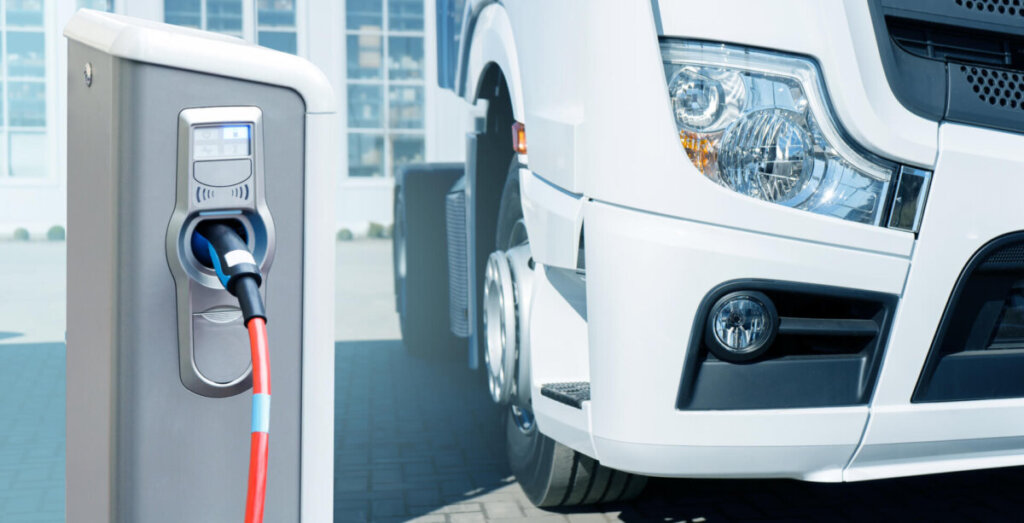
- Fast-charging networks: A nationwide system of megawatt charging points is considered essential, alongside overhead catenary lines on major corridors.
- Limited role for e-fuels: Synthetic fuels and hydrogen should be reserved for sectors where electrification is not technically feasible, such as aviation and maritime transport.
The message is clear: operators relying on diesel trucks beyond 2030 will face structural disadvantages — environmentally and economically.
Car toll, combustion engine phase-out, and new market rules
Although the truck toll is the centrepiece, UBA embeds it within a broader package of policies:
- From 2030, Germany should introduce a distance-based car toll on all roads, rising gradually by 2035.
- The country should end approvals for new petrol and diesel cars and vans from 2032, three years earlier than the EU requirement.
- By 2035, at least 50% of the vehicle fleet should be electric.
UBA stresses that these measures are economic as well as environmental: clear long-term rules are intended to give companies planning certainty and ensure social fairness during the transition.
A new era of cost transparency in freight transport?
Extending the truck toll to the entire road network would mark one of the most significant changes to German transport policy in decades. It would reshape route selection, investment strategies, and even regional competitiveness. But UBA insists that only strong and consistent price signals can deliver the 2045 climate targets.
For the first time, an official federal scenario explicitly proposes:
- a full extension of the toll system,
- a rapid transition to zero-emission heavy vehicles, and
- a financing strategy centred on rail and charging infrastructure.
The debate is likely to intensify — not least within the transport and logistics sector.
The analysis is part of the current position paper of the Federal Environment Agency on greenhouse gas neutrality by 2045. The full paper titled “Climate Neutrality 2045: Emission Path 2040” is available at: https://www.umweltbundesamt.de/publikationen/bis-2040-treibhausgase-um-mindestens-90-prozent