

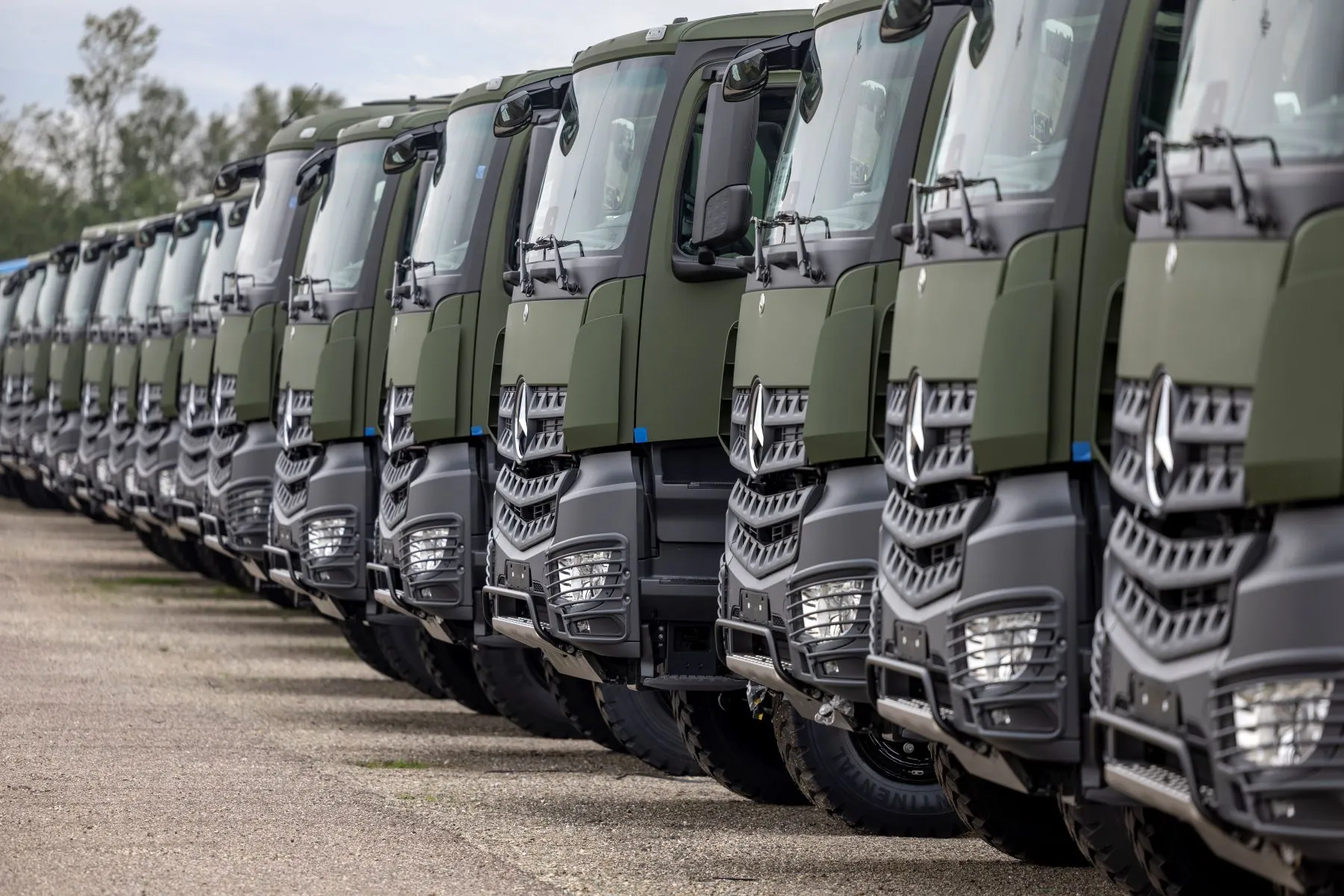

The Council of the EU and the European Parliament have both adopted their negotiating positions on the proposed Military Mobility Regulation, clearing the way for trilogue talks under the Irish Presidency. The regulation is designed to make it faster and easier to move troops, military equipment and supplies across the EU, including during emergencies or crisis situations.
For the road transport sector, however, the issue is not only defence readiness. The proposed framework could also affect how private transport companies, drivers, infrastructure operators and logistics providers are used when military transport needs to move quickly across borders.
At the centre of the proposal is the EU’s attempt to remove administrative and regulatory barriers to military transport. The plans include faster cross-border permissions, digitalised procedures, national military mobility coordinators, upgraded dual-use infrastructure and a new emergency response system that could give military transport priority access to infrastructure in exceptional circumstances.
The European Parliament wants military transport permissions to be handled more quickly, with standing permissions granted within one month and ad hoc permissions within two working days. MEPs also support a secure digital system for permissions, traffic arrangements and customs formalities, with its launch brought forward to 2027.
The Council, meanwhile, has backed the core structure of the proposal but has put greater emphasis on flexibility for Member States. Its position would allow the proposed emergency system to be triggered within 72 hours, with or without a Commission proposal, following a request from one or more Member States.
For businesses, the most significant question concerns what happens when civilian transport capacity is drawn into military logistics, or when civilian operations are disrupted because military movements are given priority.
What about compensation or liability?
The European Parliament has proposed compensation for infrastructure owners, operators and managers if they suffer justified expenses, damage or lost revenue when the emergency system is activated. However, the wider relationship between military authorities and private transport operators is still not fully harmonised, and the current text leaves key practical issues — liability, compensation, contractual arrangements and operator protection — without a common EU-wide answer.
IRU, the international road transport organisation, has warned that this creates a material risk for operators. Without clearer common rules, civilian hauliers could face different obligations and different levels of protection depending on the Member State in which they are working, producing a patchwork of national regimes rather than one predictable framework.
Military mobility is likely to rely not only on armed forces and public infrastructure, but also on commercial transport capacity. In a crisis, private road hauliers could be asked to move military goods, provide vehicles or drivers, support supply chains linked to defence operations, or operate in conditions where military traffic is prioritised over normal commercial flows.
Unresolved legal questions
The unresolved legal questions are therefore highly practical. If a civilian operator carries military cargo, who is liable if the cargo is damaged, delayed or seized? If a lorry is diverted, immobilised or prevented from completing a commercial job because military transport has priority, who compensates the operator? If a driver is asked to work under emergency derogations, what safeguards apply? And if a company is contracted by one Member State but operates across several others, which national rules govern the operation?
IRU has also warned that differences between military transport carried out directly by armed forces and transport outsourced to civilian operators could create additional problems. This includes possible differences in traffic-ban exemptions, cabotage rules, driving and rest time requirements, and other road transport rules that normally apply to commercial hauliers.
The European Parliament’s position would allow certain derogations during an emergency, including exemptions from cabotage and traffic restrictions, as well as less restrictive rules on driving times, breaks and rest periods, provided worker welfare and road safety are not compromised. Trade unions have already raised concerns that such derogations could put pressure on drivers and weaken existing protections if not tightly limited.
The Commission has presented military mobility as one of the pillars of Europe’s defence readiness, alongside faster authorisations, resilient dual-use infrastructure and secure access to transport assets. The regulation is expected to be adopted by the end of 2026 if the Council and Parliament reach agreement.
The coming negotiations will decide whether the final law creates a genuinely EU-wide framework for civilian transport involvement, or whether operators are left navigating a patchwork of national rules at precisely the moment when speed, certainty and coordination are supposed to matter most.


