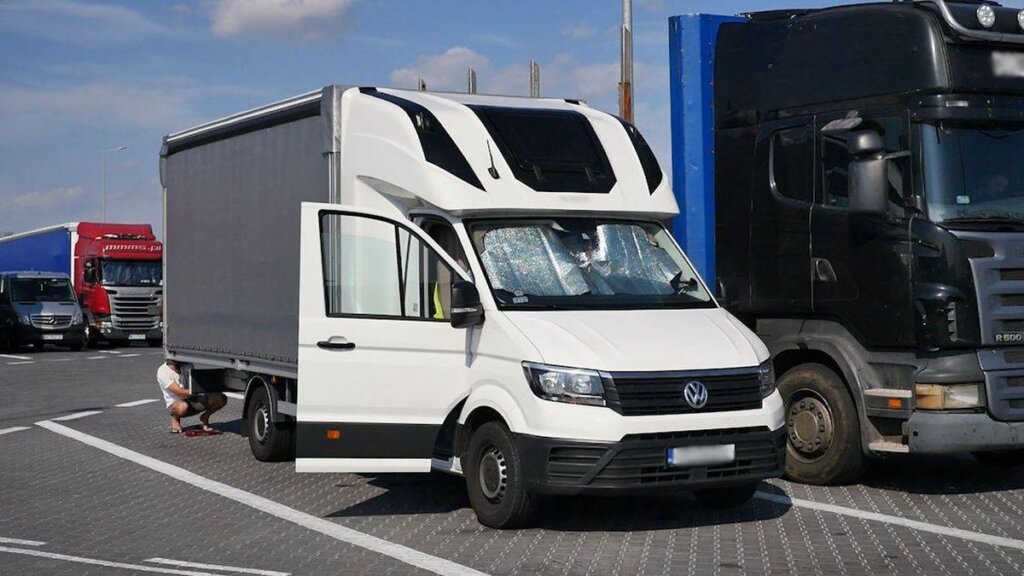
The question we currently encounter most frequently is: Is a business owner who travels abroad in a 3.5-tonne van to deliver their own goods to a customer, without providing transport services, required to use a tachograph? The answer is not straightforward and cannot be given solely on the basis that the goods being carried are the company’s “own goods”.
Extension of the scope of regulation no 561/2006
Pursuant to Article 2(1)(aa) of Regulation (EC) No 561/2006 of the European Parliament and of the Council, from 1 July 2026 the Regulation also applies to the international carriage of goods by road and cabotage operations performed using vehicles or combinations of vehicles with a maximum authorised mass exceeding 2.5 tonnes.
Consequently, businesses using vehicles with a maximum authorised mass of between 2.5 and 3.5 tonnes may become subject not only to the requirement to equip the vehicle with a tachograph, but also to the rules governing maximum driving periods, mandatory breaks and rest periods. This does not, however, mean that every international journey made using such a vehicle automatically falls within the scope of these rules.
Exemption provided for in article 3(ha) of the regulation
The Regulation provides for an exemption from its application.
Under Article 3(ha) of Regulation No 561/2006, its provisions do not apply to vehicles, including any trailer or semi-trailer, with a maximum authorised mass exceeding 2.5 tonnes but not exceeding 3.5 tonnes, which are used for the carriage of goods, provided that all three of the following conditions are met:
- the carriage is not performed for hire or reward;
- the carriage is performed on the company’s or driver’s own account;
- driving does not constitute the main activity of the person driving the vehicle.
Even a preliminary analysis of this provision leads to the conclusion that the EU legislature did not make the applicability of the exemption dependent solely on the fact that a company is carrying its own goods. On the contrary, all the conditions listed above are cumulative, and failure to meet even one of them results in the entire regulatory regime becoming applicable.
Non-commercial carriage is not the same as the absence of transport operations
In practice, the interpretation of the first condition creates the greatest uncertainty. Businesses very often assume that not providing transport services automatically means that the carriage is non-commercial. Such an interpretation must, however, be regarded as too broad.
The provision refers to carriage “not performed for hire or reward”. This concept cannot be interpreted solely by reference to the business activity codes registered by the company or the absence of a transport licence. In every case, it is necessary to analyse the actual nature of the carriage, its economic function and whether the transport constitutes an independent economic service or merely an activity ancillary to the company’s principal business.
Carriage on own account requires an individual assessment of the facts
The second condition, relating to carriage performed on the company’s own account, is equally important. It is not sufficient to establish that the goods being carried are owned by the business. It is also necessary to verify whether the carriage serves exclusively the purposes of the company’s own business activity and whether the business is not, in fact, carrying goods on behalf of a third party.
In practice, this assessment requires an analysis of matters including sales documentation, delivery terms, the method of charging transport costs and the organisational model of the business.
The driver’s main activity – an often-overlooked condition
The most underestimated element of the exemption is the requirement that driving must not constitute the main activity of the person driving the vehicle. Contrary to a common assumption, the fact that the driver is the owner of the business does not automatically mean that this condition is satisfied.
The assessment must be based on the actual scope of the person’s duties. Where driving is incidental or ancillary to commercial, manufacturing or service activities, the arguments supporting the application of the exemption will be considerably stronger than in the case of a business owner whose principal professional activity consists of regularly carrying out international transport operations.
What information should be verified before an answer is given?
From the perspective of professional advisory practice, giving a definitive answer solely on the basis of the statement that the business owner is “carrying their own goods” must be regarded as incorrect.
The following matters should first be established:
- the maximum authorised mass of the vehicle and any trailer;
- the nature of the business activity;
- the type of goods being carried;
- the legal basis for the carriage;
- the method of settling transport costs with the recipient;
- the frequency of such journeys;
- the scope of duties of the person driving the vehicle.
Only an analysis of the above circumstances makes it possible to correctly apply the conditions set out in Article 3(ha) of Regulation No 561/2006 to the facts of a particular case.
Summary
The changes applicable from 1 July 2026 do not mean that every business carrying its own goods in a van with a maximum authorised mass of up to 3.5 tonnes is required to use a tachograph. At the same time, it would be equally incorrect to assume that the mere fact that the business does not provide transport services automatically excludes the application of the Mobility Package rules.
Reliance on the exemption provided for in Article 3(ha) of Regulation No 561/2006 requires a detailed analysis of the business model in each individual case and an assessment of whether all the conditions specified in that provision have been met cumulatively. Only such an analysis makes it possible to provide the business owner with an answer that complies with the applicable legislation and to reduce the risk that the adopted classification will be challenged during a roadside inspection.
Article 3(ha) of Regulation No 561/2006 was introduced specifically to avoid subjecting businesses for which transport is not their principal economic activity to the full social-regulation regime. Unfortunately, only practical experience will show whether the interpretation adopted by European authorities will be favourable to such businesses.