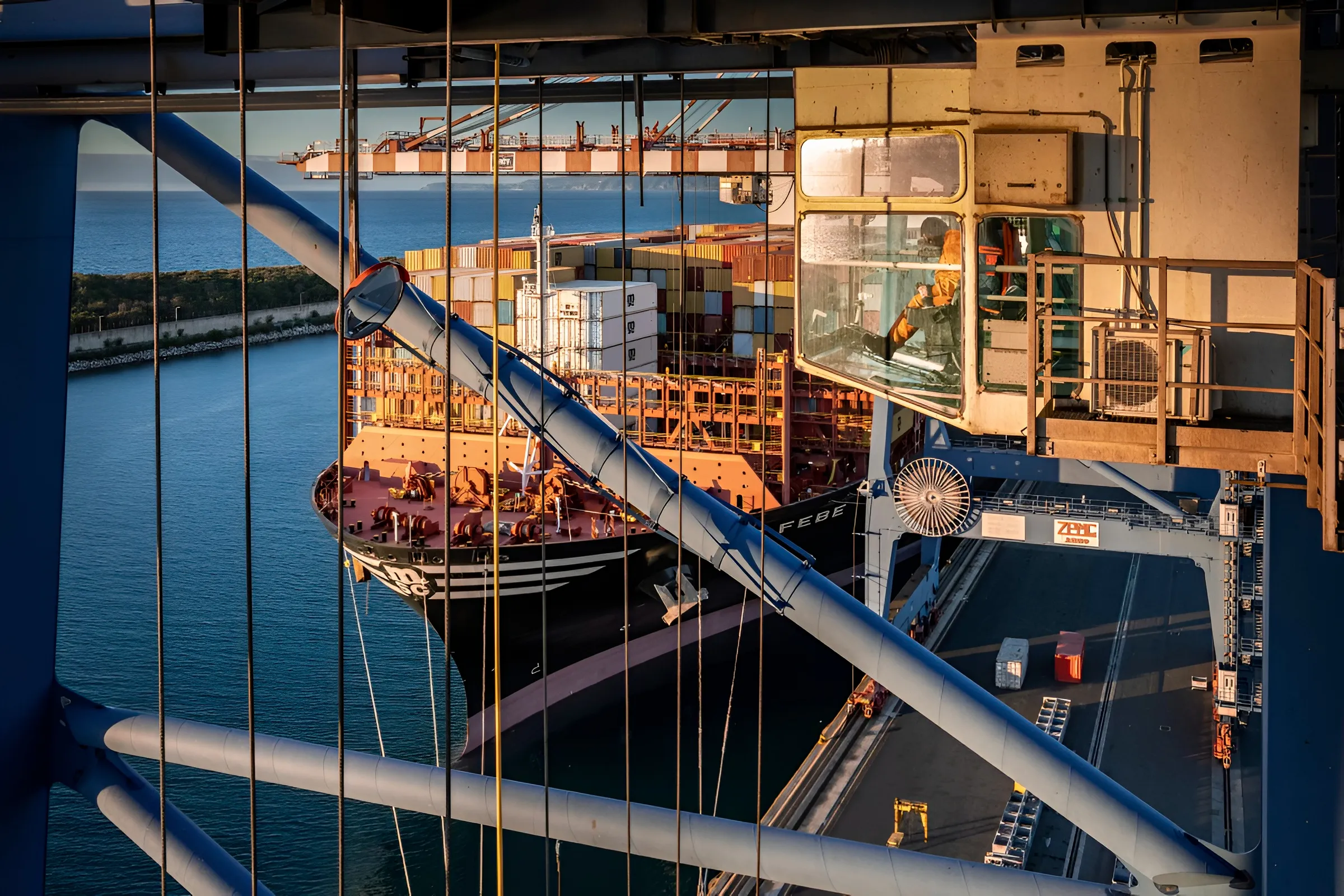

The order, first revealed by shipbrokers, covers ultra-large vessels of around 20,000 TEU each, with deliveries due to begin in the first half of 2029. Neither MSC nor Hengli has publicly confirmed the deal.
A series of 20 ships at that size marks a major commitment, even in a newbuilding cycle where container lines have continued signing large contracts despite mounting concern over future supply. The global containership orderbook already stands at close to 13m TEU, and the new vessels would enter service into a market that is still working through that wave of capacity. If demand growth fails to keep pace, the result could be renewed pressure on rates.
That backdrop raises an obvious question: is MSC positioning itself for long-term market share and fleet renewal, or simply adding more weight to a market already at risk of overcapacity?
MSC’s LNG fleet is already growing
This would not be MSC’s first move into LNG propulsion. The carrier already runs LNG dual-fuel container ships built at Chinese yards, including a string of 16,000 TEU vessels.
DSIC delivered the 16,196 TEU MSC Viola in January 2025, a vessel able to run on either low-sulphur fuel oil or LNG. MSC has also taken delivery of LNG dual-fuel ships from Yangzijiang Shipbuilding: MSC Iris, handed over in late 2025, was the eleventh vessel in a 16,000 TEU LNG series ordered back in 2022.
Seen against that history, a new Hengli order would not be an experimental step into LNG. It would extend a strategy MSC is already pursuing — large ships that can run on conventional fuel or LNG, keeping the door open to lower-carbon LNG alternatives later in their working lives.
Hengli’s rise in large container ships
The shipyard itself is part of the story. Hengli Heavy Industries has emerged quickly as a serious player in Chinese shipbuilding, operating from the former STX Dalian site and building out its orderbook across multiple vessel types. It has already built LNG dual-fuel container ships for MSC, and its own product range includes an LNG dual-fuel design of up to 24,000 TEU.
For MSC, Chinese yards have become central to its fleet renewal and expansion plans. Chinese shipbuilders have picked up a large share of recent container ship orders, helped by competitive pricing, available building slots and growing experience with dual-fuel technology.
LNG: a transitional bet, not a clean answer
LNG dual-fuel ships sit within one of the main fuel strategies liner operators are currently betting on: vessels that can switch between conventional fuel and LNG now, with the option to use bio-LNG or synthetic LNG later if supply scales up.
The appeal is straightforward. LNG cuts some emissions compared with conventional marine fuel, and dual-fuel engines give operators flexibility that single-fuel ships don’t have — a significant factor for vessels that may stay in service into the 2050s.
But LNG is no longer a simple decarbonisation story. Its environmental performance depends heavily on engine type, methane slip and how much lower-carbon LNG becomes available. Methane is increasingly a regulatory issue, not just a talking point in the climate debate. From 2026, the EU Emissions Trading System for shipping covers methane and nitrous oxide alongside CO₂, while FuelEU Maritime targets the greenhouse gas intensity of the energy ships use at EU ports. LNG-fuelled vessels calling in Europe will therefore be judged on their full greenhouse gas profile, not CO₂ alone — making engine efficiency and methane slip performance increasingly relevant to the lifetime cost of these ships.