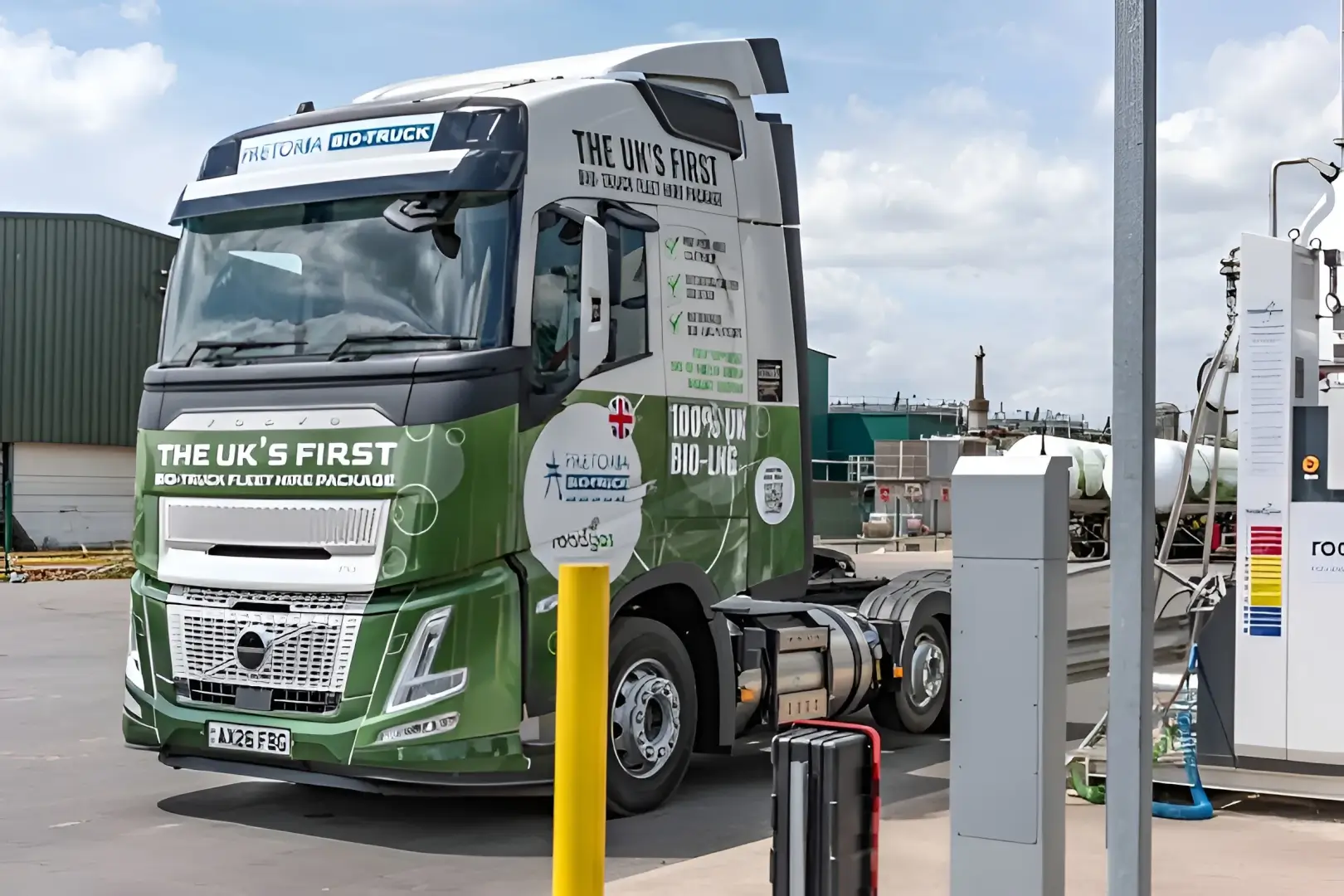

The Nottingham-based refuelling specialist is building the sites on behalf of Cambridge-based Bio-LNG supplier Pretoria Energy. The network will combine 24/7 public-access stations with private depot-based facilities at motorway forecourts and freight hubs in the South East, the Midlands and the North, with further sites planned for 2027.
Bio-LNG is a liquefied form of biomethane produced from organic feedstocks. Roadgas and Zemo Partnership both cite lifecycle CO₂ savings of more than 80% against diesel — higher than the 76% Zemo recorded for 100% biomethane trucks in a two-year heavy vehicle trial, a difference that reflects the specific lifecycle methodology behind Roadgas’s figure.
For long-distance operators, the appeal goes beyond the emissions numbers. Each site will use high-flow cryogenic dispensers and large-capacity LNG tanks, with refuelling times measured in minutes. That, combined with the 1,000 km range, gives fleets a fuel that can support high daily mileage and predictable turnaround — closer to diesel operations than battery-electric trucks, which remain constrained in some applications by range, payload, charging availability and depot power capacity.
Roadgas managing director David Rix said the company was pairing biomethane supply with expanded infrastructure to let operators track the fuel’s journey from feedstock to tank, alongside flexible commercial terms including pay-per-mile options and OEM-backed maintenance and diagnostics support.
Bio-LNG is not a zero-emission fuel — gas trucks still produce tailpipe emissions, and the climate benefit depends on the biomethane supply chain, methane control and feedstock sustainability. Zemo’s vehicle lifecycle work positions renewable fuels as a complement to battery-electric and hydrogen fuel-cell trucks rather than a substitute, particularly in heavy-duty segments where electrification is still maturing.
Roadgas is entering a market that already has an established biomethane refuelling base. CNG Fuels/ReFuels operates 16 large public-access Bio-CNG stations, with more than 2,200 vehicles refuelling across the network on an average day in recent monthly data. Gasrec runs a mix of Bio-LNG and Bio-CNG sites, including its Hams Hall location near the M6/M42 interchange, and has been expanding capacity.
What sets Roadgas’s plan apart is its focus on a national, Bio-LNG-specific network built for long-haul HGVs, bundling fuel supply, refuelling infrastructure and fleet support into a single offer. For operators, that combination — coverage, uptime and cost stability — will determine whether Bio-LNG becomes a practical bridge fuel for fleets not yet ready to electrify their long-haul routes.