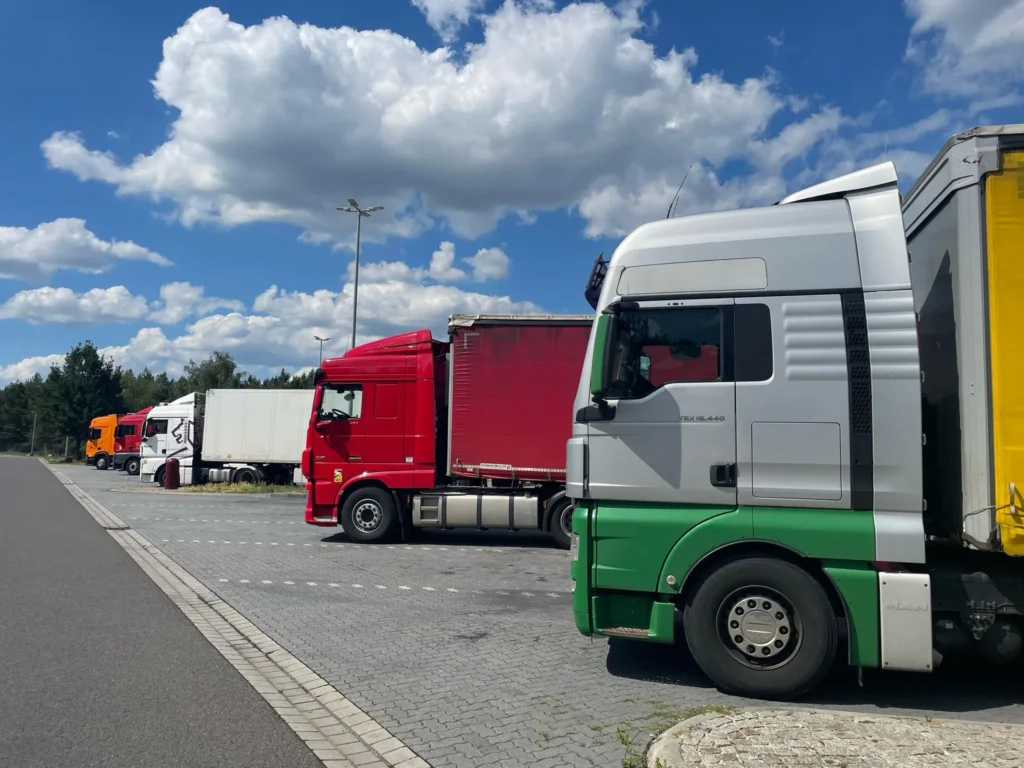
The new National Planning Policy Framework, published on 17 August, gives planning authorities clearer instructions on how to assess logistics developments.
Under Policy E3, freight facilities must have suitable access to transport networks, limit their environmental and residential impact, and provide sufficient and secure parking for the lorries they are expected to attract.
The policy covers warehouses, distribution centres, rail freight terminals, intermodal facilities, HGV operating centres, lorry parks, ports and inland border facilities.
Greater weight for logistics projects
The framework says planning decision-makers should give “substantial weight” to the economic benefits of commercial developments that improve freight and logistics.
It also recognises that major logistics facilities may need to be located outside existing settlements because of their size and requirement for access to strategic transport networks. Such projects can be supported where they comply with the new freight policy and their benefits are not substantially outweighed by adverse effects.
This does not guarantee planning permission. Developers must still address traffic, noise, environmental and community concerns, particularly where night-time operations are proposed.
Stronger backing for lorry parks
Development plans must now provide for necessary transport facilities, with lorry parking specifically listed alongside ports and airports.
The framework also supports new or expanded roadside facilities where they address local or wider shortages of overnight HGV parking. Existing roadside facilities should not be lost unless a suitable alternative is provided or they are shown to be no longer needed or viable.
The previous framework already recognised the importance of overnight lorry parking. However, the new version strengthens this through several connected policies covering new truck stops, protection of existing facilities and secure parking at logistics developments.
The Road Haulage Association welcomed the changes. Managing director Richard Smith said safe and suitable lorry parking should be treated as “essential national infrastructure, not an optional extra”.
Logistics UK also described the dedicated policy as a significant step forward, although it continues to call for logistics to be formally recognised as critical national infrastructure.
The Government received 657 consultation responses concerning Policy E3. Of these, 51% supported it wholly or partly, 17% opposed it and 32% were neutral.
The framework does not allocate sites or provide construction funding. Its practical impact will depend on how councils and planning inspectors apply it. Nevertheless, lorry parks, depots and warehouses now have a clearer and potentially stronger position within England’s planning system.