Drivers will not simply be recorded by enforcement cameras during the operation in the week beginning 17 August. Officers will stop offending vehicles and pull them off the road, infrastructure minister Vincent Karremans has announced.
“We are going to go all out together with the police,” Karremans told Dutch television programme Goedenavond Nederland. He stressed that the vast majority of lorry drivers were respecting the restriction, but said further action was needed against those still using the bridge.
More than half cannot be fined through cameras
The Merwedebrug carries the A27 between Gorinchem and Sleeuwijk and forms an important north–south freight connection between the provinces of Noord-Brabant and Zuid-Holland.
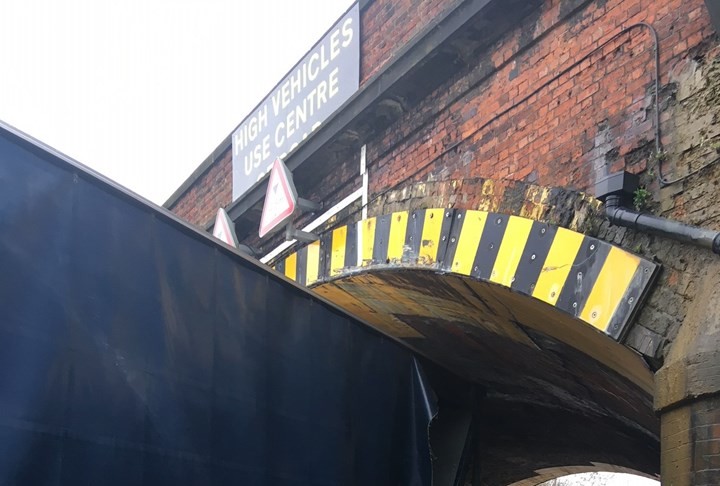
It has been closed to lorries and coaches since 18 July 2026, after testing found that steel in several parts of its arch structure was weaker than previously assumed. Rijkswaterstaat said it could no longer guarantee the bridge’s structural safety under heavy traffic.
ANPR-based enforcement began on 25 July, with violations carrying a €500 fine plus administrative costs.
Nevertheless, Rijkswaterstaat recorded an average of approximately 1,600 lorries and coaches each working day between 3 and 7 August. That was down from between 2,000 and 2,500 daily violations recorded previously, and from around 18,000 heavy vehicles using the crossing before the ban.
The remaining figure is still high enough to place excessive stress on the bridge’s arch structure, the road authority warned.
One reason for the planned roadside operation is that more than half of the vehicles detected carry foreign registration plates. Under the applicable international arrangements, Rijkswaterstaat cannot currently issue fines to many of these operators solely from its camera records. A police officer or authorised enforcement officer must stop the driver in person.
By 31 July, authorities had issued 1,118 fines for breaches of the restriction.
Rijkswaterstaat has also installed additional warning signs at border crossings and motorway junctions, including information in several languages. Traffic controllers have been deployed near the Avelingen entry and Werkendam exit to discourage lorries from approaching the bridge through local roads.
AI website claims almost 1,900 crossings
The scale of the continued violations has also attracted the attention of a private developer. A website called Daar gaat er weer een — roughly translated as “There goes another one” — uses artificial intelligence to analyse Rijkswaterstaat’s publicly available traffic-camera stream.
By Thursday evening, the system claimed to have detected 1,864 lorries and 15 coaches since midnight, including 182 lorries between 10am and 11am alone. The website said its AI detection system had achieved a reliability rate of 98.4%.
However, these are not official enforcement figures. The developer states that the service is not connected to Rijkswaterstaat, the police or the public prosecutor. Its detections do not establish that an offence has taken place and may include errors or vehicles exempt from the restriction.
Diversion routes for lorries
Lorries and coaches must divert via either the A15–A16–A59 or the A15–A2–A59. Vehicles carrying dangerous goods must use the A2 route.
Scheduled buses and emergency vehicles remain exempt, while cars, motorcycles and light commercial vehicles may continue to use the bridge. Rijkswaterstaat said the restriction was necessary to keep the crossing open to lighter traffic and avoid a complete closure.