The Slovak government approved a 30-day emergency package on 18 March, citing an oil emergency amid supply pressure and a surge in cross-border fuel purchases. Slovak officials say around 22 petrol stations in northern border areas ran dry as Polish and Austrian motorists took advantage of comparatively low Slovak pump prices.
What the rules actually mean for your truck
The restrictions go well beyond a simple price surcharge. Three elements combine to create a serious operational headache for international carriers.
From 23 March, vehicles registered outside Slovakia pay a regulated diesel price of €1.826 per litre. The rate was calculated as the arithmetic average of pump prices in Austria, the Czech Republic and Poland, based on European Commission data. It is tied to the vehicle’s registration plate, not the driver’s nationality.
On top of that, there is a €400 cap per refuelling stop for all vehicles, and diesel may only be dispensed into the vehicle’s own tank or a single portable container of no more than 10 litres.
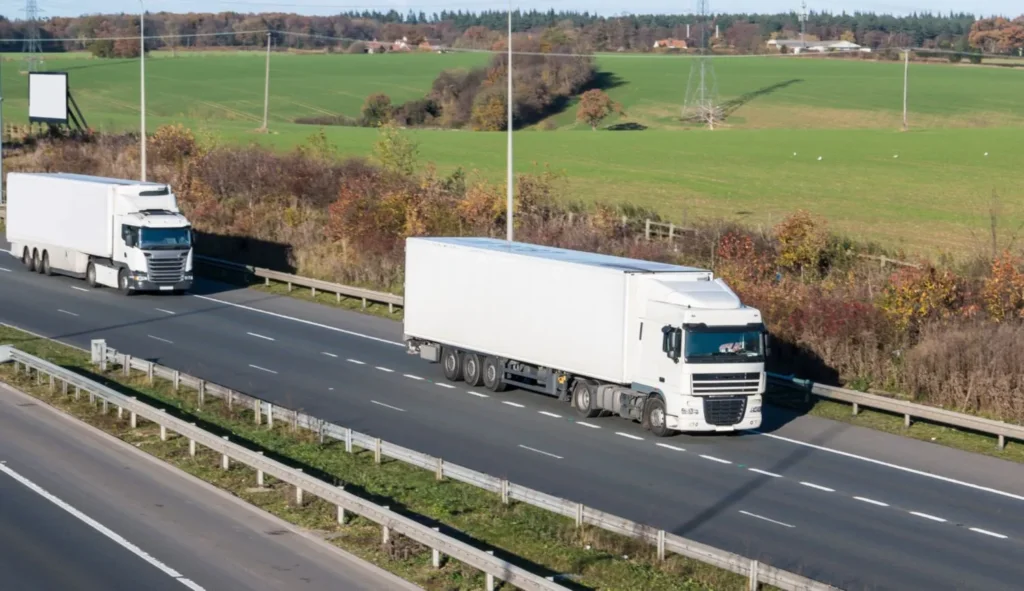
For a heavy goods vehicle covering several hundred kilometres a day in Slovakia, €400 may not cover a full fill. Trucking associations say operators are being forced to stop multiple times, which can push subsequent refuelling into higher-cost markets such as Germany or Austria. The president of ČESMAD Slovakia has publicly called for at least allowing domestic-registered vehicles to fill their tanks in full, suggesting that even Slovak carriers are feeling the squeeze.
Diesel exports from Slovakia are also temporarily restricted, except for fuel already in a vehicle’s own tank.
Some sectors are exempt
Slovakia’s Economy Ministry says the rules do not apply to integrated rescue services or the armed forces, and that a separate regime will be set for agricultural and construction machinery.
Brussels calls it discriminatory
The European Commission’s response has been direct. On 24 March, a Commission spokesperson told Reuters that Slovakia’s refuelling cap and differentiated pricing for foreign-registered vehicles are incompatible with EU law and amount to discrimination.
The issue goes to the core of the EU single market, which prohibits nationality-based discrimination and limits national measures that create barriers to the free movement of goods. Slovakia may argue that a genuine supply emergency justifies the steps taken, but Brussels has made clear it does not accept the pricing split as lawful.
The 30-day measure approved on 18 March is due to run until mid-April, though whether it will be amended, extended or withdrawn under EU pressure remains unclear.
Hungary, too, is using dual fuel pricing
It must be noted that Slovakia is not the only country currently operating a two-tier fuel system. Hungary has also reintroduced dual pricing, with capped fuel prices available only to vehicles registered in Hungary.
On 9 March, Prime Minister Viktor Orbán announced caps of 595 forints per litre for petrol and 615 forints for diesel, with the protected rates applying only to Hungarian-registered vehicles. So far, however, there has been no verified public European Commission reaction to this latest 2026 scheme.
This is not without precedent. Hungary first introduced its fuel cap in November 2021 to shield consumers from surging pump prices and contain inflation ahead of the 2022 parliamentary election. The measure was later maintained as energy-market and war-related price pressures intensified.
In 2022, the Commission challenged Hungary over a similar fuel-pricing regime after Budapest excluded foreign-plated vehicles from subsidised fuel. At the time, Hungary kept the official fuel price at 480 forints per litre, but denied that rate to trucks over 7.5 tonnes and to foreign-plated trucks over 3.5 tonnes, which instead had to pay market prices. The Commission viewed the measure as discriminatory and warned that it undermined the EU single market.
Brussels then escalated the dispute in July 2022 by issuing a reasoned opinion to Hungary under the infringement procedure, giving Budapest two months to respond and take the necessary measures. The Commission said the dual-pricing system treated foreign vehicles less favourably and was incompatible with EU internal market rules.
However, Hungary scrapped the wider fuel price cap altogether only in December 2022 after shortages and panic buying created what MOL described as a critical supply situation. That step effectively brought the discriminatory dual-pricing regime to an end as well.