Key points:
- The UK and the EU have agreed a draft SPS agreement on food, animal and plant products.
- It is expected to be formally confirmed at the UK-EU summit in Brussels on 20 November.
- Logistics UK says it could cut export costs by up to 8% and save £150 to £250 per consignment.
- Most agri-food goods should no longer need export health certificates or phytosanitary certificates.
- Customs controls will remain, and port health authorities warn that removing checks does not remove risks.
Draft deal ahead of the summit
The draft agreement was reached on 3 November. Prime Minister Andy Burnham is due to meet European Commission President Ursula von der Leyen and European Council President António Costa at the summit in Brussels on 20 November, where the deal is expected to be formally agreed.
The full text has not yet been published. According to the government, the agreement should take effect from mid-2027.
What changes at the border
According to government guidance for logistics companies and hauliers, the agreement should mean:
- no export health certificates or phytosanitary certificates for most agri-food goods,
- fewer or no physical inspections of animal, plant and food products,
- a lower risk of consignments being held at border control posts,
- easier consolidation of mixed loads.
However, the guidance makes clear that “the agreement is not a customs agreement, and so customs controls will remain”. Some goods from outside the EU will need to be inspected once the agreement is in force.
£150 to £250 saved per consignment
According to Logistics UK, the deal could cut export costs on affected agri-food goods by up to 8%. This means savings of around £150 to £250 per consignment. Groupage operators, which currently pay charges for each consignment in a mixed load, stand to benefit most.
The EU accounts for about 40% of UK exports, and a comprehensive SPS agreement is expected to add £5.1 billion a year to the UK economy.
“Further progress towards concluding an SPS deal with the EU is hugely positive news for British businesses,” said Ben Fletcher, chief executive of Logistics UK. He added that it would mean “making supply chains more efficient and lowering costs for logistics operators, retailers and manufacturers”.
Port health authorities raise questions
Not everyone is fully convinced. In a statement sent to Trans.INFO, Anthony Baldock, executive board chair of the Association of Port Health Authorities, welcomed efforts to make trade easier, but warned: “Removing a check does not remove the risk it was designed to manage.”
He said the government must explain “where does responsibility for assuring food safety move to, who pays for it, how do we detect problems, and what happens when something goes wrong?” He also called on the government to show that the projected savings are net savings, not costs moved to other public services or businesses.
“Fewer certificates may be good news. Fewer safeguards would not be,” Baldock said.
What it means for hauliers
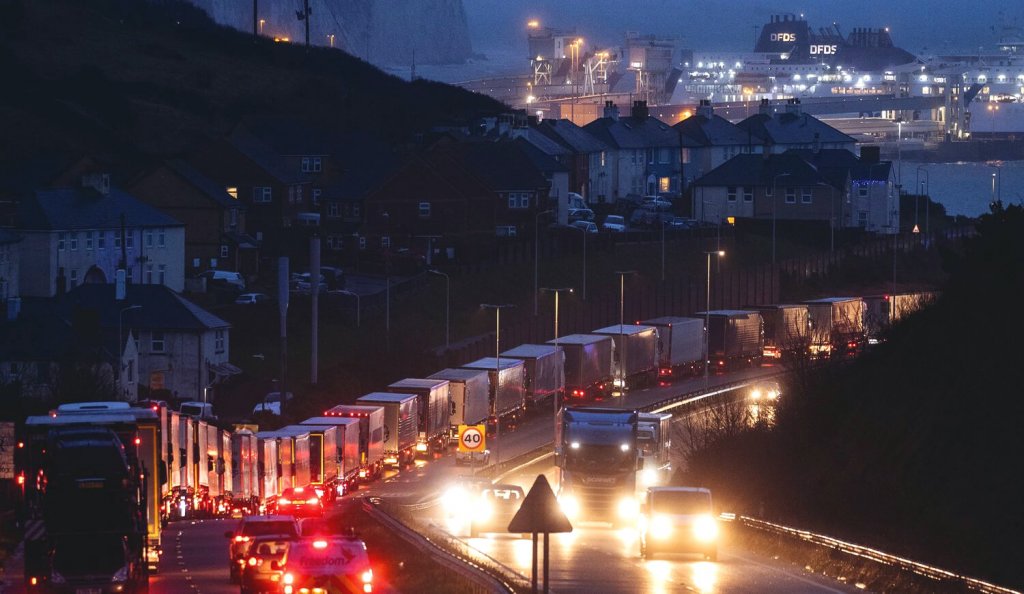
For hauliers moving food between the UK and the EU, the deal could mean less paperwork, fewer stops at border control posts and lower costs per load. However, nothing changes yet: current rules apply until the agreement takes effect, and customs declarations will still be needed.
The changes could also affect border control posts built after Brexit, such as Sevington. Trans.INFO has also looked at how trade has changed 10 years after the Brexit referendum.