Key points at a glance
- In late July, DHL Freight and Kühne+Nagel reported delays affecting road and rail services around Madrid and Bordeaux, as well as parts of southern France.
- No immediate disruption was reported at Spanish ports, but inland flows and regional access routes were impacted.
- Supply chains are most exposed when they rely on specialised suppliers, run with low inventory, and operate within tight delivery windows.
- Even after roads reopen, the operational fallout can continue.
- Risk specialist Sphera recorded more than 30 fire-related supplier delivery failures in France, Spain, Portugal and Greece over the past three years.
The biggest risk isn’t the long-haul route
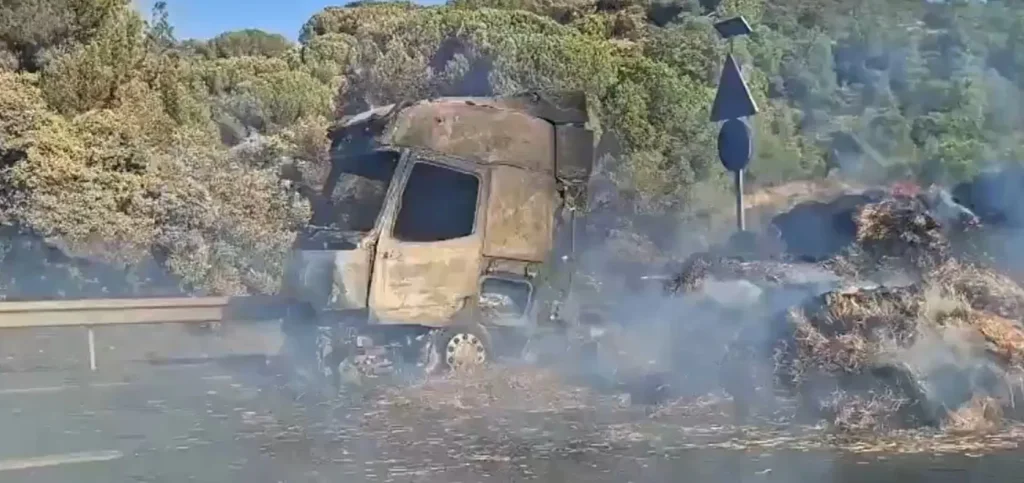
At the end of July, major fires in Spain and France led to closures on key road and rail links. DHL Freight warned customers to expect pick-up and delivery delays around Madrid and Bordeaux. Kühne+Nagel also flagged disruption to road and rail services in Spain and south-west France. At that point, there were no known direct restrictions affecting Spanish ports.
For many shippers, however, the greater risk lies away from the main corridors. An open motorway is of limited value if a supplier has halted production due to evacuations, a warehouse cannot be reached, or a regional carrier is unable to deploy staff and vehicles.
The risk therefore shifts from transit time alone to whether the supply chain can function end to end.
Production losses often show up with a delay
Many impacts do not surface during the fire itself, but afterwards. A plant may continue operating temporarily using existing stock. Once specific components run out, production interruptions can emerge days later.
The most vulnerable items are those sourced from only a handful of manufacturers or made to customer specification. In such cases, a disrupted supplier is difficult to replace at short notice.
This risk is particularly relevant in sectors such as aerospace, electronics manufacturing, medical technology and mechanical engineering. Around Bordeaux, several high-tech and aerospace businesses depend on specialised suppliers and tightly scheduled transport flows.
The weak point is often below direct suppliers
Sphera notes that the biggest operational disruptions often originate with tier 2 and tier 3 suppliers. Companies typically have good visibility of their direct partners, but far less insight into the upstream suppliers, warehouses or logistics providers behind them.
As a result, a fire can affect a business that the end customer may not even be aware of. If a shared component maker, packaging specialist or transport provider goes offline, multiple supply chains can be hit at the same time.
According to Sphera, more than 30 fire-related incidents leading to supplier bottlenecks were identified in France, Spain, Portugal and Greece over a three-year period. The risk specialist cautions against treating the impact as limited to the area directly affected by the fire.
Missed connections can extend delays from hours to days
In groupage, express and parcel networks, a single late truck can disrupt multiple downstream processes. If a linehaul arrives after the hub cut-off, the shipment misses its planned connection, turning a short delay into an additional day.
A similar dynamic applies to sea and air freight. Even when ports and airports are operating normally, cargo can miss its booked departure if pre-carriage is disrupted or containers do not reach the terminal in time.
Kühne+Nagel warned in late July that fires in southern France could affect traffic flows around Marseille, Lyon and Fos-sur-Mer, potentially disrupting connections serving a major French port and industrial cluster.
Extra costs from re-routing and emergency moves
For shippers and logistics providers, the impact goes beyond late deliveries. Routes may need to be re-planned, time slots rebooked, and replacement vehicles or special runs arranged.
Additional costs may include:
- longer distances and higher fuel consumption,
- extra waiting time at hubs, warehouses and terminals,
- express transport or air freight for urgently needed components,
- additional inventory to protect at-risk supply chains,
- contract penalties or production losses caused by late delivery.
Whether these costs can be passed on depends on transport contracts, emergency clauses and the specific cause of the disruption.
Fashion, retail and spare parts are especially time-critical
Sphera says disruptions have already been seen in apparel distribution during summer sales. The window is tight: if seasonal goods arrive late in stores, they quickly lose value.
Spare parts logistics is also highly sensitive. When a machine or production line goes down, even a few hours’ delay in a critical component can translate into significant downtime costs.
In food logistics, limited shelf life and temperature-controlled requirements add another layer of risk. Detours and longer dwell times raise costs and increase the likelihood that delivery windows or temperature limits will not be met.
Why the disruption outlasts the fires
Even once roads and rail lines reopen, logistics networks rarely return to normal immediately. Vehicles may be out of position due to diversions, driver hours can be disrupted, and warehouses must work through backlogs.
Suppliers may also need time to assess damage, restart equipment or replace missing staff. At the same time, many companies compete for the same alternative transport capacity.
In practice, the key issue is not only whether a road is open again, but whether materials are available, suppliers are producing, transhipment points are functioning, and detour routes have enough capacity to absorb diverted flows.