At a glance:
- Europe’s biggest truckmakers want the EU’s 2030 CO2 compliance deadline pushed back to 2033 ,
- ACEA says the supporting infrastructure is at least three years behind schedule ,
- Missing the target by three points could cost €2.2bn
The chief executives of DAF Trucks, Daimler Truck, Ford Otosan, Iveco Group, MAN Truck & Bus, Scania Group and Volvo Group made the appeal at IAA Transportation in Hanover on Monday.
According to the European Automobile Manufacturers’ Association (ACEA), just 2.4% of new heavy-duty trucks registered in Europe are currently zero-emission. In Poland, Spain and Italy the share remains below 1%, while it stands at 4.3% in Germany and 2.4% in France.
ACEA argues that the conditions needed for hauliers to adopt battery-electric and hydrogen trucks commercially are now “at least three years behind” where they need to be.
Karin Rådström, president and CEO of Daimler Truck and chair of ACEA’s Commercial Vehicle Board, said manufacturers had already invested in zero-emission vehicles, but the wider ecosystem needed to make them commercially viable was not developing quickly enough.
She said the EU should both accelerate those supporting measures and delay the 2030 compliance timeline by three years.
Fewer than 2,000 suitable public truck chargers
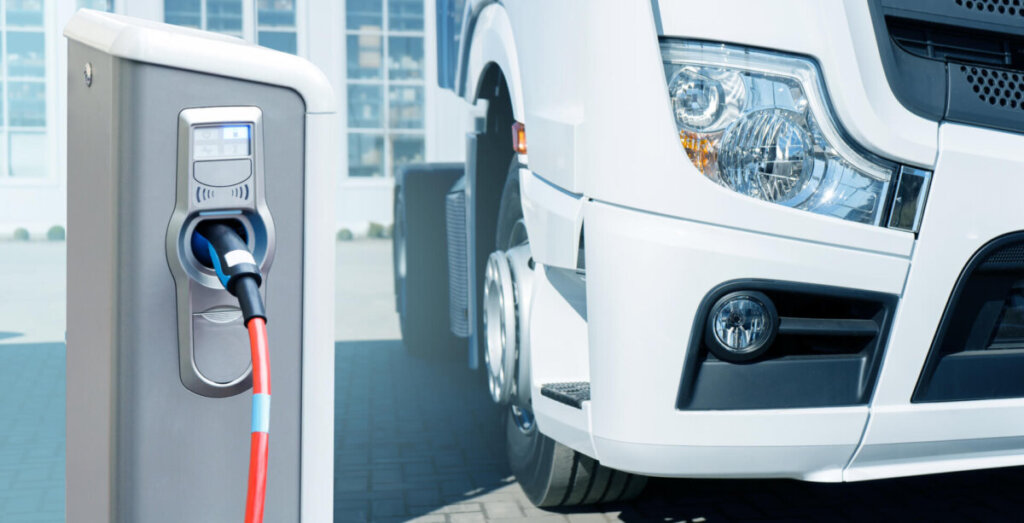
Charging infrastructure is one of the industry’s main concerns. ACEA says fewer than 2,000 public chargers suitable for heavy trucks are currently available across Europe. It estimates that at least another 700 truck chargers would need to be installed every month to support the transition required by the 2030 targets.
Hydrogen infrastructure is even less developed, with fewer than a dozen suitable refuelling stations operational, according to the association. Grid connections for new charging sites can meanwhile take several years.
Manufacturers are also calling for wider use of CO2-based road charging, changes to EU weights and dimensions rules to reduce the payload disadvantage of zero-emission trucks, and greater reinvestment of road-toll and emissions-trading revenues into charging infrastructure and vehicle uptake.
ACEA says CO₂-based road charging is effectively operating in only four EU member states. For operators, the manufacturers argue, the fundamental problem is economics. Battery-electric and hydrogen trucks remain more expensive to buy than diesel equivalents, while electricity and other operating costs determine whether that higher investment can be recovered over the vehicle’s working life.
Billions in potential penalties
EU CO2 rules require manufacturers to reduce average emissions from new heavy-duty vehicles sharply during the coming decade. The legislation sets a headline reduction target of 45% from 2030 against the applicable regulatory reference periods, rising to 65% from 2035 and 90% from 2040. ACEA describes the effective manufacturer compliance reductions relative to 2025 as 43%, 64% and 90% respectively.
Manufacturers that miss their targets face financial penalties. ACEA estimates that falling just three percentage points short of the 2030 requirement could result in approximately €2.2 billion in penalties across the industry.
Earlier this year, the EU amended the heavy-duty CO2 rules to give manufacturers greater flexibility to generate emissions credits between 2025 and 2029. ACEA welcomed that change but warned at the time that it did not resolve the underlying lack of charging, grid capacity and demand for zero-emission trucks.
The latest demand goes substantially further: Europe’s truckmakers now want the 2030 deadline effectively shifted to 2033. The intervention comes as Brussels faces broader pressure from the automotive industry to reconsider the pace and structure of its vehicle decarbonisation rules.