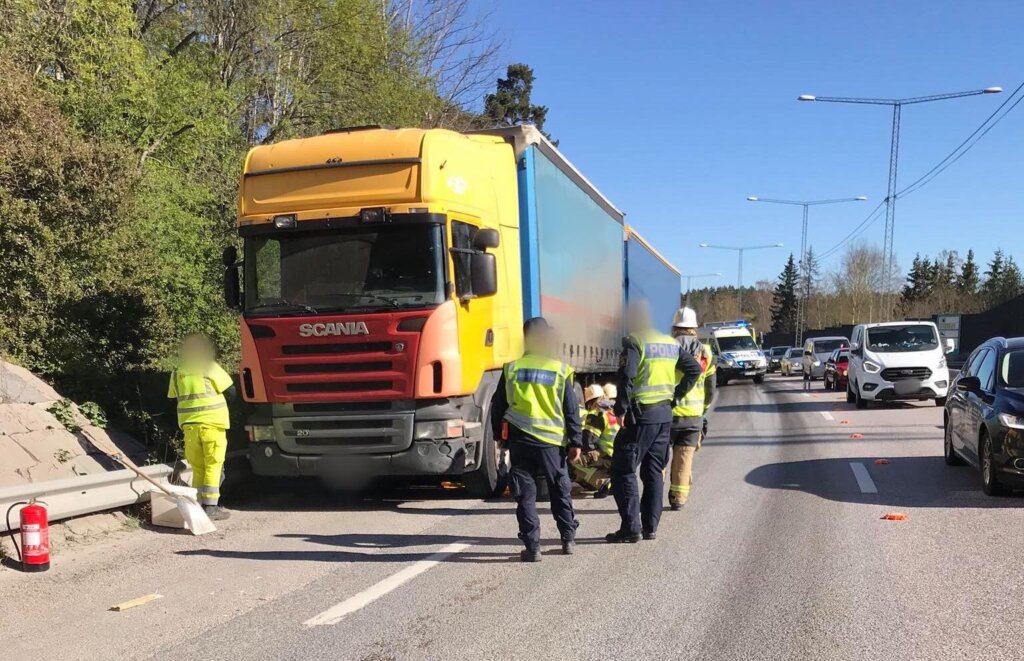
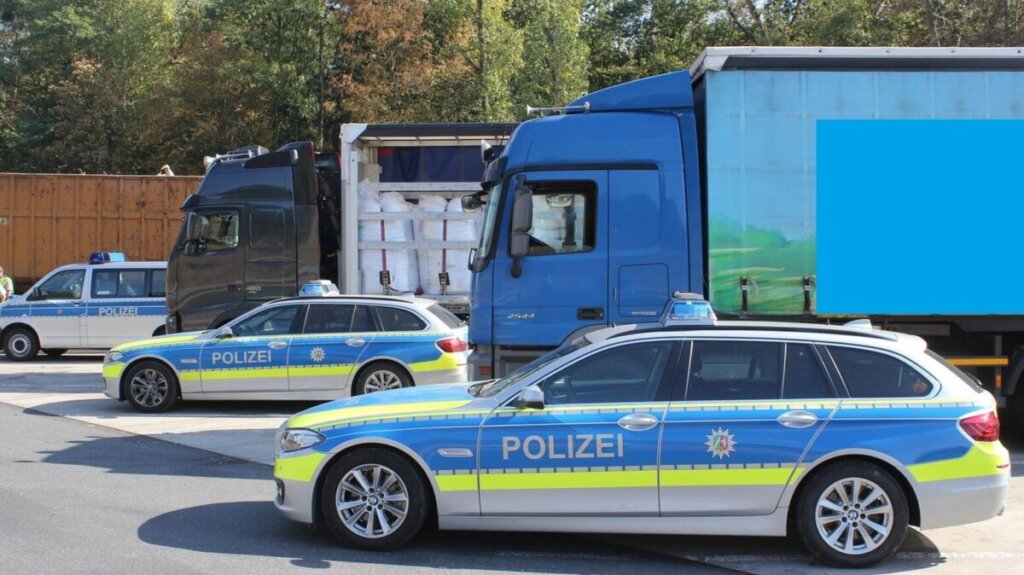
As part of a truck inspection operation at the Trento–Monte Bondone port, Italian police checked a truck registered in Latvia. The vehicle underwent a detailed technical inspection, which revealed “sophisticated” interference with the central ECU control unit. The system simulated normal operation of emission-reduction equipment, while in reality the vehicle did not meet environmental requirements.
The inspection was carried out using modern tools that allow real-time monitoring of the vehicle’s operating parameters. Thanks to this technology, officers were able to detect irregularities indicating software tampering.
As a result of the inspection, the driver and the transport company were issued a fine of €4,130, and the vehicle was impounded for three months at a local depot. The case also involved a breach of the conditions of the Community licence, which requires carriers to comply with technical and environmental regulations in EU countries.
AdBlue tampering in Europe under scrutiny
Tampering with the SCR system in trucks is no longer a “grey area” and is becoming one of the main targets of inspections in European road transport. In many countries, enforcement services are implementing modern technologies to detect irregularities, and penalties for interfering with exhaust emission systems are becoming increasingly severe.
Italy is one example of a country that has significantly tightened its approach to tampering with emission systems. Since November 2025, the local traffic police have been carrying out truck inspections using advanced diagnostic devices connected directly to the OBD port (On-Board Diagnostics).
The new equipment allows officers to analyse the operation of SCR and DPF systems in real time, including AdBlue level, exhaust emissions, and the presence of emulators.
Data inconsistencies are automatically flagged as potential mechanical or electronic tampering.
Denmark has taken a similar direction, developing remote emissions measurement technologies. These make it possible to identify vehicles emitting excessive amounts of nitrogen oxides without having to stop them. A truck with the SCR system disabled or damaged can emit up to 40 times more NOx than a properly functioning vehicle.
Harsh penalties across Europe
In many countries, AdBlue tampering is treated not only as an administrative offence but also as a violation of environmental regulations.
In Italy, the driver or carrier must expect a fine from €422 to €1,697, seizure of the registration certificate, and vehicle immobilisation for up to three months. In the case of more serious violations the penalty can rise to €4,130, and in extreme cases it may even result in up to 6 years in prison and a fine of up to €100,000.
An even tougher approach can be seen in Spain. Tampering with the SCR system can result in a penalty of up to €20,000, and in practice drivers receive fines of around €9,000.
In the Netherlands, the problem remained difficult to enforce for years due to legal loopholes. However, work is now underway to amend regulations to clearly enable penalties for both drivers and vehicle owners. Tampering may carry a sentence of up to 2 years in prison or a financial penalty of up to €20,000.
Denmark: a systematic approach and high fines
Denmark is one of the most consistent countries in the fight against tampering. Local authorities have been using modern technologies for years to detect irregularities, and the penalty system is progressive.
The carrier faces fines from DKK 15,000 (approx. zł 8,500) for a first offence up to DKK 115,000 (approx. zł 65,500) for repeated violations, while the driver may be fined from DKK 7,500 (approx. zł 4,300) to DKK 57,500 (approx. zł 33,000).
United Kingdom: lighter, but effective
Compared with other countries, the United Kingdom applies more moderate financial sanctions. If tampering is detected, the driver or carrier has 10 days to remove the illegal device.
If the system is not restored to proper operation, a £300 fine is imposed and the vehicle is immobilised. At the same time, the services are announcing intensified inspections, which increases the risk of irregularities being detected.
In many countries, AdBlue tampering is treated not only as an administrative offence but also as a violation of CO2 rules.