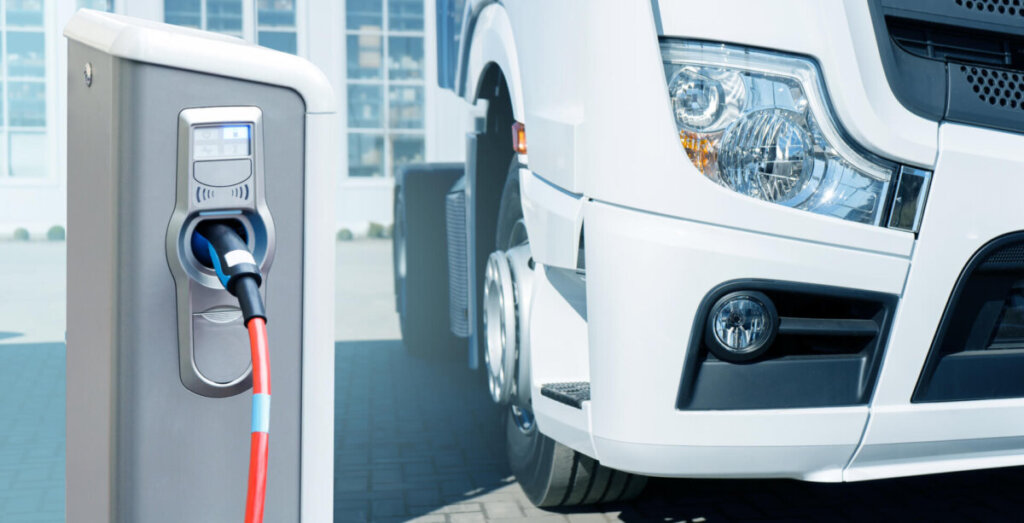
The European Parliament has approved a change to the EU’s heavy-duty CO2 rules that will make it easier for truck manufacturers to build up emission credits in the years before the bloc’s tougher 2030 target takes effect. The measure was backed on 12 March and follows earlier support from EU member states, meaning the proposal is now effectively agreed, pending final formal approval.
The amendment does not change the EU’s headline emissions-reduction targets for heavy-duty vehicles. Manufacturers must still cut average CO2 emissions from new heavy-duty vehicles sold in the EU by 15% by 2025, 45% by 2030, 65% by 2035 and 90% by 2040 compared with 2019 levels.
What changes is the way manufacturers can earn emission credits in the reporting years 2025 to 2029. According to the Commission proposal, the revised formula is intended to let manufacturers generate more credits before 2030, giving them greater flexibility to comply with the tougher target that applies from that year. The Commission says this is justified by delays in deploying public charging infrastructure for heavy-duty vehicles along motorways.
In practice, the reform gives more room to manufacturers whose fleets perform better than the current limits in the second half of the decade. Those extra credits can then help reduce the risk of penalties later if specific CO2 thresholds are exceeded. German outlet Stern reported that the change is particularly beneficial for manufacturers that performed strongly early on but are approaching the 2030 target more slowly.
The move may ease pressure now, but raise doubts over the pace of change
The file moved quickly through Parliament under an urgent procedure. Parliament’s voting record shows that MEPs approved the proposal by 473 votes to 81, with a small number of abstentions, without changing the Commission text. Since the Council also backed the proposal without amendments, the measure is now de facto settled politically.
Supporters of the change argue that it gives European truck makers breathing room while infrastructure and market conditions catch up with regulatory ambitions. ACEA, the European vehicle manufacturers’ association, welcomed the short-term flexibility but said the sector still faces structural barriers, especially the slow rollout of charging infrastructure and the wider conditions needed to support zero-emission truck uptake.
Critics, however, see the move as a weakening of the existing regime. German trade publication DVZ reported that environmental group NABU warned the softer rules could reduce the share of zero-emission trucks in new registrations by 2030, although that estimate was not independently verified here. That reflects the wider concern that easing short-term compliance pressure could slow the market rollout of battery-electric and other zero-emission heavy vehicles.
The Commission insists the change is limited and does not alter the substance of the EU’s long-term decarbonisation path for heavy-duty vehicles. Its proposal states that the amendment is intended only to revise the calculation of emission credits for 2025-2029, while leaving the overall targets in place. New urban buses are excluded from this easing, reflecting the more advanced rollout of zero-emission models in that segment.
The Commission insists the change is limited and does not alter the substance of the EU’s long-term decarbonisation path for heavy-duty vehicles. Its proposal states that the amendment is intended only to revise the calculation of emission credits for 2025-2029, while leaving the overall targets in place. New urban buses are excluded from this easing, reflecting the more advanced rollout of zero-emission models in that segment.