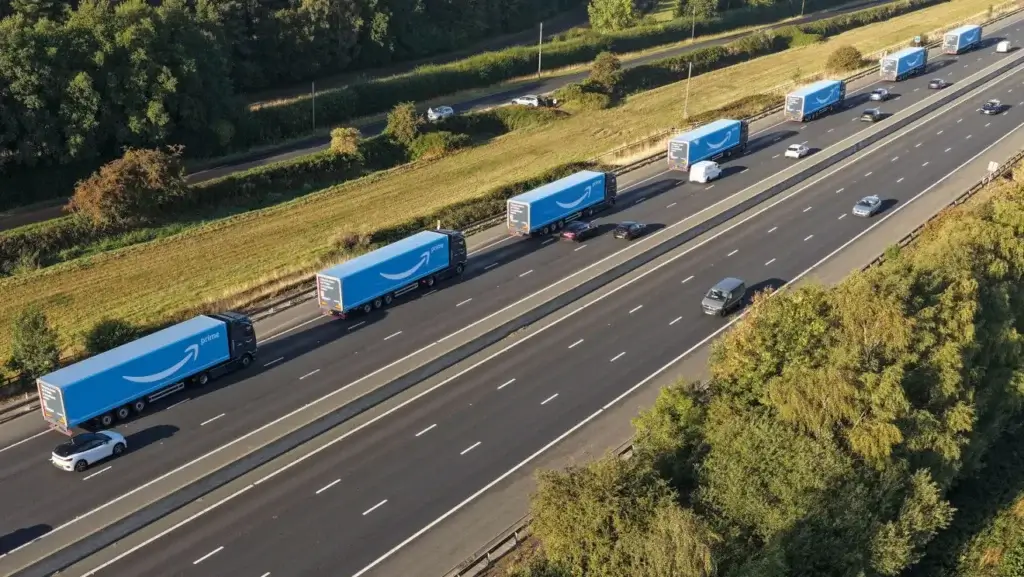
Major cuts at U.S. giants are a sign that job reductions are no longer the exclusive domain of the tech sector. The biggest players, who hired en masse during the pandemic, are now entering a phase of deep restructuring, and decisions made in the United States may have global consequences.
UPS cuts 30,000 jobs and distances itself from Amazon
UPS, the world’s largest courier company, announced that in 2026 it will eliminate up to 30,000 jobs. The reductions are to be carried out through voluntary departure programmes for full-time drivers and by not replacing employees who leave the company of their own accord.
According to Reuters, the key reason behind the decision is reducing the volumes handled for Amazon, which – as UPS emphasises – are “exceptionally unfavourable for margins”. Since last year, the company has been implementing a plan to reduce its dependence on its biggest customer and shift its business focus towards more profitable segments, such as serving companies in the healthcare sector.
In 2025, UPS has already eliminated 48,000 jobs and closed 93 facilities, and in the first half of 2026 it plans to close another 24 locations. As the company’s CEO announced, in 2026 the group intends to reduce Amazon parcel volumes by another one million packages per day, while also reshaping its operating network.
Record revenues despite layoffs
The scale of the cuts does not indicate financial trouble. UPS reported that in the last quarter of 2025 it achieved revenues of $24.5 billion, and its forecast for the whole of 2026 assumes an increase to $89.7 billion, which surprised the market.
According to the 2024 annual report, the company employed around 490,000 people, including nearly 78,000 managers.
Amazon lays off 30,000 employees
On the other side of the relationship is Amazon, which confirmed 16,000 new layoffs in its corporate structures, thereby completing a plan to cut around 30,000 jobs implemented since October 2025 The company does not rule out further cuts.
Although Amazon employs 1.58 million people overall, mainly in logistics centres and warehouses, the reductions cover nearly 10% of corporate staff and are the largest in the company’s history – bigger than the wave of layoffs in 2022–2023.
As the group’s HR director explained, the decisions are intended to strengthen the organisation by reducing the number of management layers, increasing team accountability and cutting bureaucracy. At the same time, she noted that some departments will still be adjusting headcount to the new realities.
Logistics under pressure from AI and automation
The layoffs at Amazon and UPS are part of a broader trend. Artificial intelligence and automation are increasingly reshaping employment structures in logistics, from planning and supply chain management to warehouse operations.
For years, Amazon has been investing in robotising its fulfilment centres, reducing the need for human labour and speeding up order picking. At the same time, it has been rapidly expanding its own delivery network, which in recent years has weakened the position of traditional operators such as UPS, FedEx and the U.S. Postal Service.
In 2024, Amazon handled 6.3 billion deliveries in the United States, overtaking both UPS and FedEx. According to forecasts, by 2028 it could also overtake the public operator in terms of parcel volumes.